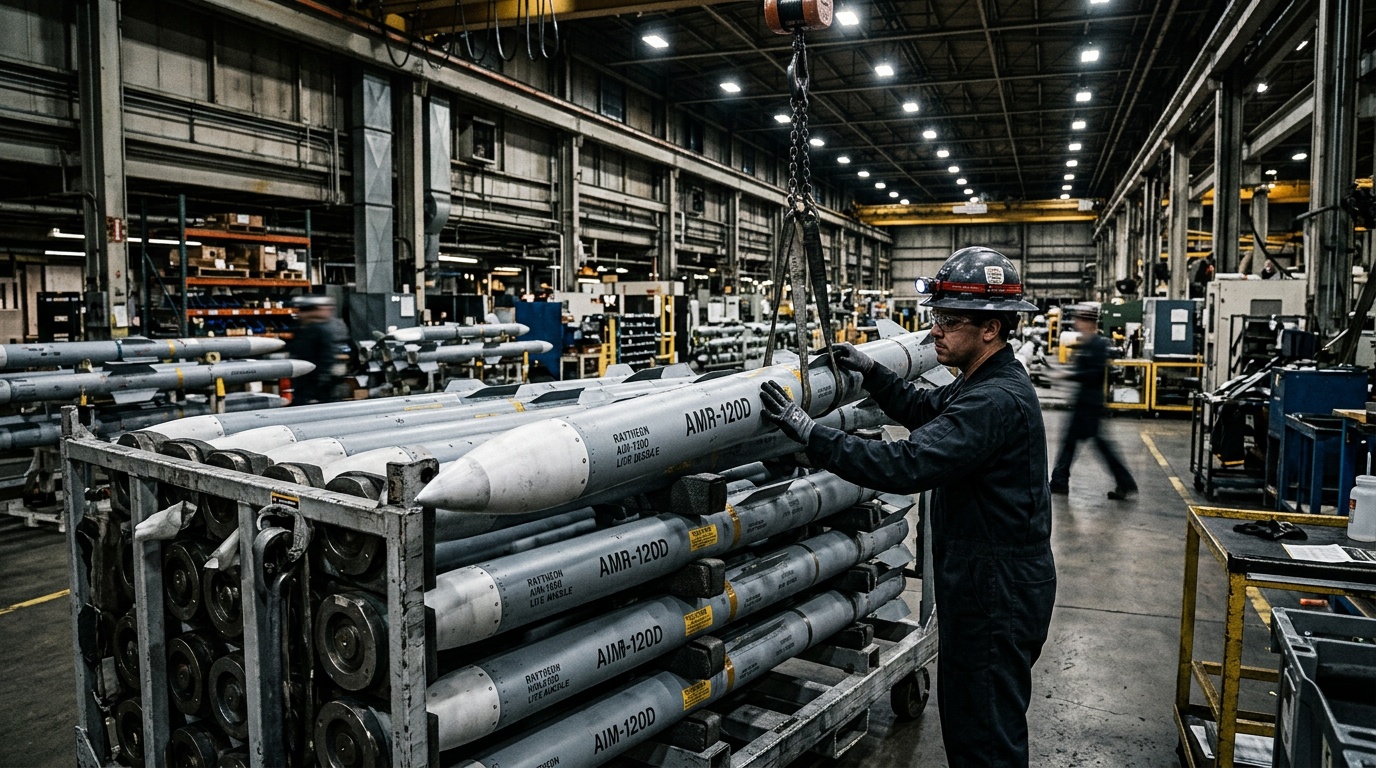
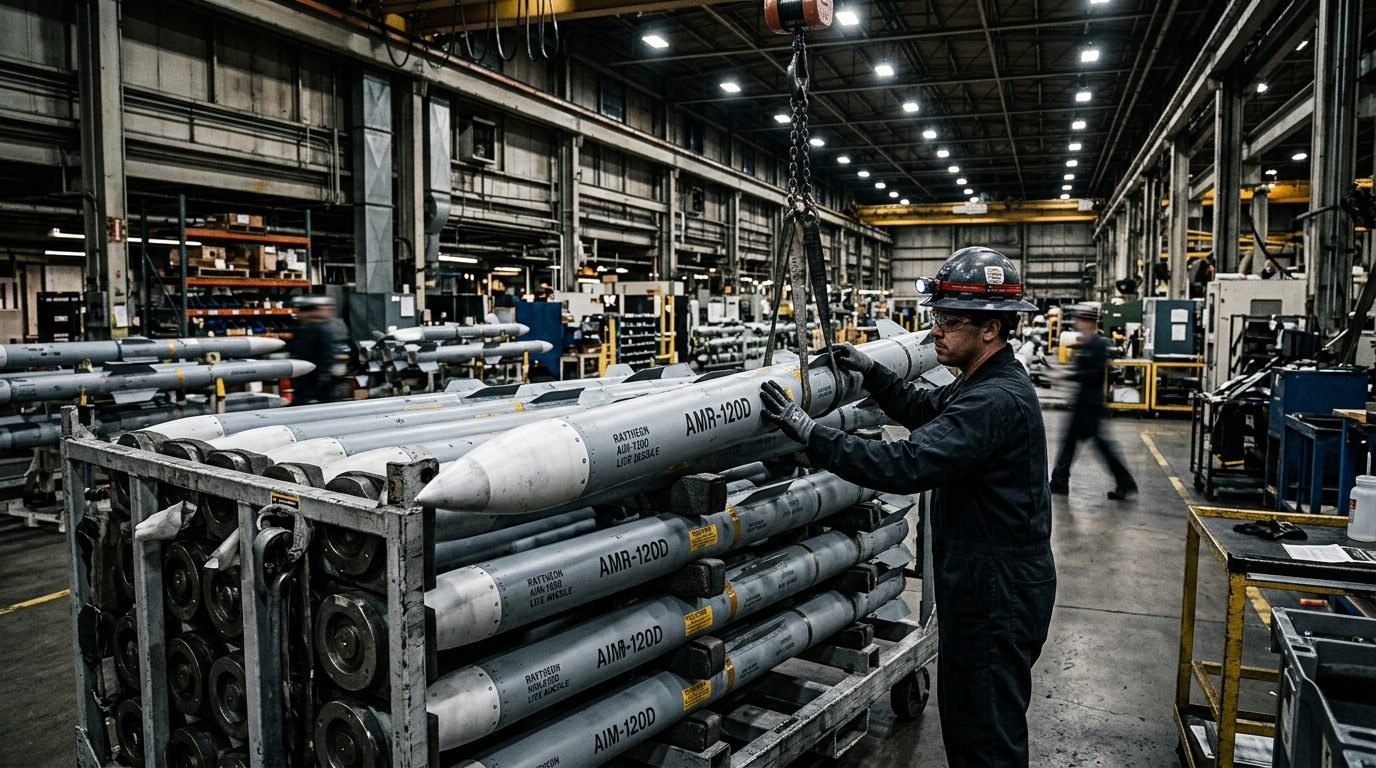
The Pentagon has handed Raytheon, a subsidiary of RTX (RTX), a contract worth up to $20.7 billion to speed up production of Advanced Medium-Range Air-to-Air Missiles, or AMRAAMs. The reason is simple: the stockpile is running thin.
AMRAAMs aren't just another line item in the defense budget. They're a workhorse of modern air combat, arming fighter jets and the National Advanced Surface-to-Air Missile System, or NASAMS, which helps defend the Washington area and is used by more than a dozen countries, including Ukraine, Oman and Qatar.
The five-year multi-year contract, which includes two option years, was awarded on Sept. 25, according to a Monday press release from the Department of Defense.
It's one of several major munitions deals the Pentagon has launched this year to nudge defense contractors into ramping up production. Raytheon nearly doubled AMRAAM production in 2025 from the previous year and had previously set an annual production target of at least 1,900 missiles.
The deal falls under the Pentagon's 'Arsenal of Freedom' initiative.
Pentagon Races To Replenish Missiles
The contract comes amid a broader push to refill U.S. missile stockpiles, which have been depleted by conflicts in the Middle East and Ukraine, weapons supplied to allies, and U.S. military operations in Iran.
Senior military commanders have warned that U.S. munitions stocks are 'dangerously low,' with the Pentagon having used nearly 80% of its interceptors for a key missile-defense system since the Feb. 28 U.S.-Israeli strikes on Iran.
Raytheon Ramps Up Missile Output
In August, Raytheon landed a $22.9 billion contract to dramatically expand Tomahawk missile production. That was followed by a $2.8 billion contract awarded to RTX's Pratt & Whitney division in 2025 to produce engines for the F-35 Lightning II fighter jet.
In the same month, the Pentagon awarded Raytheon two contracts worth a combined $1.28 billion: $745.4 million to produce Standard Missile-3 Block IIA missiles for the U.S. and Japan, and $536 million for TOW Weapon System production and engineering services.
Escalating conflicts in the Middle East and Ukraine have driven a surge in demand for cost-effective air defense solutions. In response, Lockheed Martin Corp. (LMT) introduced a more affordable Patriot interceptor in July. In June, the company secured a seven-year contract worth up to $35 billion to quadruple THAAD interceptor production.