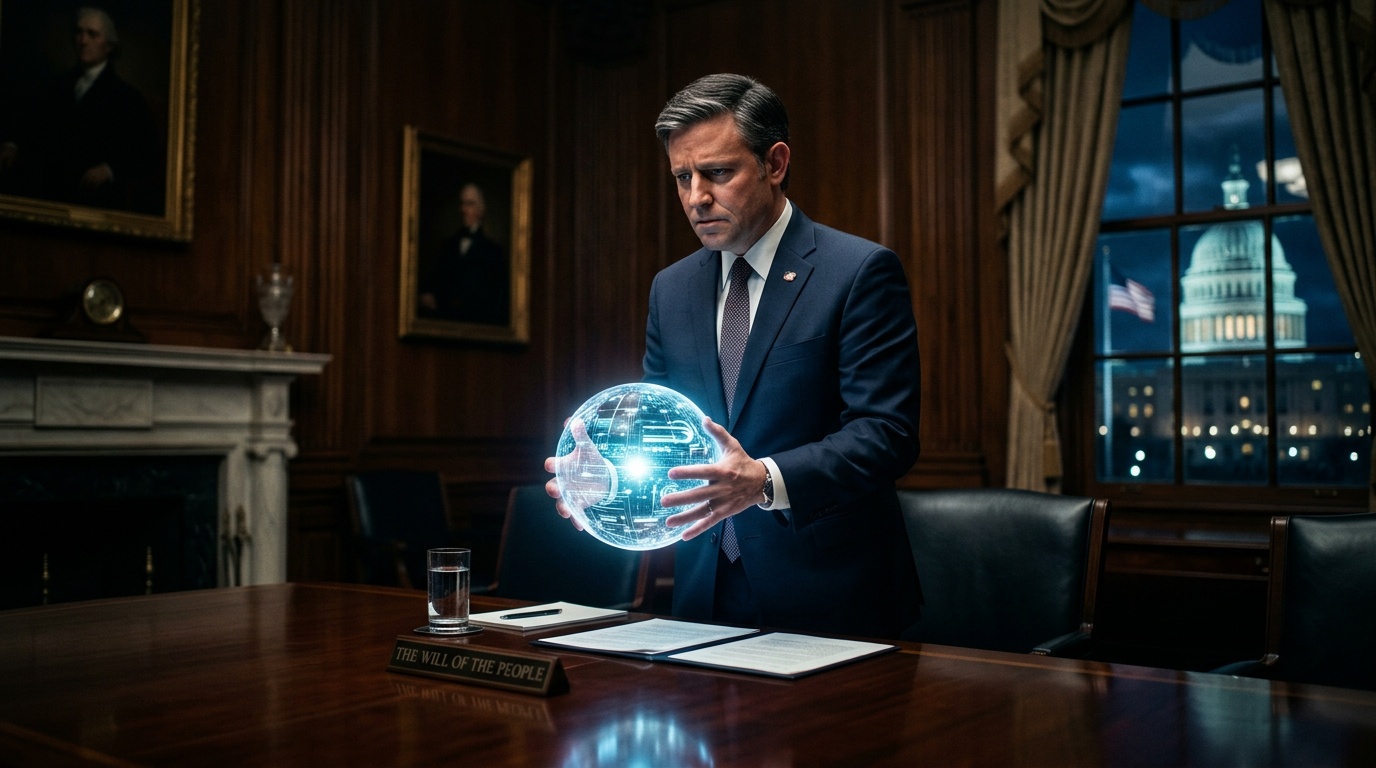
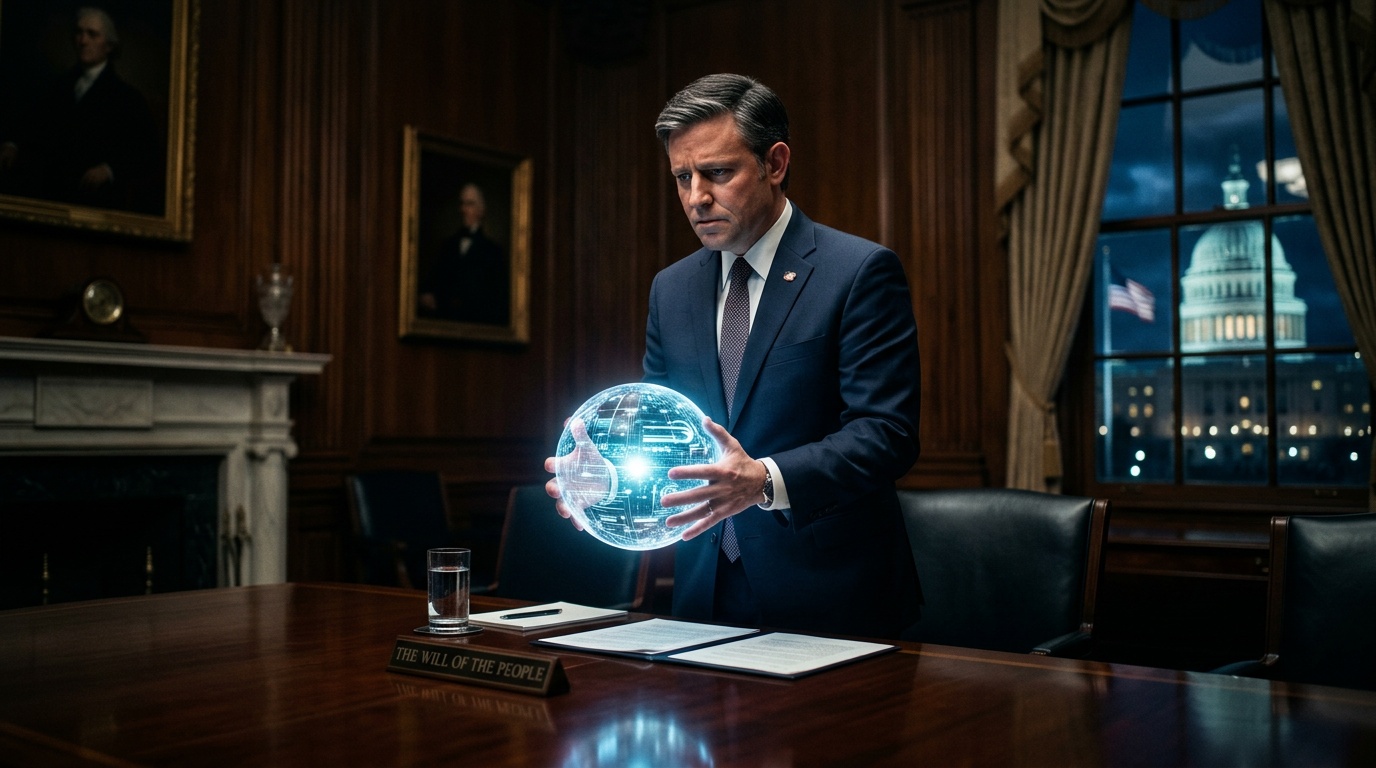
House Speaker Mike Johnson (R-La.) has a message for the AI industry: guardrails are coming, but they need to be built carefully. On Sunday, in a post on X, Johnson pointed to Congress' work on artificial intelligence, including the bipartisan task force he set up after taking the speaker's gavel.
"We all have a sense of urgency to create guardrails around the technology," he said.
The trick, in his telling, is threading a needle that plenty of lawmakers have struggled with: write rules that stop AI from causing harm without kneecapping the American companies building it.
"The key is designing the guardrails carefully, in a way that prevents any harm from AI —while also preserving American innovation and our national security by keeping our edge over China and other international competitors," Johnson said.
He also wants a conversation, not just legislation. Johnson called for a meeting in Washington with AI platform providers and key experts to figure out the right path forward and to talk about what responsibility these companies carry for keeping their products safe.
"I am calling for a meeting in Washington with AI platform providers and key experts to determine the right course forward and discuss the responsibility providers have to ensure the safety of their products," he said.
The Regulation Debate Is Getting Crowded
Johnson is far from the only voice in this conversation, and the chorus is getting louder by the week. Earlier this month, George Clooney questioned whether lawmakers even have the expertise to regulate AI, warning that convincing AI-generated content could make it harder to tell facts from fabricated claims.
On the industry side, Nvidia Corp. (NVDA) CEO Jensen Huang urged G20 leaders to invest in AI infrastructure, warning that excessive fear and regulation could leave countries behind. His preferred approach: target actual risks rather than hypothetical harm.
Last month, former White House AI and crypto czar David Sacks warned that voluntary AI safety standards could eventually harden into mandatory rules that disadvantage open models. And Chamath Palihapitiya cautioned that overly restrictive U.S. regulations could push investment and capital overseas.
China Is the Shadow Over Every AI Debate
If there's one theme tying all of this together, it's China. Last week, Treasury Secretary Scott Bessent warned that the U.S. cannot afford to slow its AI race with China, calling American leadership critical to both national security and the economy.
In August, Elon Musk identified China as "by far" the strongest AI competitor, echoing his 2011 prediction that China would eventually emerge as a major rival to the U.S. in space technology.
So Johnson's framing is not happening in a vacuum. The speaker wants guardrails. He just wants to make sure they don't become a cage.
Disclaimer: This content was partially produced with the help of AI tools and was reviewed and published by MarketDash editors.