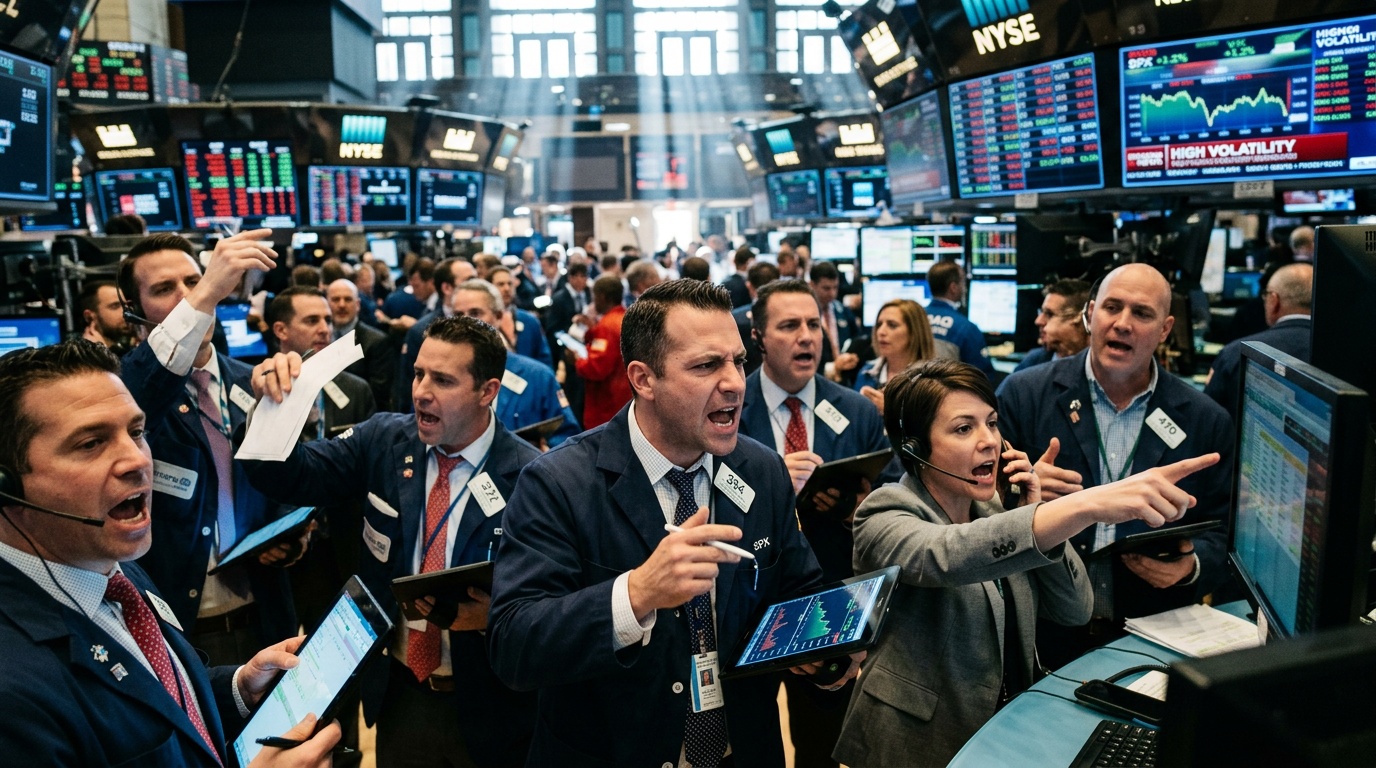
Two narratives wrestled for control of the tape this week: a red-hot jobs report that revived rate-hike chatter, and a wave of corporate earnings so strong it made investors shrug off the prospect of higher borrowing costs.
The Bureau of Labor Statistics said nonfarm payrolls grew by 162,000 in August, nearly triple the 56,000 that economists had penciled in, and the biggest monthly jump since March. The unemployment rate held steady at 4.1%. And that soft patch from July? Revised away, from a loss of 23,000 to a gain of 21,000.
By Friday afternoon, traders had priced in a 60% chance that the Federal Reserve raises rates at its September meeting. That's a notable shift, but here's the thing: stocks didn't crater. In fact, they held up remarkably well for a print this hot.
Why the resilience? Because corporate America is printing money in a way we haven't seen in years.
Record Earnings Season Gives Investors Cover
The second quarter of 2026 delivered the strongest earnings season since 2021, and that's giving investors confidence that companies can outrun higher rates.
FactSet puts the blended S&P 500 earnings growth rate at 50.4% year-over-year. That's a second straight quarter above 25%, and the seventh consecutive quarter of double-digit growth. This isn't a narrow, tech-only story either. About 76% of S&P 500 companies beat revenue estimates, which is ahead of both the five- and ten-year averages, and ten of eleven sectors grew earnings year-over-year.
On Wednesday, New York Fed President John Williams delivered what might be the most important central-bank message of the week. Speaking to CNBC, he argued that the recent surge in Treasury yields isn't a sign of market dysfunction or fiscal panic. It's just the market reflecting a strong economy.
“What's driving it, in large part, is really a strong U.S. economy and a strong economic outlook fueled by big investments in AI and data centers and technology in general,” Williams said.
That's a Fed official essentially saying, “Don't worry, the economy is booming, and that's why yields are up.” It's a far cry from the days when rising yields sent equities into a tailspin.
Dell Reboots the AI Infrastructure Trade
If there was a single earnings report that captured the zeitgeist, it was Dell Technologies. The company reported second-quarter 2027 revenue of $47 billion, a record, up 58% year-over-year and beating the $44.92 billion consensus by a cool $2 billion. Adjusted EPS came in at $7.04, up 203% and blowing past the $4.87 estimate by 44%.
But the AI numbers were the real head-turners. Dell booked $60.9 billion in AI server orders during the quarter, bringing twelve-month cumulative AI orders to $131.7 billion. AI-optimized server revenue hit $16.4 billion, doubling year-over-year.
Those numbers aren't just good for Dell; they validate the entire AI infrastructure trade. If companies are still placing orders at this pace, the demand for chips, servers, and data centers isn't slowing down.
Next week, all eyes turn to the August CPI report, due Thursday, Sept. 11, just four days before the FOMC's September meeting. It's likely the final piece of data that will decide whether the Fed hikes or holds.
S&P 500's Best and Worst Performers This Week
Let's take a quick tour of the winners and losers on the S&P 500 this week.
Leading the pack was Robinhood Markets, which gained 17.93% over five days. The fintech platform got a cluster of Wall Street upgrades: Morgan Stanley moved it to Overweight with a $150 price target, up from $124, and Scotiabank started coverage with an Outperform rating.
SanDisk Corporation added 15.81%, with most of the gains coming on Friday. Dell Technologies rounded out the top three, up 15.46% on the earnings bonanza detailed above.
On the downside, Edison International fell 20.11% after California's legislature adjourned on Aug. 31 without meaningful wildfire liability reform. That leaves Southern California Edison exposed to Eaton fire litigation with no cap. The stock lost roughly a quarter of its value on Monday alone. Mizuho, Barclays, and Argus all cut ratings, and JPMorgan slashed its price target to $61 from $82.
Fair Isaac Corporation dropped 18.97%, nearly all of it on Friday, after Federal Housing Finance Agency Director Bill Pulte directed Fannie Mae and Freddie Mac to accept mortgages underwritten with VantageScore. That's a direct threat to FICO's dominance in credit scoring.
Lululemon Athletica lost 16.83% after second-quarter revenue of $2.42 billion missed estimates and comparable sales fell 9%. Management cut full-year revenue guidance to $10.35–$10.5 billion from $11–$11.15 billion, and guided the third quarter to a 10–11% decline.
So there you have it: a week where the economy looked too hot for comfort, but earnings were too good to ignore. The tug-of-war between rates and profits is far from over, but for now, the bulls have the upper hand.