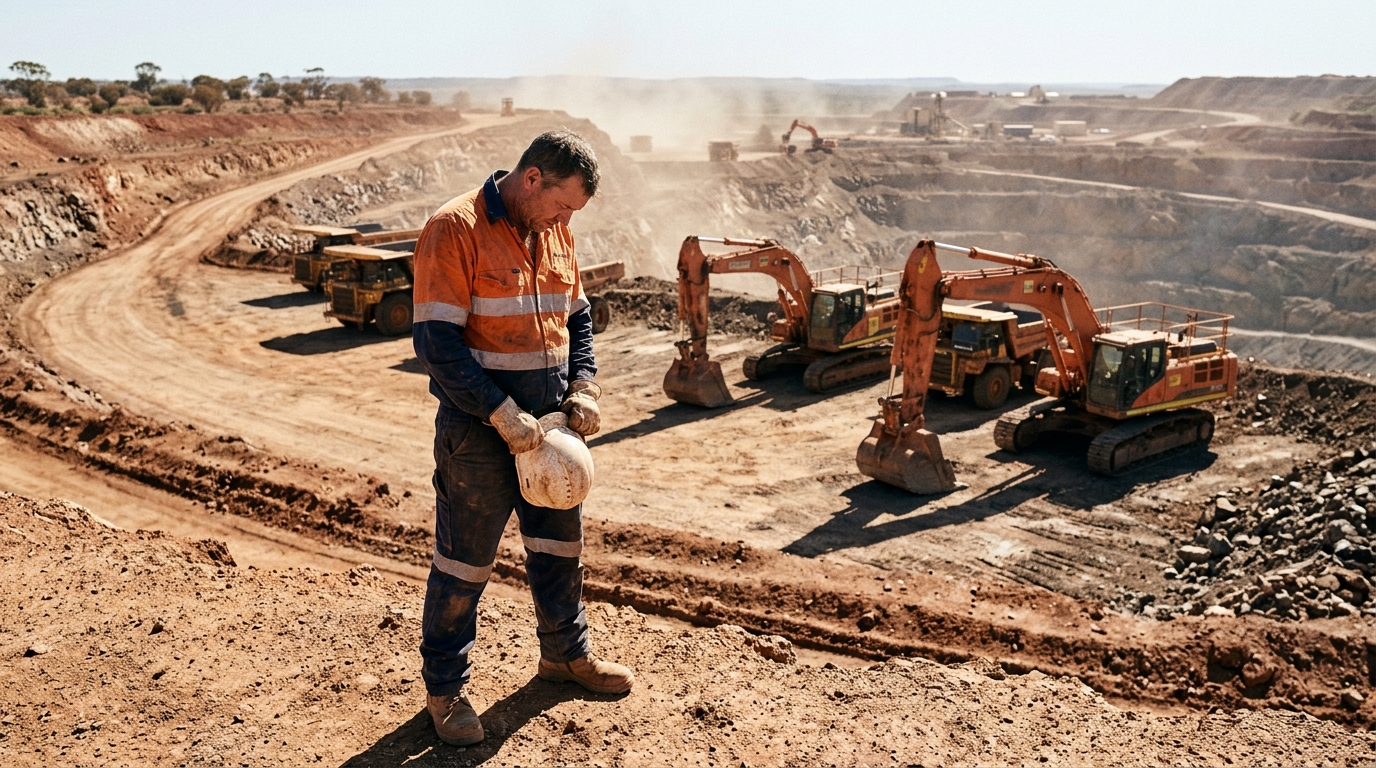
The biggest new customer for Nvidia Corp (NVDA)'s next-generation AI chips isn't another chatbot maker or cloud giant. It's a humanoid robotics company.
Figure AI's decision to secure access to up to 100,000 Nvidia Vera Rubin GPUs signals that the next wave of AI infrastructure spending may come from teaching robots how to understand and interact with the physical world—not just generate text.
Beyond Chatbots
Figure this week announced a strategic partnership with AI cloud provider Nscale to deploy up to 100,000 GPUs built on Nvidia's Vera Rubin platform. The agreement includes an initial $3.5 billion compute commitment, with plans to scale beyond $6 billion, as Figure trains the AI models powering its humanoid robots. Deployments are expected to begin in the second half of 2027.
While the headline numbers are eye-catching, the more important takeaway is why Figure needs that much computing power.
The company said it is increasingly constrained not by hardware manufacturing but by the data and compute required to train Helix, its robotics foundation model. Figure also pointed to Index, its recently launched data platform, which it says is generating 35 minutes of training data every second.
"Data alone cannot solve this problem," the company said. "Scaling physical intelligence will require an immense amount of compute."
The Rise of Physical AI
For Nvidia, the announcement underscores how demand for AI infrastructure is broadening beyond large language models.
Humanoid robots represent a fundamentally different AI challenge. Instead of answering questions or writing code, they must perceive the physical world, understand their surroundings and safely perform real-world tasks. That requires continuous training on massive amounts of visual and behavioral data.
Nvidia CEO Jensen Huang described the partnership as activating a "robotics flywheel." In his words, Figure's AI models will train on Nvidia's Vera Rubin platform through Nscale's cloud, validate in Nvidia Isaac Sim, and ultimately deploy on Nvidia-powered robots. He called it "the physical AI flywheel" that will accelerate the path from AI models to real-world robots.
That framing matters because it positions robotics as a new long-term demand driver for Nvidia's AI ecosystem rather than simply another buyer of GPUs.
What Investors Should Watch
Investors have largely viewed Nvidia's growth through the lens of hyperscalers and generative AI companies racing to build ever-larger language models. Figure's latest commitment suggests another market is beginning to emerge.
If humanoid robotics scales as companies such as Figure envision, demand for AI infrastructure may increasingly come from training machines to operate in the physical world.
For Nvidia, that could broaden its customer base beyond cloud providers and AI labs, reinforcing Huang's long-held view that physical AI represents the industry's next frontier. The Figure partnership may be one of the clearest signs yet that the shift is already underway.