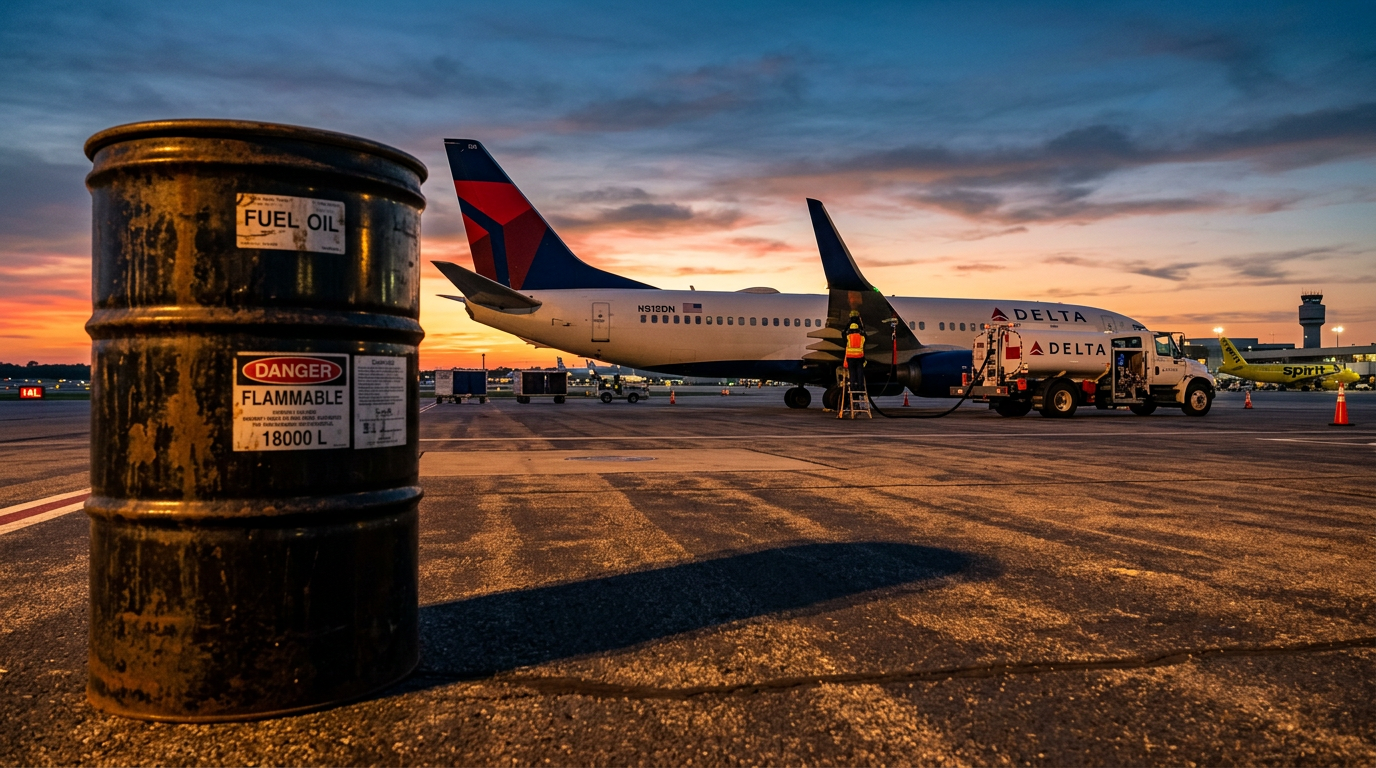
Delta Air Lines (Delta (DAL)) reported second-quarter results on Friday that beat Wall Street's expectations on both earnings and revenue. But the market gave the news a shrug — shares slipped about 0.4% in premarket trading — as investors focused on the elephant in the cockpit: record fuel costs.
Adjusted earnings came in at $1.56 per share, topping the $1.47 estimate. GAAP diluted earnings, however, fell 25% year over year to $2.44 per share, reflecting the impact of higher expenses.
Record Revenue, Lower Margins
Operating revenue rose 19% to $19.76 billion, beating the $17.53 billion estimate. Adjusted operating revenue increased 13.9% to a record $17.67 billion, even though capacity grew only about 1%. That's a sign that Delta is squeezing more out of each seat — and passengers are paying up.
Passenger revenue climbed 13% to $15.61 billion, with premium-product revenue up 17% to $6.92 billion, outpacing main-cabin revenue growth of 8% to $6.85 billion. Domestic revenue rose 15%, while Pacific revenue advanced 15% and Atlantic revenue grew 8%. Adjusted unit revenue jumped 12.4%, and passenger yield increased 12%.
But the cost side tells a different story. Adjusted operating income declined 24% to $1.56 billion, and the adjusted operating margin narrowed to 8.8% from 13.3% a year ago. Adjusted net income fell 26% to $1.03 billion.
Diversified Revenue Supports Growth
Delta's non-ticket revenue streams are becoming increasingly important. Diversified revenue accounted for 61% of adjusted revenue, up from 59% a year earlier. Cargo revenue surged 39%, MRO (maintenance, repair, and overhaul) revenue increased 32%, and loyalty and related revenue grew 19%.
American Express remuneration — the fees Delta gets from its co-branded credit card partnership — rose 16% to $2.4 billion. Corporate sales grew by double digits across all sectors, with premium corporate sales up more than 25%. That suggests business travel is back in a big way.
Fuel Costs Pressure Profitability
Here's the big number: adjusted fuel expense surged 77% to $4.41 billion, with the adjusted fuel price rising 75% to $3.93 per gallon. Delta said it absorbed the highest quarterly fuel expense in its history. That's a massive headwind, and it explains why margins compressed even as revenue hit records.
Adjusted operating expenses increased 20% to $16.10 billion, and non-fuel unit costs rose 6.8%. So it wasn't just fuel — other costs are creeping up too.
Despite the pressure, Delta generated $1.65 billion in adjusted operating cash flow and $209 million in free cash flow during the quarter. For the first half, adjusted operating cash flow totaled $4.07 billion, with free cash flow of $1.44 billion.
The airline ended the quarter with $4.67 billion in cash and $7.7 billion in liquidity. Debt and finance lease obligations fell 7% year over year to $13.95 billion, while adjusted net debt dropped by $709 million from the end of 2025 to $13.59 billion. Delta expects gross leverage of about two times by year-end and announced a 15% dividend increase starting in the September quarter.
Delta Affirms Full-Year Outlook
CEO Ed Bastian struck an optimistic tone, saying the airline is entering the second half of the year from a position of strength. He noted that Delta reaffirmed its full-year outlook for 20% earnings growth despite a multibillion-dollar fuel cost headwind, underscoring the resilience of its business and setting the stage for continued momentum into 2027.
For the third quarter, Delta expects adjusted earnings of $2.00 to $2.50 per share, compared with the $1.99 consensus estimate. It forecasts mid-teens revenue growth and an operating margin of 11% to 13%.
Delta also affirmed full-year adjusted EPS guidance of $6.50 to $7.50, well above the $5.93 estimate, and maintained free cash flow guidance of $3 billion to $4 billion. Management expects full-year earnings to grow 20% despite the fuel headwind, with double-digit margins and a return to earnings growth in the second half.
So the story is clear: Delta is flying high on record summer travel demand, but fuel costs are a persistent drag. The market seems to be waiting to see if the airline can keep its margins aloft.