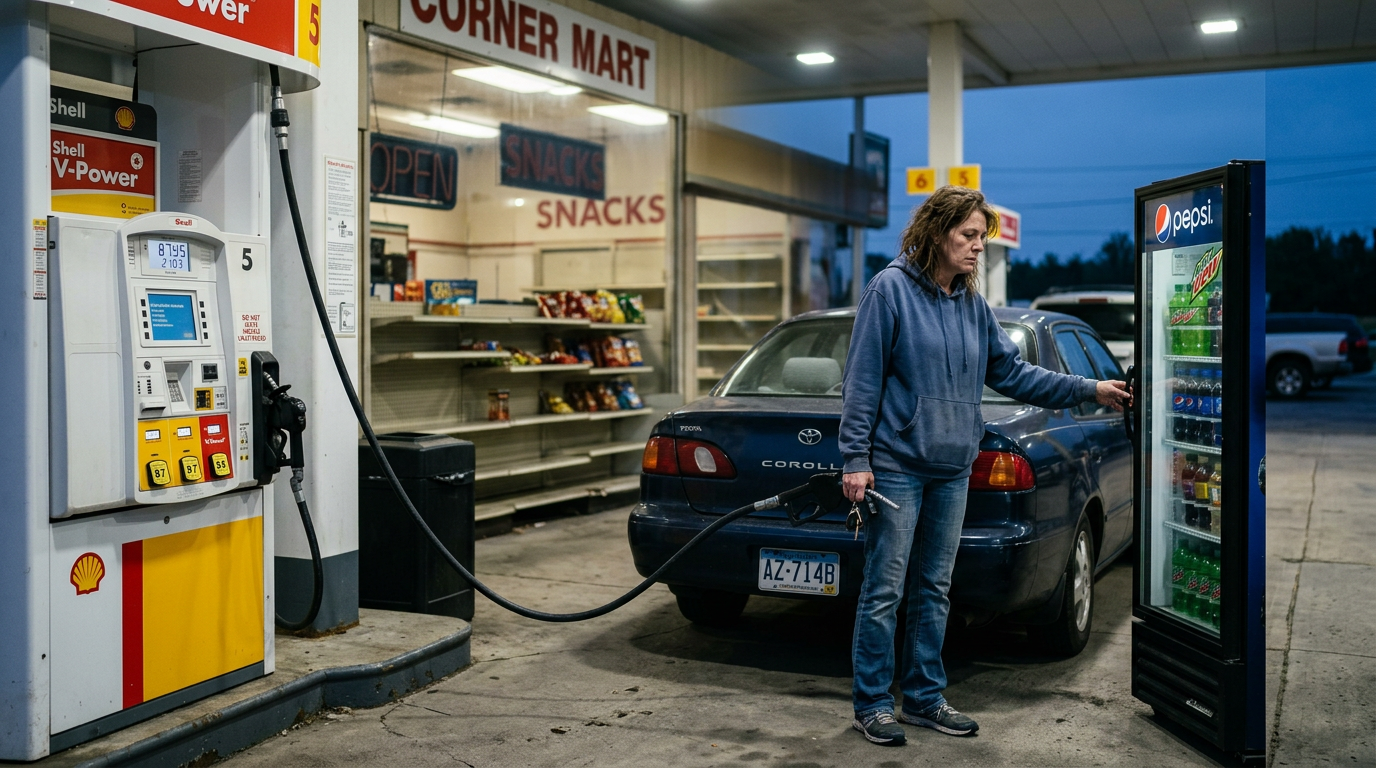
PepsiCo (PepsiCo (PEP)) is feeling the pinch at the pump — and it's showing up in its snack and drink sales. The company reported its second-quarter results on Thursday, and while revenue came in ahead of expectations, higher gasoline prices are taking a toll on impulse purchases, especially at convenience stores.
During the earnings call, management noted that consumers are still stopping by convenience stores, but they're less likely to grab a bag of chips or a soda when fuel costs eat into their wallets. "Higher gasoline prices, partly driven by geopolitical tensions, weighed on consumer spending during the second quarter," the company said, particularly in those quick-stop shops where unplanned buys typically thrive.
The numbers tell the story: Revenue rose 6.4% year over year to $24.18 billion, topping analysts' estimate of $23.96 billion. But core earnings of $2.20 per share missed the consensus estimate of $2.21 per share by a penny. That slight miss, combined with the gas-price headwind, sent shares down 0.29% in premarket trading Friday to $137.46.
First Half Performance
Looking at the first half of 2026, PepsiCo delivered 7% revenue growth, with global food volumes rising 3% and beverage volumes increasing 2%. That's the strongest first-half volume growth since 2022. The company is leaning into affordability initiatives and expanding its portfolio, particularly in permissible and portion-controlled products, to support U.S. volume growth.
International Strength Continues
Management expects the strong international performance to persist through the second half of 2026, with momentum carrying into the summer season. For the third quarter, they anticipate continued strength in international operations, gradual improvement in North America, and an approximately one percentage point boost to EPS from tariff refund claims. These refunds are expected to help offset commodity inflation while allowing PepsiCo to keep investing in growth initiatives.
The company also expects a higher year-over-year tax rate in the third quarter, with certain investments and operating expenses weighted more toward that quarter compared with the fourth. Ongoing productivity initiatives are expected to continue through the third and fourth quarters to support future growth investments.
PepsiCo also anticipates improved growth across its U.S. Foods and U.S. Beverages businesses during the second half. The company continues to project organic sales growth at the lower end of its long-term target range of 4% to 6% for the period.
Inflationary Pressures
Higher commodity inflation is expected in the second half, partially offset by tariff refund claims that are projected to add about one percentage point to full-year EPS growth. Despite these pressures — including higher fuel costs — PepsiCo expects its international business to remain strong.
Full-Year Outlook
PepsiCo reaffirmed its fiscal 2026 guidance, projecting organic revenue growth of 2% to 4% and core constant currency EPS growth of 4% to 6%. The company also maintained adjusted EPS guidance of $8.55 to $8.71, compared to the $8.64 estimate, and sales guidance of $97.68 billion to $99.56 billion, versus the $98.88 billion estimate.
Management reaffirmed its full-year guidance, supported by continued strength in international markets and gradual improvement in North America, though at a slower pace than previously expected after a softer second quarter. The company expects its international business to surpass $40 billion in annual revenue this year and now accounts for roughly two-thirds of beverage volumes and more than half of food volumes.
So while higher gas prices are making that convenience-store run a little less convenient for PepsiCo, the company's global engine is still humming along. Investors will be watching to see if those tariff refunds and affordability initiatives can help offset the drag from the pump.