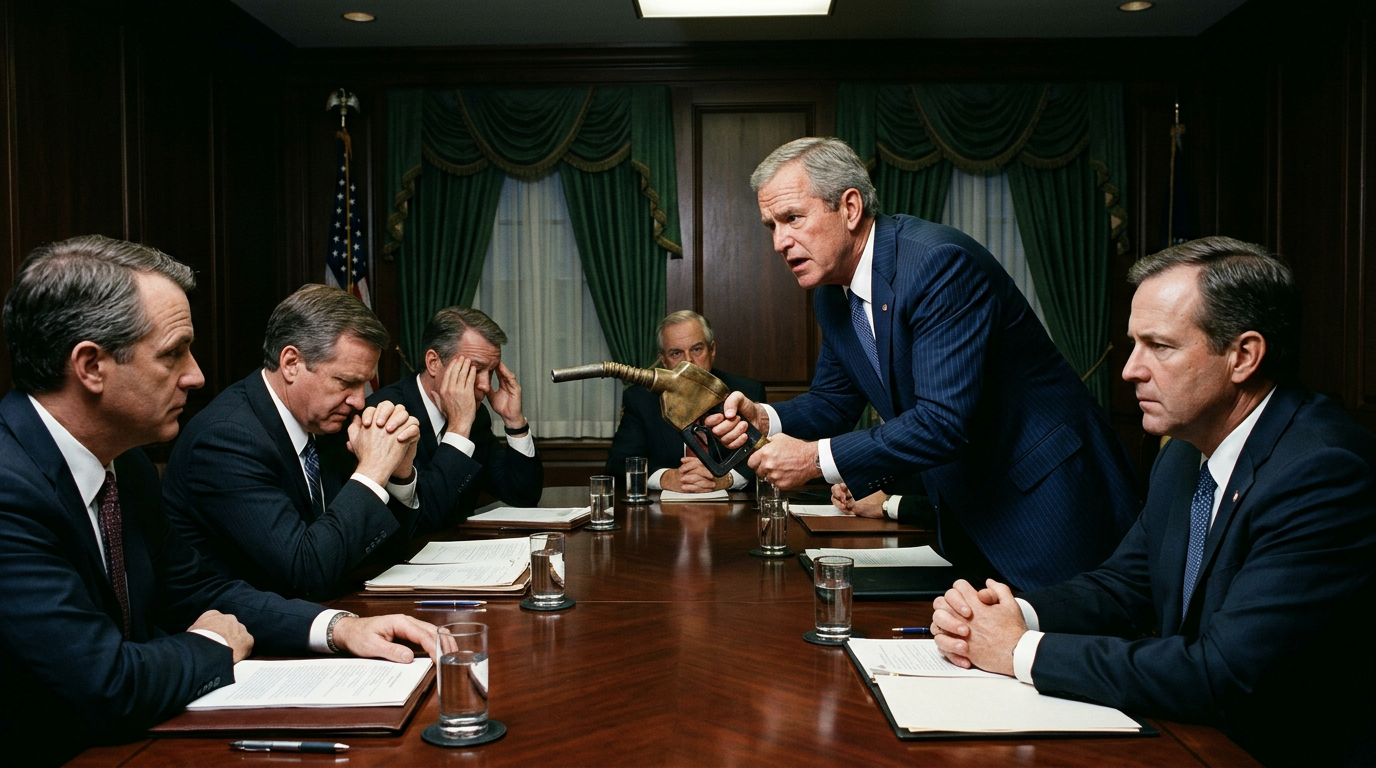
On Friday, the Donald Trump administration turned up the heat on the oil industry, asking state officials to investigate whether companies are illegally keeping gasoline prices high even as crude oil costs fall.
The Department of Justice and the Federal Trade Commission sent a letter to state attorneys general on July 3, urging them to use “all tools available” to look into potential antitrust or consumer protection violations. The message is clear: if oil companies or fuel retailers are artificially inflating prices, the feds want to know—and they want states to help.
Associate Attorney General Stanley Woodward Jr. and FTC Chair Andrew Ferguson said federal authorities are “closely monitoring petroleum markets” for antitrust issues and encouraged state law enforcement to join the effort. “We urge state law enforcers to join us in investigating illegal practices,” they wrote. “Recent volatility in crude oil prices does not suspend either the antitrust laws or state consumer protection laws, and it does not authorize companies to manipulate retail prices or collude with their competitors.”
The letter is the latest move in the administration's argument that lower crude prices should mean cheaper gas for consumers—and that if it doesn't, something might be wrong.
President Trump has been vocal on this point. Earlier this week, he posted on Truth Social, “Gasoline Retailers must get their Prices down, IMMEDIATELY!” Days before that, he said he'd directed federal prosecutors to investigate whether oil companies were manipulating prices, claiming customers were being “gouged.”
As of Friday afternoon, the national average gas price was $3.82 per gallon, according to The Hill. But drivers in several West Coast states and Hawaii were still paying over $5 a gallon. That gap between crude oil prices—which have fallen—and what people are paying at the pump is what's catching the administration's eye.
Oil companies, however, say there's a reasonable explanation. Chevron Corp.’s (Chevron (CVX)) CFO Eimear Bonner told CNBC that while the company expects pump prices to ease as markets stabilize, “It's going to take time though. There is a lag between … oil prices and reductions in oil prices and when that shows up at the pump.” In other words, the price of crude doesn't instantly translate to the price of gas—there's a delay as refineries, distributors, and retailers adjust.
The administration hasn't accused any specific company of wrongdoing, but the letter signals that federal and state scrutiny of pricing practices is only going to intensify. For now, the ball is in the states' court—and the oil industry is watching closely.