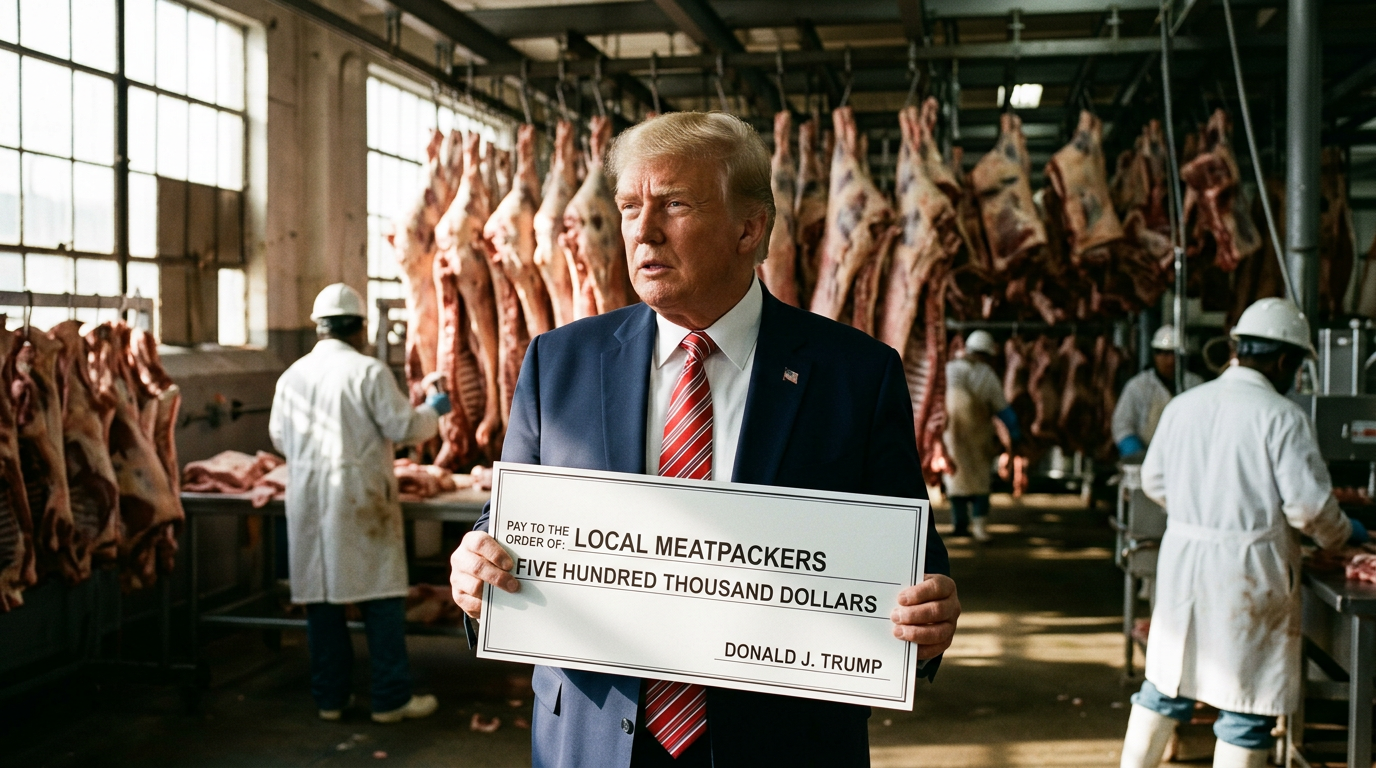
The Trump administration is throwing a $500 million lifeline to smaller meatpackers struggling with soaring beef prices—but the biggest names in the industry, like Tyson Foods (TSN) and JBS NV (JBS), are being left out in the cold.
On Tuesday, the U.S. Department of Agriculture (USDA) announced it would allocate up to $500 million in payments to small- and medium-sized meatpacking firms. The money, funded under the Commodity Credit Corporation Charter Act and administered by the Farm Service Agency, is meant to help these processors cover the higher costs of buying cattle, which have been driven up by historically low U.S. cattle supplies and the reemergence of New World Screwworm.
To qualify for the SPUR funding, beef processors must operate under federal or approved cooperative inspection programs, be U.S.-owned, and not be among the nation's largest beef processors or owned by one. In other words, if you're a giant like Tyson, JBS, Cargill, or National Beef (owned by Brazil's MBRF Global Foods)—which together process about 85% of the nation's beef—you're not getting a dime.
The initiative is designed to offset losses for smaller slaughterhouses, which are losing about $300 per head of cattle. The four largest processors, meanwhile, have been able to weather the storm better, but they're also under scrutiny: the Justice Department has launched a criminal investigation into the top U.S. meatpackers.
Trump Steps Up Beef Relief
This aid is the latest attempt by the Trump administration to tackle what's become known as "beeflation"—the relentless rise in beef prices. According to the Federal Reserve Bank of St. Louis, the average price of ground beef in May was $6.745 per pound, a 12.77% increase from May 2025. That's enough to make anyone wince at the grocery store.
The administration had previously halted a proposal to suspend tariffs on imported beef, part of a broader plan that included expanding loan and capital access for U.S. ranchers and easing certain Agriculture Department regulations affecting cattle producers.
The pain is real for consumers, too. The average cost of a Fourth of July BBQ for 10 people hit a record $73.82 in 2026, up 4% from 2025 and surpassing the previous high of $71.22 set in 2024, according to the Farm Bureau. Besides beeflation, higher gas prices are also contributing to the overall rising costs.
Despite record beef prices, Americans are still splurging on steaks and burgers. Celebrity chef Wolfgang Puck noted that demand for red meat remains strong. While grocery beef prices are still high, premium restaurant cuts like tenderloin have fallen about 25% from a year ago, helped by increased imports from countries such as Argentina and Brazil, with rib cuts also seeing modest price declines.
So, while the big guys are left to fend for themselves, smaller meatpackers are getting a helping hand from Uncle Sam. Whether that will be enough to tame beeflation remains to be seen.