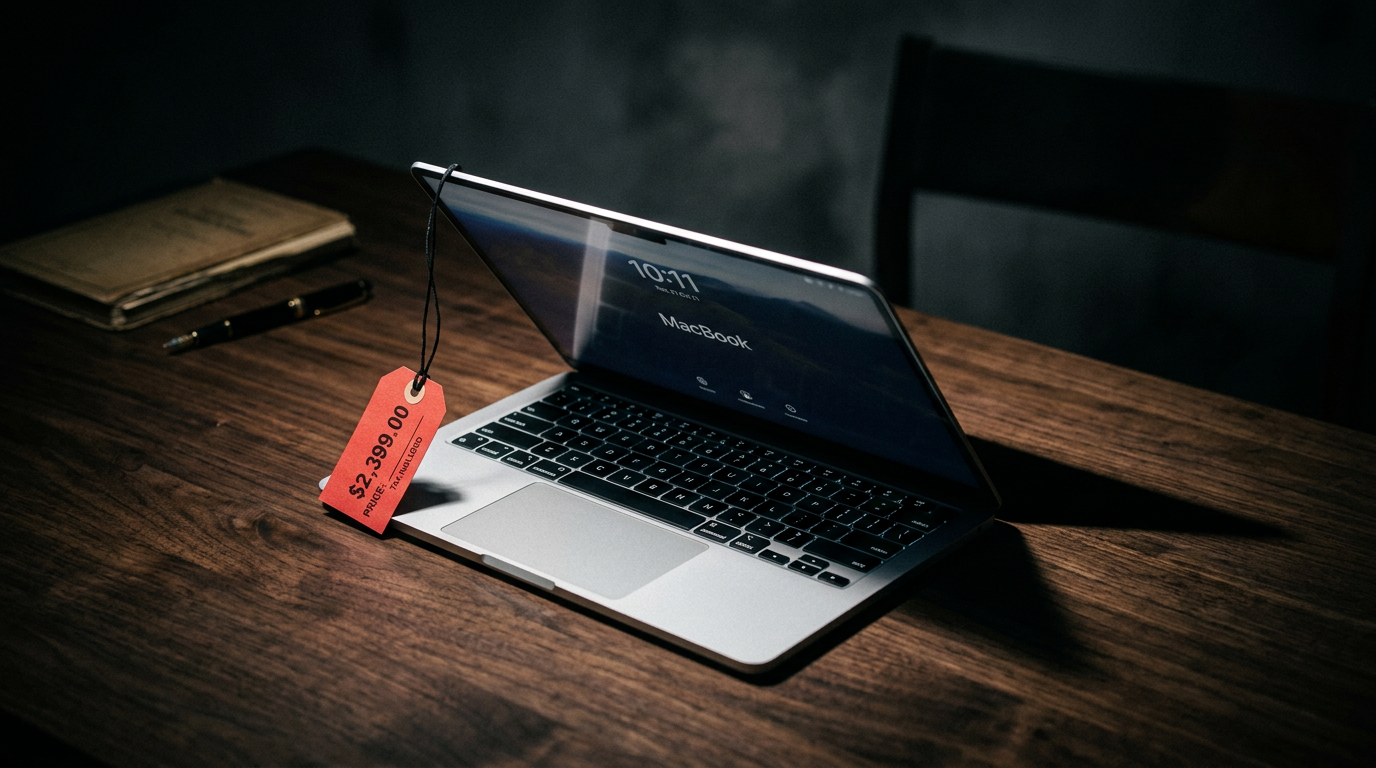
Apple's stock took a beating on Thursday, dropping more than 6% in its worst single-day slide since April 2025. The culprit? The company raised prices on Macs and iPads, and investors are worried that iPhones might be next.
Here's the thing: iPhones account for nearly half of Apple's business. Macs and iPads together make up only about 14% of revenue. So testing customer tolerance for price hikes on the smaller categories is a relatively low-risk move. CNBC reported on Friday that investors are watching closely to see if CEO Tim Cook raises iPhone prices before John Ternus takes over as CEO on September 1. If Cook acts now, it could give Ternus a higher baseline price and less margin pressure to deal with.
Apple blamed the increases on higher memory and storage costs, which have surged thanks to demand from AI data centers. The company has a few options: pass costs to customers, absorb the margin hit, or diversify its supply chain. It's reportedly reopened talks with Chinese memory suppliers after facing backlash over similar discussions in 2022.
Dan Ives Says Apple Had to Protect Margins
Wedbush Securities analyst Dan Ives told CNBC on Friday that Apple needed to raise prices because memory costs have surged across the technology supply chain. He said Apple waited as long as it could, but had to act at the start of what he sees as a major three-year hardware cycle.
Ives believes the increases may drive only limited customer churn, especially in higher-end products. He called the stock reaction overdone relative to the likely impact on demand and earnings.
Sunil Garg Sees Broader Pressure on Consumer Tech
Lighthouse Canton CIO Sunil Garg told CNBC on Friday that the AI capital spending boom should continue to be funded because hyperscalers keep raising capital through equity and debt. That supports demand for upstream AI infrastructure companies, especially memory suppliers with locked-in, noncancelable orders.
However, Garg noted that Apple and Microsoft's price increases point to a broader consumer technology challenge. Rising costs and AI-driven changes are pressuring margins and business models across the industry.
Gil Luria Says Apple Faces Three Pricing Drivers
D.A. Davidson's Gil Luria told CNBC on Thursday that Apple's price increases reflect three things: higher memory costs, a major upgrade cycle, and the possible launch of a foldable iPhone priced above $2,000.
He said Apple is raising prices now to manage memory cost pressure, avoid weaker pricing next year, and prepare customers for a higher-priced foldable device. Luria emphasized that Apple must carefully balance the increases to preserve growth into next year, especially as investors continue to treat the stock as a safer large-cap technology name despite potentially slower growth.
As of premarket trading on Friday, Apple shares were down 0.01% at $275.12.