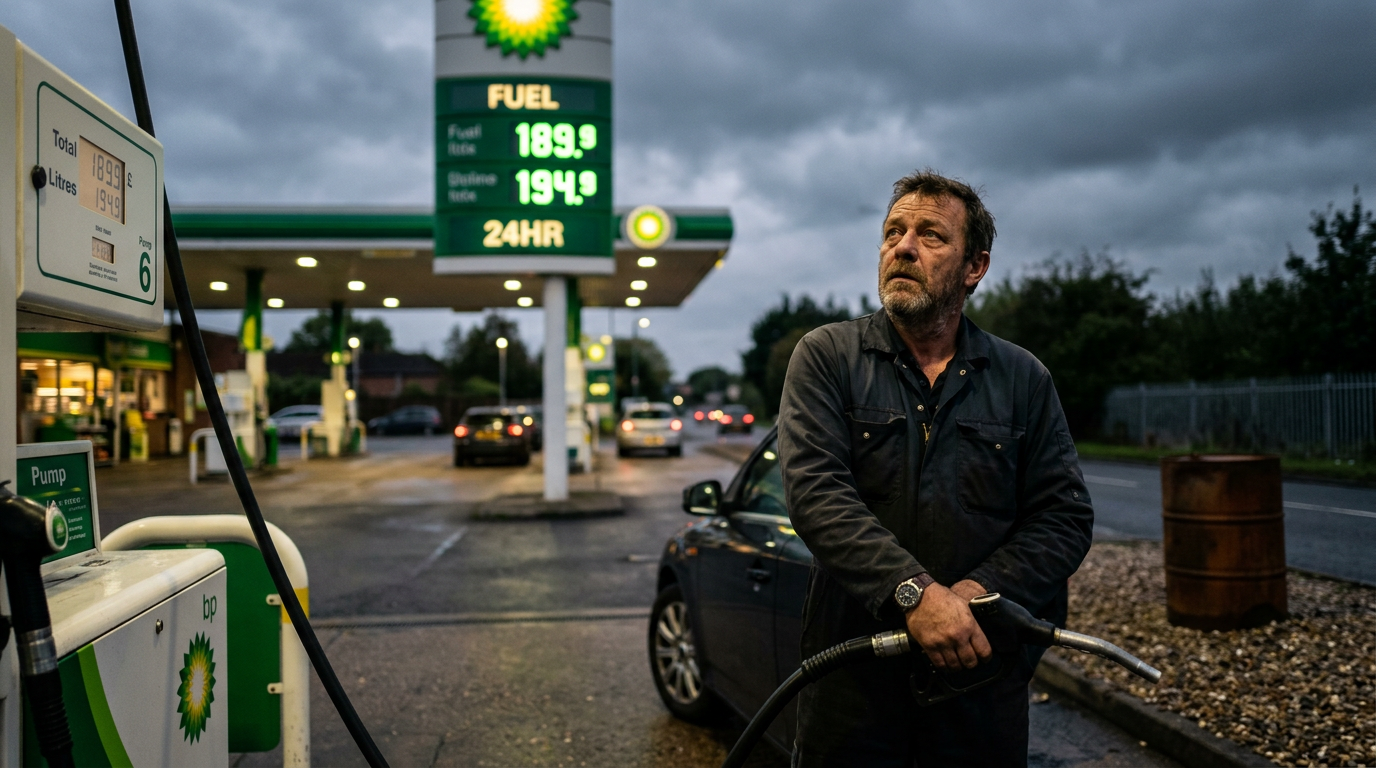
The Iran agreement that President Donald Trump has been touting is doing what it's supposed to do—oil prices are falling. But if you've filled up your tank lately, you might be wondering where the relief is. The national average price of gas is still hovering around $4.04 a gallon, and in states like California, Hawaii, and Washington, it's well over $5. So what gives?
GasBuddy analyst Patrick De Haan took to X to call out the disconnect. He shared a post from user Hunter Eagleman bragging about finding gas below $3 a gallon somewhere, but De Haan wasn't impressed. "While Hunter drives across the country for the *cheapest* gas station to post, the average American is spending $10-$25 more every fill-up" compared to June 2025, he said. And it gets worse: prices are "over $1/gal more than February," before the U.S.-Israeli operation that killed Iran's former Supreme Leader Ayatollah Ali Khamenei and kicked off the war in Iran.
De Haan had earlier warned that while the Iran deal would help resume normal traffic through the Strait of Hormuz, it would be "foolish" to think things would snap back to normal immediately. Any slip-up, he cautioned, would send oil prices surging again. That caution is echoed by Japanese shipping company Mitsui OSK Lines, which said traffic through the Strait of Hormuz could take months to return to pre-war levels. Operators are wary and need proof that the agreement will actually translate into safe passage before they fully commit.
So while oil prices are moving in the right direction—West Texas Intermediate crude was at $75.41 a barrel, and Brent crude slipped to $78.40—the pain at the pump isn't going away overnight. For now, Americans are left paying a premium for a conflict that's technically winding down, but whose effects are still very much in the rearview mirror.