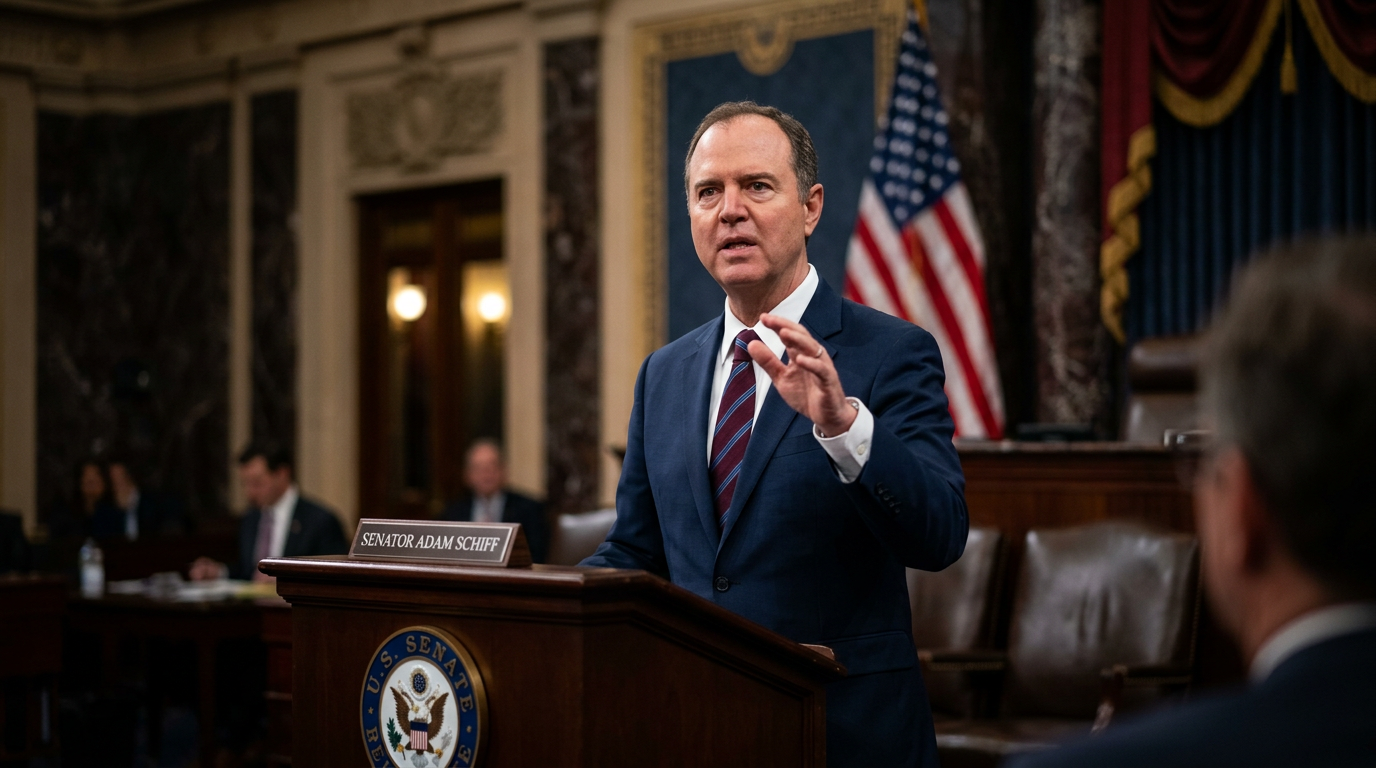
Sen. Adam Schiff (D-CA) didn't hold back on Tuesday, unleashing a blistering critique of President Donald Trump and his administration after details of the Memorandum of Understanding (MoU) signed by Washington and Tehran started making the rounds.
On the social media platform X, Schiff pointed to a Bloomberg report outlining the 14-point draft agreement. "Wow. Iran gets sanctions relief, the release of frozen funds," Schiff wrote, noting that the deal also lets Tehran export oil and tap into "a $300 billion reconstruction fund."
"The U.S. gets a reiteration of the vague promise Iran won't develop a nuke," the California Senator added. He wrapped up his post with a punch: "Hard to imagine a more thorough capitulation."
Schiff isn't alone in his skepticism. Economist Peter Schiff also weighed in, arguing that the agreement essentially resets things to where they were before the war—after losing lives, $100 billion, and watching oil prices spike.
Meanwhile, the practical fallout is still unfolding. Japanese shipping giant Mitsui OSK Lines says traffic through the Strait of Hormuz could take months to get back to normal. Operators are wary and want proof that the deal actually translates into safe passage, not just promises on paper.
Adding another layer of complexity, Iranian news agency Fars cited an anonymous source suggesting Iran might charge tolls on ships passing through the Strait, with a 60-day free pass after the agreement's signing. Iran's Foreign Ministry confirmed on Monday that the country could indeed charge a service fee for transit.
So while the deal may have ended active hostilities, the road to normalcy looks long—and expensive.