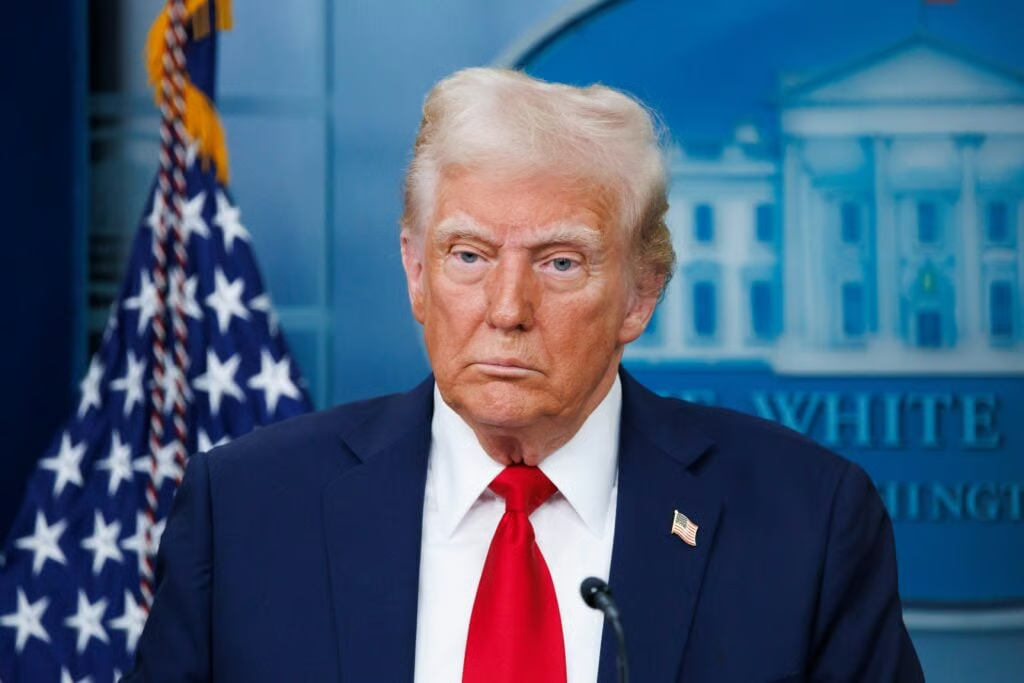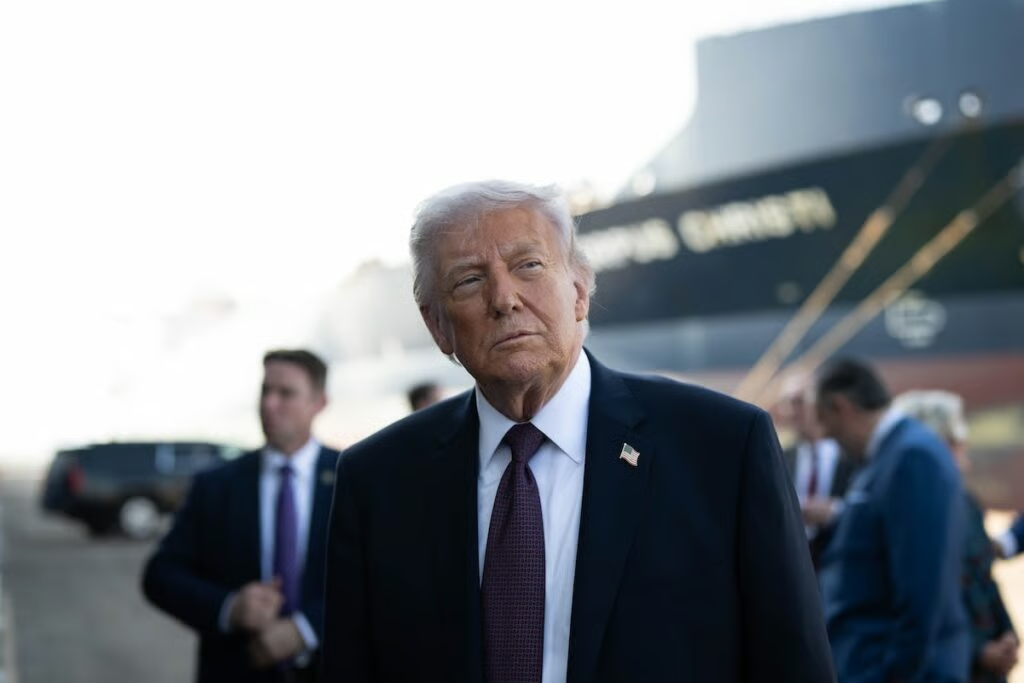
On Friday, President Donald Trump said the European Union is violating a trade agreement and announced plans to raise tariffs on imported automobiles and commercial vehicles to 25%. The move escalates trade tensions between the U.S. and its longtime ally.
In a Truth Social post, Trump wrote: "I am pleased to announce that, based on the fact the European Union is not complying with our fully agreed to Trade Deal, next week I will be increasing Tariffs charged to the European Union for Cars and Trucks coming into the United States."
He added that vehicles produced in the U.S. would be exempt: "It is fully understood and agreed that, if they produce Cars and Trucks in U.S.A. Plants, there will be NO TARIFF." Trump also pointed to a surge in domestic investment, claiming "over 100 Billion Dollars" is being invested in new auto plants across the country.
The announcement comes after the Trump administration launched a Section 301(b) trade investigation in March into 16 countries, including Japan, India, Vietnam, and South Korea, examining alleged unfair trade practices. Officials said the probe could lead to tariffs or other trade restrictions.
Earlier this year, the EU reportedly considered retaliation against the U.S. over tariff threats tied to Trump's Greenland policy. Options included trade countermeasures and the use of a rarely used "bazooka" tool that could restrict U.S. exports, services, and market access in Europe. However, EU action was not expected before new tariffs took effect, and any major steps would have required broad member-state support. EU leaders also discussed coordinated responses and expressed solidarity over Greenland-related tensions.
European firms with high U.S. sales exposure are seen as most at risk. Automakers BMW and Mercedes-Benz Group (OTC: MBGAF, MBGYY) and luxury groups LVMH (OTC: LVMHF) and Hermès could face higher costs and reduced competitiveness. Tech and industrial companies such as SAP SE (NYSE: SAP), Infineon Technologies AG (OTC: IFNNY), and ASML Holding NV (NASDAQ: ASML) also face potential pressure. Analysts say exporters relying heavily on the U.S. market could see higher costs and reduced competitiveness if tariffs are imposed.
Disclaimer: This content was partially produced with the help of AI tools and was reviewed and published by MarketDash editors.