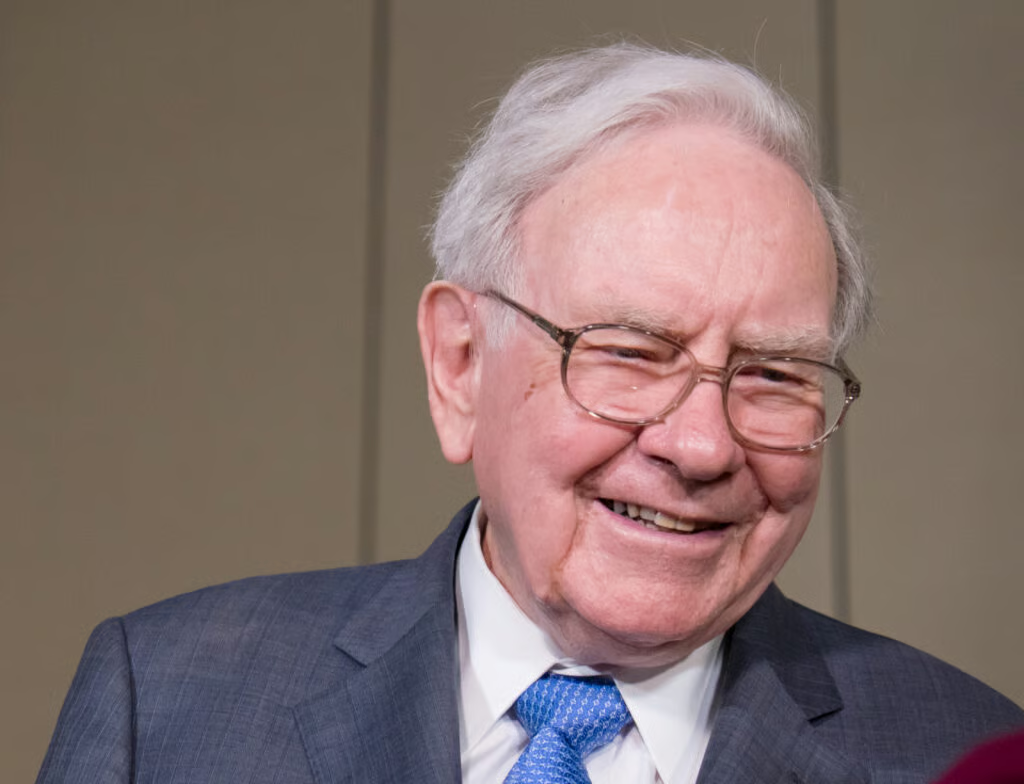
Warren Buffett has a knack for making complex investments sound simple. At Berkshire Hathaway's annual meeting on Saturday, he told the story of how a roughly $35 billion bet on Apple Inc. (AAPL) a decade ago turned into about $185 billion on a pre-tax basis, counting dividends and gains. The punchline? Most of that magic happened under CEO Tim Cook, a man Buffett says "succeeded a legend" in Steve Jobs.
Buffett explained that Berkshire committed about 10% of its resources to Apple by buying shares and then letting Apple's management do the heavy lifting. The position remains Berkshire's biggest holding, even though the conglomerate doesn't treat every stock as a forever asset. "I think just within the last week or so, they celebrated their 50th anniversary. And 50 years seems like a long time, but Apple seems like a very new company," Buffett said, as shared by CNBC. He noted that while the public knew Jobs well, few investors knew Cook's name when he took over after Jobs' death.
But the backdrop here is that Apple is also adjusting its internal playbook as Cook prepares to step down. The company is pulling back on buybacks and sharply increasing research spending, with John Ternus lined up to take the top job. That leadership transition could influence capital allocation choices that affect shareholder returns and the durability of Berkshire's outsized exposure.
One change that stands out: Apple cut its stock repurchases by about half in the March quarter, even as free cash flow rose 28%. Separately, CFO Kevan Parekh said the company is moving away from its long-running goal of reaching a net cash neutral position. A report by The Information framed the shift as Apple keeping more cash on hand, rather than pushing relentlessly to send it back out the door. The same report floated higher component expenses, including memory chips, as one reason the company might want more balance-sheet flexibility.
Another explanation offered was optionality as competitors spend heavily on artificial intelligence infrastructure. In that view, Apple's decision to retain more cash could leave room for opportunistic moves during an industry spending cycle that is getting more expensive. Operationally, Apple also posted a quarter with revenue up 17% and iPhone sales up 22%, a rebound from slower upgrade patterns in prior periods.
Apple's research and development expense jumped 34%, an unusual acceleration for a company often seen as less research-intensive than peers like Alphabet (GOOGL). Cook described the spending as aimed at "opportunities" across products and services. Some analysts are tying the spending posture to an AI pivot, with WWDC and Siri upgrades in focus as the competitive bar rises. Wedbush analyst Dan Ives has said Ternus would be a "New Sheriff" and expects an AI push alongside a more aggressive approach to mergers and acquisitions.
Buffett also said Cook has announced plans to retire, and he suggested shareholders should thank him. The leadership handoff is expected to go to Ternus, setting up a new management chapter alongside these financial-policy tweaks. For investors, the question is whether Apple's next chapter will deliver the same kind of returns that made Berkshire's bet so legendary.