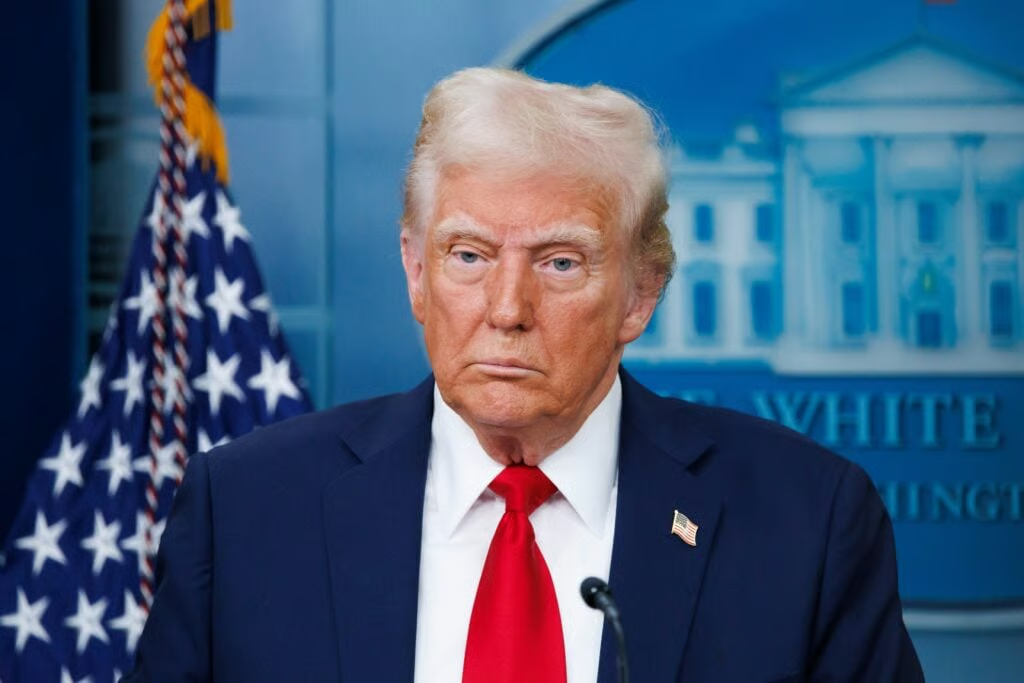
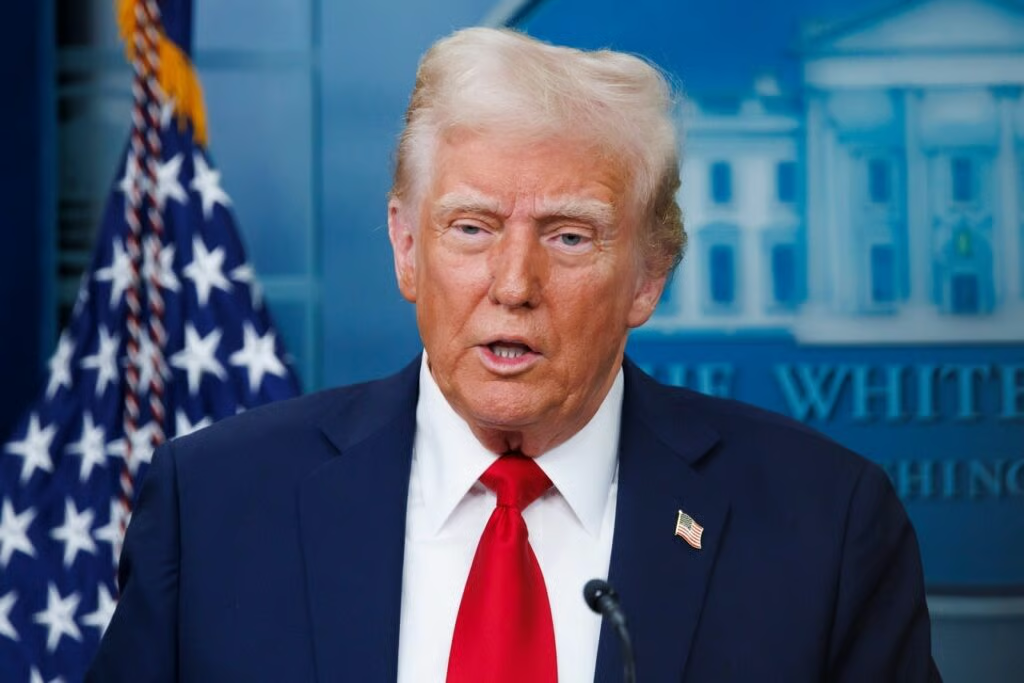
Here's how you know things are getting tense: when the prediction markets start taking bets on whether a country will let ships through a narrow strip of water. Iran said on Monday that it "will not negotiate under the 'shadow of threats'" and that "Iranians do not submit to force." This was followed by President Trump threatening Iran with "lots of bombs." So, you know, standard diplomatic back-and-forth.
The Strait of Hormuz, that critical chokepoint for global oil shipments, remains affected, with shipping restricted. Traffic has slowed significantly since the war began. And now people are literally betting on when Iran might agree to let ships pass freely again.
Polymarket, a prediction platform built on Polygon (POL) that lets users wager using the USDC (USDC) stablecoin, has a contract asking: "Iran agrees to unrestricted shipping through Hormuz in April?" Over $227,000 has been bet on this question so far. That's real money saying, "We want to know what happens next."
And what the money says isn't optimistic. Bettors have placed just a 23% probability on Iran opening up the strait this month. That's down by 20 percentage points from where it was. When the probability drops that much, it means people with skin in the game are getting more pessimistic, fast.
This isn't just theoretical—it's moving oil prices. Iran closed the Strait of Hormuz again on Saturday, citing the continued U.S. blockade of Iranian ports as a violation of the ceasefire. And oil reacted: WTI crude for May fell 1.72% to $88.07 per barrel, while the June contract declined to $86.38. Brent crude dropped 0.75% to $94.76. When a strait closes, traders notice.
Meanwhile, another contract on Polymarket is betting on when the U.S. and Iran might agree to a permanent peace deal. The markets aren't holding their breath for that either. The option for a deal by April 22 has only an 18% probability. It climbs to 39% for April 30, and peaks at 71% for June 30. So the smart money says if there's going to be a deal, it's more likely a summer project than a spring surprise.
What's interesting here is how prediction markets have become a kind of collective intelligence gauge for messy geopolitical situations. Instead of just watching pundits argue on TV, you can see where actual dollars (or in this case, digital dollars) are flowing. And right now, those dollars are saying: don't expect the Strait of Hormuz to open up soon, and don't expect peace to break out tomorrow. The markets are betting on more tension, not less.
.jpeg)