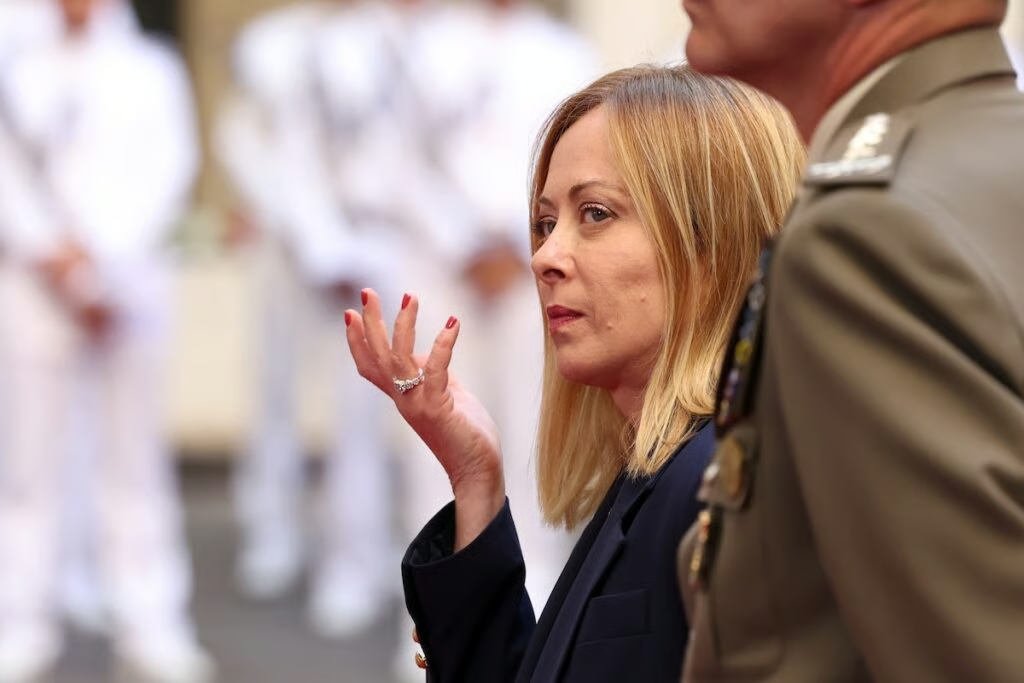
So, remember when President Donald Trump and Italian Prime Minister Giorgia Meloni were best buds? Yeah, that's over. On Tuesday, Trump called Meloni "unacceptable" and said he was "shocked" by her comments. It's the kind of diplomatic breakup you'd expect in a high school cafeteria, not between two allied nations, but here we are.
The whole thing started, as these things often do, with a phone interview. Trump was talking to the Italian newspaper Corriere della Sera and decided to unload on Meloni. He said she was "very different from what I thought" and faulted her for not supporting efforts to reopen the Strait of Hormuz, that crucial energy chokepoint Iran has been disrupting. Then he dropped the hammer: "I'm shocked by her. I thought she had courage, but I was wrong." Ouch.
This isn't just about shipping lanes, though. The dispute really kicked into high gear after Meloni condemned Trump's earlier remarks about Pope Leo XIV, calling them "unacceptable." Trump, never one to back down from a fight, fired back: "She is the one who is unacceptable." He then escalated dramatically, claiming "she does not care whether Iran has a nuclear weapon and would blow Italy up in two minutes if it had the chance." That's... quite an accusation to level at the leader of a NATO ally.
The irony here is thick enough to cut with a knife. Just a year ago, Trump was singing Meloni's praises as a strong leader and a key link between the European Union and his administration. Now? It's all "unacceptable" and "shocked." It's a vivid reminder of how quickly geopolitical friendships can turn sour when personal pique and policy disagreements collide.
Italy Circles the Wagons
Unsurprisingly, Italy isn't taking this lying down. Foreign Minister Antonio Tajani came out swinging, stating that Italy will continue to stand firmly with its allies. But he added an important caveat: "Western unity and steadfast allies of the United States, but this unity is built on mutual loyalty, respect, and frankness." Translation: We're allies, but you don't get to talk to our prime minister like that.
Tajani emphasized that Meloni will "always defend only and solely the interests of Italy." It's a clear message of sovereignty—Italy's foreign policy isn't for rent.
Defense Minister Guido Crosetto voiced his support on the social media platform X, writing that "Giorgia Meloni is a leader who has never feared saying what she thinks, especially when principles, respect, and identity are at stake." The Italian cabinet is clearly closing ranks, presenting a united front against what they see as an unwarranted personal attack from a powerful ally.
The Iran Problem at the Heart of It All
While the personal drama is juicy, the core of this fight is deadly serious: Iran. On Sunday, President Trump said the U.S. would block Iran-linked shipping in the Strait of Hormuz. This came after nuclear talks with Tehran failed and tensions escalated over access to the waterway, through which about a fifth of the world's oil passes.
Trump claimed Iran had not kept a pledge to open the strait and that the disruptions were affecting global shipping. His solution? Have the U.S. Navy act to stop vessels linked to Iran, remove alleged mines, and intercept ships accused of paying illegal tolls. It's a muscular, confrontational approach.
Vice President JD Vance framed the failed negotiations as more damaging for Iran than for the United States. He stressed that Washington's unwavering priority remains "preventing Iran from obtaining a nuclear weapon." "We've made very clear what our red lines are," he said. The message is simple: The U.S. is drawing a hard line on Iran, and it expects its allies to fall in line.
Meloni's apparent reluctance to fully endorse the U.S.'s aggressive posture in the Strait of Hormuz seems to be the policy crack that widened into this personal chasm. When you combine that with her defense of the Pope—a figure of immense cultural and moral significance in Italy—you get a perfect storm of diplomatic discord.
What we're watching now is a stress test for Western unity on a major security issue. It's one thing for allies to disagree in private. It's another for the U.S. President to publicly call the Italian Prime Minister "unacceptable" and question her courage. That kind of language makes it much harder for diplomats to paper over the differences later. For investors and markets, this kind of public rift between major economies introduces a fresh layer of political risk and uncertainty into an already volatile region. It's a reminder that in geopolitics, as in life, today's friend can be tomorrow's "unacceptable" shock.