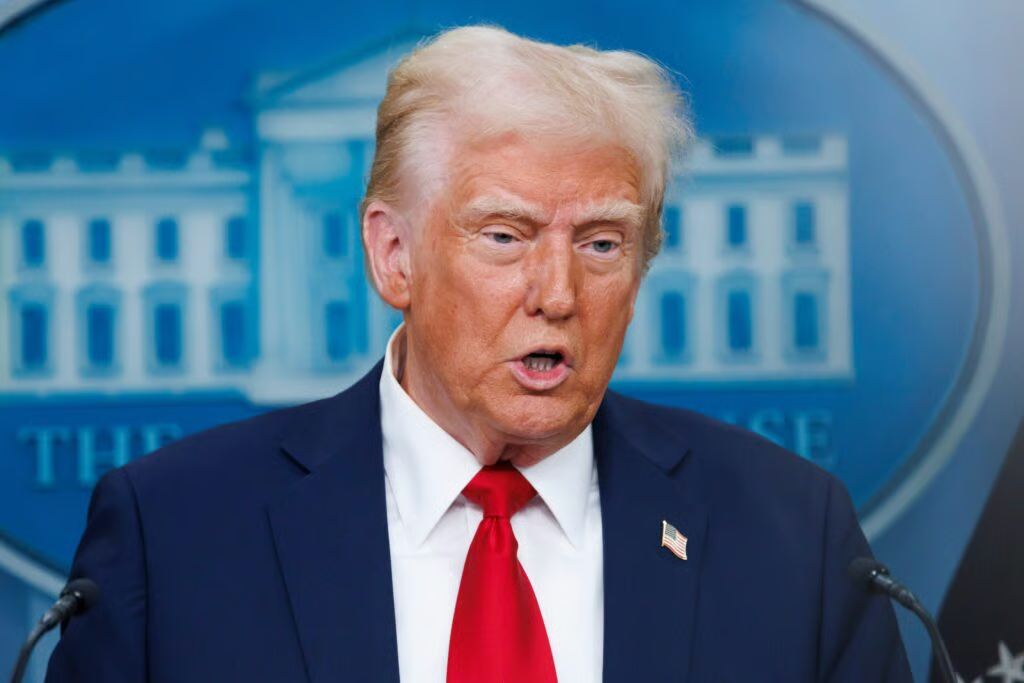
So here's a fun political-economic spat for your Saturday. Former Transportation Secretary Pete Buttigieg took to social media on Friday to make a pretty direct accusation: President Donald Trump, who promised to lower inflation, is actually driving it up.
"The president's number one promise was to drive inflation down. Instead, he drove it up," Buttigieg said in a post on X. He shared a video from a CNBC appearance where he doubled down, arguing the administration isn't just failing on inflation—it's actively making it worse.
"Inflation has tripled from just one month ago," he said, adding that it's now higher than when Trump took office. That's a strong claim, and Buttigieg didn't leave it hanging. He laid out a few reasons why he thinks it's happening.
First up: tariffs. Buttigieg argues that the administration's tariff policies are "actively making goods prices higher," estimating that typical families are paying significantly more as a result. It's a classic economics 101 point—if you tax imports, consumers often end up footing the bill.
Next, energy. He criticized decisions to halt certain transmission and generation projects, saying they're pushing energy costs upward. "Right now, we have an administration actively making prices higher," Buttigieg said. "They're actively making goods prices higher with tariffs … [and] actively making energy prices higher."
And then there's geopolitics. Buttigieg linked the inflation surge to the ongoing conflict involving Iran, calling it a key driver behind the spike in energy prices. It's a reminder that inflation isn't always a domestic policy story; sometimes it's a rockets-and-drones story.
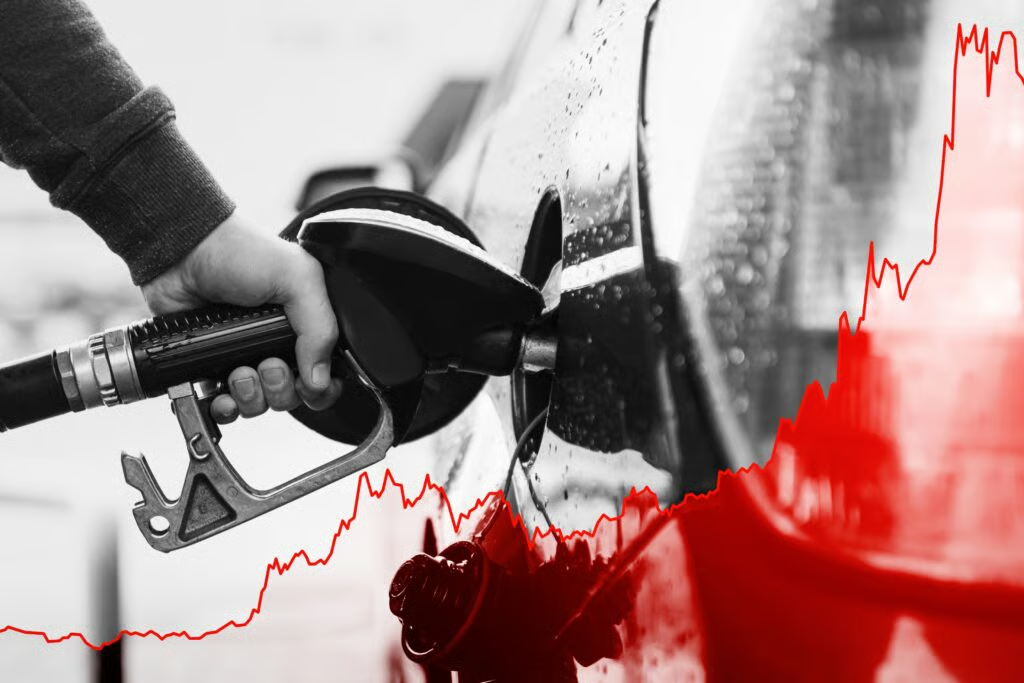
The data from March seems to back up the energy part, at least. U.S. inflation accelerated sharply, posting its fastest monthly gain since mid-2022. The Consumer Price Index rose 0.9% from February, driven largely by a more than 10% surge in energy prices. On an annual basis, inflation climbed to 3.3% from 2.4% the previous month.
But here's the nuance: core inflation—which strips out volatile food and energy prices—remained relatively contained. It was up just 0.2% month-over-month and 2.6% year-over-year. That suggests the March spike was heavily concentrated in energy, not a broad-based surge across the economy. So, depending on your perspective, you could say inflation is running hot because of energy shocks, or you could say the underlying trend is still fairly tame. Either way, it's becoming a political football, and Buttigieg just kicked it hard.