So, you want your employees back in the office? You could send a stern memo. Or, if you're JPMorgan Chase & Co. (JPM) and CEO Jamie Dimon, you could build them a $3 billion, 60-story, all-electric skyscraper in the heart of Manhattan and hope they show up.
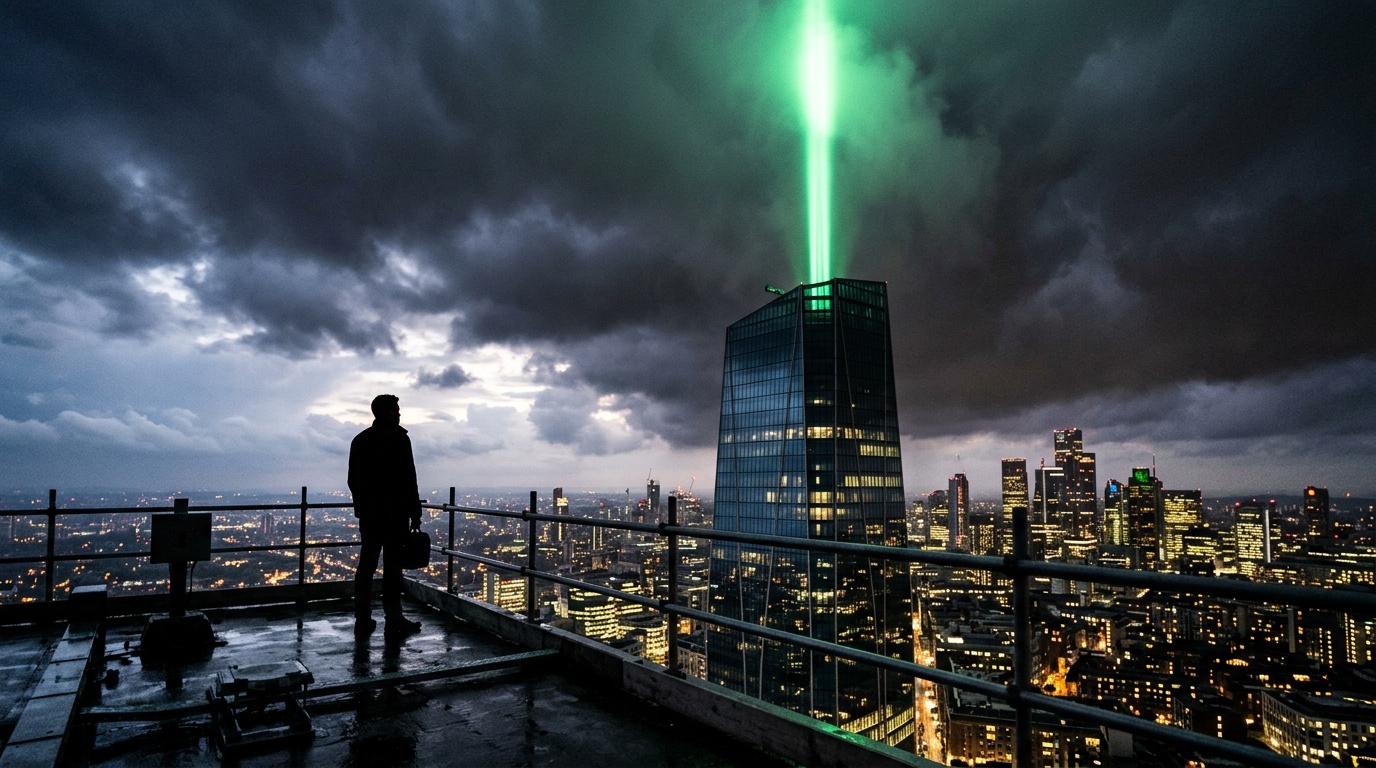
The bank's new headquarters, unveiled last month, is quite the statement piece. It replaces the old building on the same site at 270 Park Ave. and can house up to 10,000 people. But this isn't just a bigger box to put desks in. The bank's head of global corporate real estate, David Arena, told CNBC they had a specific goal in mind: "We tried to future-proof the building."
Future-proofing, in this case, means a few things. For starters, it's New York City's largest all-electric skyscraper, running entirely on renewable energy and built to hit net-zero operational emissions. It's also a massive bet on the commercial revival of New York itself.
The design comes from the firm of architect Norman Foster—the same mind behind Apple Inc.'s (AAPL) spaceship-like campus in California. Foster told the Wall Street Journal that "every level of this tower pushes those boundaries further than anything we've done before" in terms of blending leisure, entertainment, and lifestyle into a workspace.
And they've packed a lot in. There's a triple-height area called the "Exchange," designed as a hub for dining and large gatherings. There's a fitness and wellness center with yoga and cycling rooms, medical services, mother's rooms, and meditation areas. The idea, Arena said, is to make the office "commute-worthy." He described the whole project as a "recruitment tool" that mashes up hospitality and productivity under one very tall, very expensive roof.
This philosophy ties directly into what Jamie Dimon has been preaching lately. He's a big believer in the office as the essential Petri dish for creativity and mentoring. Speaking at a conference in Riyadh back in October, he made his case bluntly. "I'm not making fun of Zoom, but younger people are being left behind," Dimon said. "If you look back at your careers, you learned a little bit from the apprentice system. You were with other people who took you on a sales call or told you how to handle a mistake or something like that. It doesn't happen when you're in a basement on Zoom."
Dimon and other senior leaders were apparently deeply involved in the design process, with Arena calling the CEO the building's "master architect."
Structurally, the Foster + Partners design uses a fan-column and diagrid-bracing system that lifts the tower 80 feet above street level. This creates a plaza with 2.5 times more public space than the old site had. The focus is on natural light, openness, and green areas that connect the building to the city around it.
Then there's the tech. According to reports, getting in will require biometric access controls—think fingerprint or iris scans. Inside, AI-driven systems will automatically tweak the air quality, lighting, and temperature for efficiency and comfort. The building uses high-performance glass to cut down on heat gain and has water-recycling systems to conserve resources.
This flagship project is part of a broader overhaul. Over the last five years, JPMorgan has modernized 125,000 workstations across its global offices. Reuters reported the bank plans to upgrade another 75,000 over the next five years.
So, what's the takeaway? When most companies are still figuring out their hybrid work policies, JPMorgan has built a physical manifesto. It's a $3 billion argument that the future of work isn't distributed; it's centralized, collaborative, and now comes with a yoga room. Whether it actually gets 10,000 people to commute regularly remains to be seen, but they've certainly built a compelling reason to try.