So, International Business Machines (IBM) shares are having a good day. They're up a few percent, which for a big, established tech company is basically the equivalent of doing a backflip. The reason? The company just pulled back the curtain on its latest quantum computing hardware, and investors seem to like what they see.
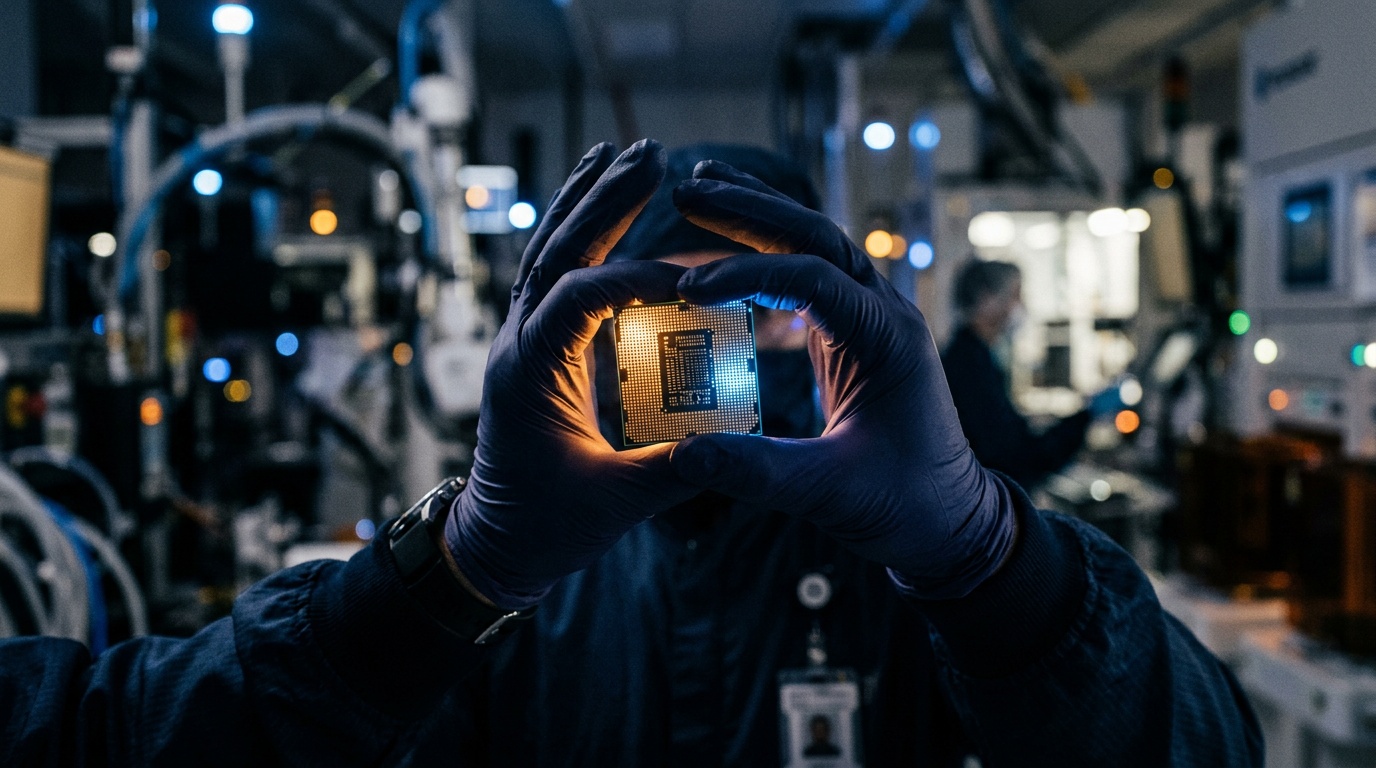
Let's talk about the shiny new toy: IBM Quantum Nighthawk. This is being billed as IBM's most advanced quantum processor yet. It packs 120 qubits, which are the basic units of quantum information, and they're all linked together with 218 of what IBM calls "next-gen tunable couplers." The company says this increased connectivity will let users run circuits that are 30% more complex than on its previous chip, all while keeping error rates low. The plan is to start delivering this thing to IBM's quantum computing users before the year is out.
Now, the big promise of quantum computing is something called "quantum advantage"—the point where a quantum computer can solve a real-world problem that's practically impossible for even the best classical supercomputer. IBM is putting a date on that. The company anticipates that the first cases of verified quantum advantage will be confirmed by the wider tech and scientific community by the end of 2026. That's not just IBM saying it works; that's the outside world agreeing.
But they're not stopping there. IBM's ultimate goal is to build the world's first large-scale, fault-tolerant quantum computer by 2029. To get there, they're working on an experimental processor called Quantum Loom, which is helping them rapidly deliver the necessary milestones. It's a pretty ambitious timeline.
"There are many pillars to bringing truly useful quantum computing to the world," said Jay Gambetta, Director of IBM Research. "We believe that IBM is the only company that is positioned to rapidly invent and scale quantum software, hardware, fabrication, and error correction to unlock transformative applications. We are thrilled to announce many of these milestones today."
Speaking of fabrication, that's another piece of news. IBM has moved the primary fabrication of its quantum processor wafers to an advanced 300mm wafer fabrication facility at the Albany NanoTech Complex in New York. This shift in manufacturing has already cut the time needed to build each new processor by at least half. It's also led to a ten-fold increase in the physical complexity of its quantum chips and lets them research multiple designs in parallel. In short, they're building these things faster and better.
Okay, so what does the market think? According to market data, the stock jumped about 3% on the news. As of publication, IBM shares were up 2.36% at $321.02, trading right near its 52-week high of $324.89.
From a technical analysis perspective, the stock is sitting pretty. It's trading approximately 14.5% above its 50-day moving average of $282.16 and about 22.6% above its 200-day moving average of $263.43. That positioning suggests a strong uptrend, with those moving averages acting as potential support if the stock pulls back. The relative strength index (RSI) is at 65.48, which indicates the stock is getting closer to overbought territory. That could mean some increased volatility as traders decide if this rally has more room to run or if it's time for a breather. Analysts note a calculated support level at $296.00, which could act as a floor.
In the grand scheme of the tech sector, with a market cap of around $288.95 billion, IBM is a mid-sized player. It's significantly smaller than giants like Microsoft (MSFT) and Nvidia (NVDA). That relative size might actually be an advantage, giving IBM more room to maneuver and grow as it tries to carve out its own niche in the fiercely competitive race for quantum supremacy.
So, there you have it. A day of big announcements from Big Blue, covering new hardware, manufacturing wins, and bold predictions for the future. The market's initial reaction is positive, betting that IBM's quantum bet is starting to pay off.