The Big Short legend is betting against the AI boom, but markets aren't exactly siding with him yet.
Burry's Latest Big Bet: The AI Giants Are Cooking the Books
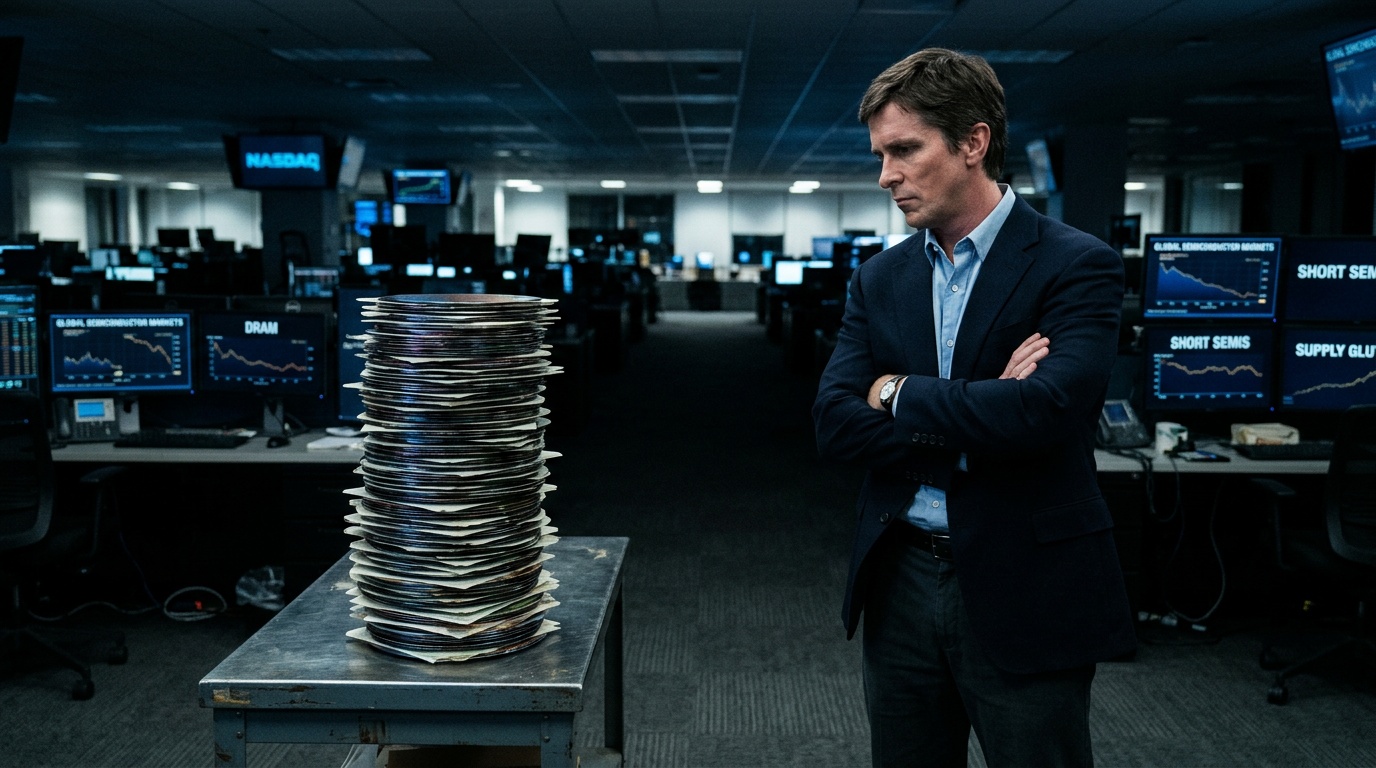
So, Michael Burry is at it again. You know, the guy who famously bet against the housing market before it all went sideways in 2008. His new target? The seemingly unstoppable AI boom. He's taking aim at the hyperscalers—the mega-cap tech names like Meta, Oracle, Microsoft, Amazon, and Google.
His argument is an accounting one, which is very on-brand for Burry. He thinks these companies are understating depreciation on their massive, and rapidly aging, compute infrastructure. All those data centers and servers powering AI aren't getting cheaper, and Burry believes the true cost isn't being reflected properly on the income statement. He's crunched the numbers and estimates that earnings across these firms could be overstated by as much as $176 billion from 2026 through 2028, with Oracle and Meta potentially being among the biggest offenders.
He's putting his money where his mouth is, of course. While his short thesis is focused on the broader cloud and AI infrastructure players, he's expressing it in the market by owning put options on Nvidia (NVDA) and Palantir Technologies (PLTR). It's a leveraged bet that the air is coming out of the AI balloon.
A Tale of Two Markets: Growth Stumbles, Mega Caps Stand Firm
Here's the interesting part: the market's recent action tells a somewhat split story. On one hand, Burry might feel vindicated looking at certain sectors. Growth stocks, particularly the more speculative names in tech and small caps, have pulled back sharply—some are down 20-30% from their highs. That's the kind of pain that makes contrarians like Burry nod knowingly.
But on the other hand, the broader market hasn't cracked. Why? Because value names and mega caps have been holding the line. The very largest companies, many of which Burry is criticizing, are still trading near record levels. They're keeping the major indices afloat.
Analysts see this not as a full-blown market breakdown, but as a sign of narrowing leadership. When volatility picks up and uncertainty rises, capital doesn't just vanish; it often flows toward perceived safety. That means companies with robust profitability and strong balance sheets. If interest rates do indeed stay higher for longer into 2026, this trend of money crowding into the biggest and most stable names could very well persist, regardless of Burry's depreciation concerns.
The Final Exam: Nvidia Earnings Are Next Week
The bulk of the Q3 earnings season is behind us, but there's one gigantic report left that everyone is watching: Nvidia (NVDA). It's arriving next week, and it's being framed as the ultimate test for the AI trade's momentum.
Investors will be scrutinizing it for two big things: signs that datacenter demand is reaccelerating and evidence that the company's impressive gross margins are holding strong. This report is the event that could make Burry's timing look brilliant or painfully early—again.
If Nvidia delivers another blowout quarter with stellar guidance, the AI narrative gets a fresh shot of adrenaline, and Burry's warning might seem premature. The market could easily shrug off his accounting arguments for another few quarters. But if the report shows any softening in guidance, or if there are hints of inventory building up in the channel, it could be the first concrete signal that Burry is onto something—that AI optimism has indeed gotten ahead of the actual business fundamentals.
So, is Michael Burry going to be wrong again? The market, with its narrow but resilient leadership in mega-caps, hasn't sided with him yet. But all eyes are on Nvidia to see if it provides the evidence he needs, or if it proves once more that betting against the most powerful market trend of the moment is a dangerous game.