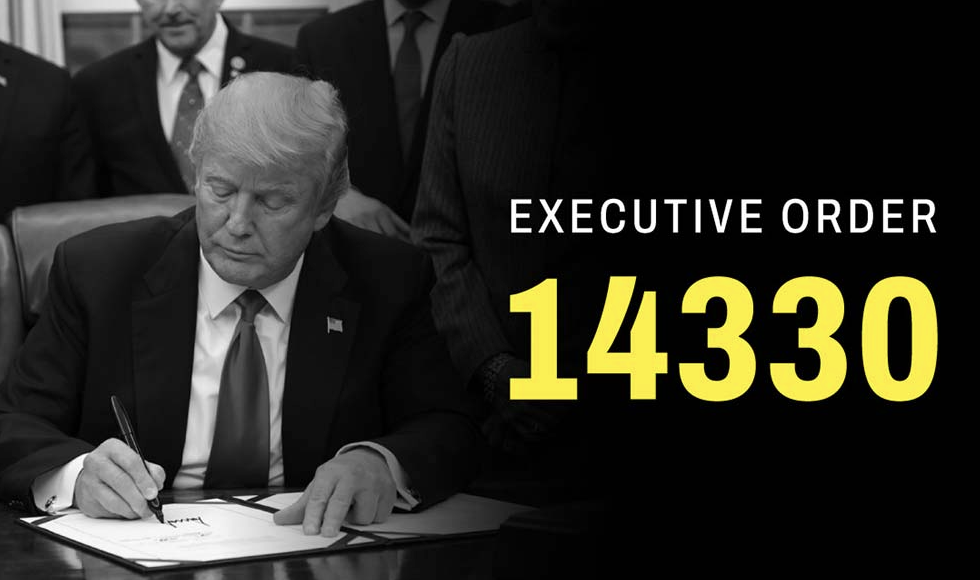
Sometimes policy doesn't just nudge markets. Sometimes it detonates them. In 2025, President Donald Trump turned three formerly speculative sectors into pillars of national industrial strategy with a flurry of executive orders that sent stocks into orbit. Nuclear energy, space exploration, and quantum computing went from niche plays to must-own positions as the administration signaled that Uncle Sam wasn't just watching anymore—he was betting.
The playbook was simple: strip away regulatory red tape, set aggressive timelines, and make it clear that federal dollars and contracts would flow to domestic players. Investors got the message loud and clear, and billions of dollars in market cap got reshuffled practically overnight.
Nuclear Power Gets a Green Light
On May 23, 2025, Trump signed four executive orders designed to kick-start a nuclear renaissance. The driving force? AI data centers and domestic manufacturing facilities were eating power faster than the grid could keep up, and nuclear was positioned as the only viable solution at scale.
The orders told the Nuclear Regulatory Commission to speed up reactor licensing timelines and directed the Department of Energy to get at least three advanced pilot reactors up and running by July 4, 2026. That's not a lot of time in nuclear years, where projects typically move at glacial speed.
Wall Street didn't wait around to see if it was possible. Uranium miners Uranium Energy Corp. (UEC) and Centrus Energy Corp. (LEU) jumped over 20% on the news alone. Small modular reactor darlings like Oklo, Inc. (OKLO) and NuScale Power Corp. (SMR) posted triple-digit gains throughout the year as investors realized the federal government had just validated their entire business model.
Large-scale operators benefited too. Constellation Energy Corp. (CEG) and Vistra Corp. (VST) hit record highs as the market priced in their ability to quickly upgrade existing nuclear fleets and potentially restart shuttered plants under the new streamlined framework. When regulatory risk evaporates, stock prices have a funny way of climbing.
Space Sector Goes Parabolic
If nuclear was hot, space was on fire. The total market capitalization of leading U.S. space companies went from roughly $450 billion at the start of 2025 to over $1.3 trillion by year-end. That's not a rally—that's a revaluation.
The momentum started building with an April 15 executive order mandating that federal contracts prioritize commercial solutions. Translation: NASA and the Pentagon would increasingly buy services from private companies rather than building everything in-house. That was music to investors' ears.
But the real rocket fuel came on December 18 with the Ensuring American Space Superiority order. This one set jaw-dropping milestones: return humans to the Moon by 2028, deploy nuclear reactors on the lunar surface, and streamline environmental reviews to accelerate launch cadences. The message was unmistakable—America was going back to space in a big way, and the private sector was coming along for the ride.
Pure-play companies like Intuitive Machines, Inc. (LUNR) and Rocket Lab Corp. (RKLB) posted double-digit single-day gains after the December announcement. Even defense contractors like L3Harris Technologies, Inc. (LHX) caught a bid as investors realized the opportunity extended well beyond launch vehicles into communications, navigation, and lunar infrastructure.
Quantum Computing's Wild Ride
Quantum computing had the most dramatic arc of the three sectors, complete with a speculative blow-off top and subsequent correction. On January 23, 2025, Trump signed an executive order prioritizing quantum research alongside AI to keep America ahead of China and other rivals. A follow-up order on May 23 directed the Department of Energy to tackle 20 specific technology challenges in the quantum space.
Those were important, but they didn't move markets the way October's rumor did. Reports surfaced that the administration was considering taking direct equity stakes in domestic quantum companies to prevent foreign acquisition. Suddenly, quantum stocks went vertical.
IonQ, Inc. (IONQ) surged to nearly $84. Rigetti Computing, Inc. (RGTI) and D-Wave Quantum, Inc. (QBTS) saw massive spikes as traders piled in, betting the government was about to become a shareholder. Then the Commerce Department issued a formal denial, and reality set back in. Quantum stocks pulled back hard by year-end.
Still, the policy framework remained supportive. The COINS Act passed in December 2025, restricting outbound investment to Chinese quantum firms and effectively ring-fencing the domestic ecosystem. Even after the selloff, the long-term narrative for U.S. quantum companies stayed intact: Washington wants winners, and it's willing to deploy regulatory moats to create them.
The De-Risking Effect
What tied all three sectors together was the administration's willingness to use executive power to de-risk investments that had previously been too speculative for mainstream portfolios. By shortening timelines, mandating commercial procurement, and signaling that these technologies were national priorities, Trump effectively told the market: these bets are safer now.
And when risk comes off, multiples expand. That's what happened across nuclear, space, and quantum in 2025. Whether these valuations hold depends on execution, but the policy foundation has been laid. For now, investors are betting that Washington's commitment is real—and pricing stocks accordingly.