






If you're trying to build the next generation of AI technology, would you rather deal with one set of rules or fifty? Silicon Valley investor Chamath Palihapitiya thinks the answer is obvious, and he's throwing his weight behind President Donald Trump's new executive order designed to wipe out state-level artificial intelligence regulations in favor of a single national framework.
Chamath Palihapitiya Says Patchwork AI Laws Are Killing America's Tech Edge Over China
MarketDash
Venture capitalist Chamath Palihapitiya is backing Trump's executive order to override state AI regulations, warning that fragmented rules are choking off investment and handing advantage to unified competitors like China.
Get Market Alerts
Weekly insights + SMS alerts
The Investment Argument
Palihapitiya isn't making a philosophical point about federalism here. His argument is purely economic: conflicting state regulations are investment killers. Writing on X shortly after the White House announcement, the "All-In" podcast co-host put it bluntly: "Playing a game with 50 sets of rules isn't viable. Having to do so would slow down investment."
And according to Palihapitiya, the numbers justify alarm. He notes that AI investments currently represent roughly half of American GDP, which means regulatory friction isn't just an inconvenience for tech companies. It's a potential drag on the entire economy. The executive order, in his view, creates the streamlined environment these massive capital flows need to keep moving.
The Trump administration's directive specifically targets what it calls "excessive State regulation," establishing federal standards that would override the patchwork of different state approaches. For venture capitalists navigating where to deploy billions in capital, this kind of clarity matters.
The China Factor
But Palihapitiya's endorsement goes beyond domestic economics. He shared a clip of Trump signing the order with a pointed quote: "We have to be unified. China is unified." This gets at the geopolitical dimension that's driving much of this policy shift.
The executive order explicitly frames AI leadership as a national security issue, warning that America is locked in a "race with adversaries for supremacy." When your competitor operates under a single centralized system while you're managing fifty different regulatory regimes, the thinking goes, you're starting every sprint with ankle weights on.
To enforce this new unified approach, the Department of Justice is launching an AI Litigation Task Force. Its mission? Sue states whose AI laws conflict with federal policy or create burdens on interstate commerce. That's not a suggestion—it's the government actively going after states that don't fall in line.
Who Wins and Who's Angry
The biggest winners here are pretty obvious: major AI players like OpenAI, Alphabet Inc. (GOOGL), and Meta Platforms Inc. (META) have been lobbying hard for exactly this outcome. Federal preemption of stricter state laws gives them regulatory breathing room and eliminates the compliance nightmare of operating under dozens of different legal frameworks.
Predictably, not everyone is celebrating. Senator Bernie Sanders came out swinging, calling the order a gift to "oligarchs" that lets tech billionaires operate without meaningful oversight at the expense of workers. The criticism highlights the tension at the heart of this debate: Is streamlined regulation necessary for innovation and economic growth, or is it just deregulation dressed up in competitiveness rhetoric?
Investment Options in AI
For investors looking to position themselves in the AI space, here are several tech-focused ETFs to consider:
| ETF Name | YTD Performance | One Year Performance |
| iShares US Technology ETF (IYW) | 27.62% | 23.93% |
| Fidelity MSCI Information Technology Index ETF (FTEC) | 25.16% | 22.07% |
| First Trust Dow Jones Internet Index Fund (FDN) | 12.16% | 6.78% |
| iShares Expanded Tech Sector ETF (IGM) | 30.48% | 26.97% |
| iShares Global Tech ETF (IXN) | 27.14% | 24.80% |
| Defiance Quantum ETF (QTUM) | 39.73% | 54.58% |
| Roundhill Magnificent Seven ETF (MAGS) | 23.14% | 17.68% |
Whether you think this executive order represents pragmatic economic policy or corporate capture probably depends on where you sit. But one thing's clear: the battle over who gets to regulate AI just shifted dramatically toward Washington.
More News
Trump Warns Iran of Economic Collapse or Worse, Tehran Threatens US Bases as Brent Sits at $102
Trump Wants to Rename AI Because 'Artificial Intelligence' Is 'Very Ineloquent' — And He's Letting the Internet Vote
Elizabeth Warren Says 'We Will Win in November' — What Crypto Bettors Think About Democrats' Midterm Odds

US-Greenland Deal Opens a Rare Earth Frontier, But the Arctic Doesn't Do Easy
Hakeem Jeffries Torches Trump and Republicans Over Rising Gas, Grocery, Housing and Health Costs: 'America Is Way Too Expensive'

Elissa Slotkin Calls for 'Legal, Vetted Immigrants' to Help US Economy: 'We're Getting Older'
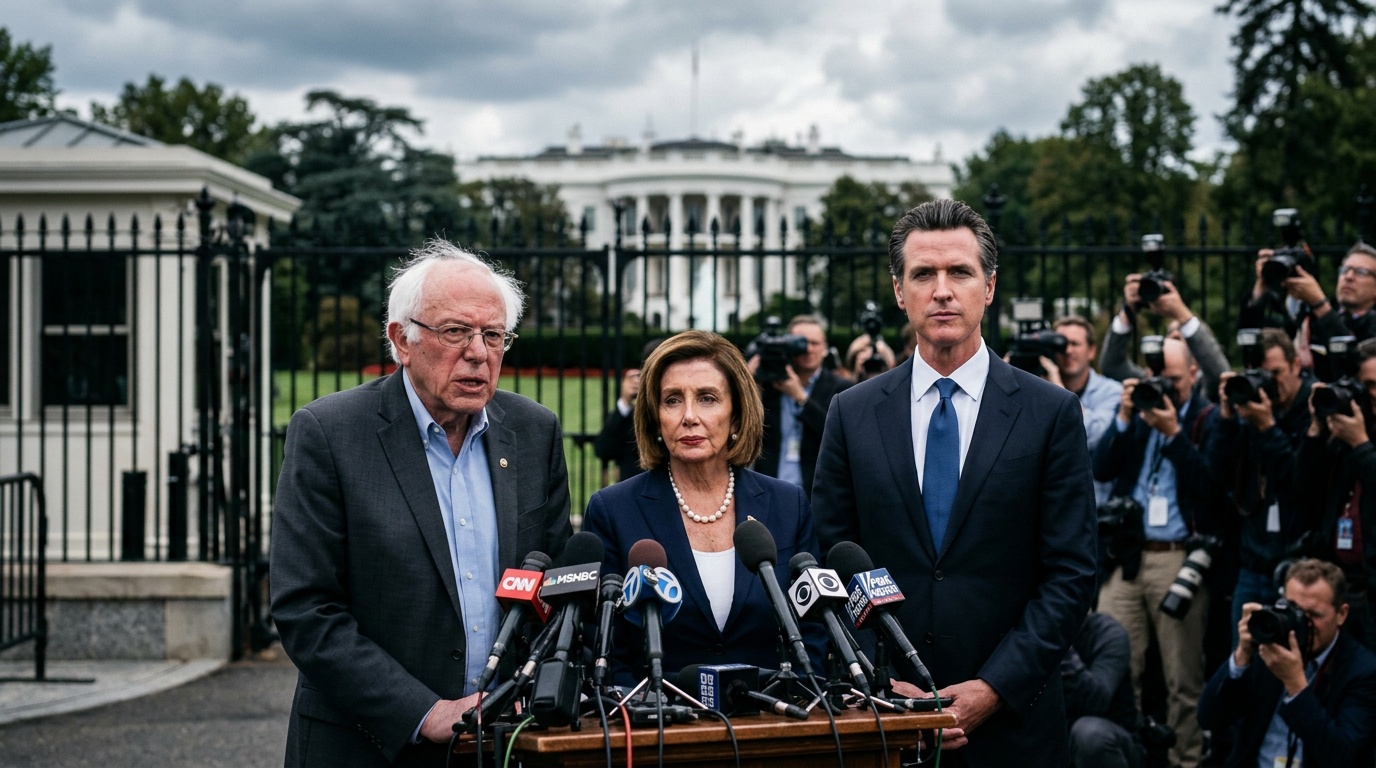
Sanders, Pelosi and Newsom Blast Trump's White House Press Ban: 'We Will Not Accept Authoritarianism'

Macron Meets Carney Amid Trump Map Row, Sanders Slams Trump's Ban On Reporters and More: This Week in Politics
Get Market News Alerts
Real-time alerts on price moves, news, and trading opportunities.
Join 20,000+ investors. No spam, ever.
Featured Articles
View all newsTrump Warns Iran of Economic Collapse or Worse, Tehran Threatens US Bases as Brent Sits at $102
By MarketDash
September 21, 2026

He Found Rolls-Royce Below $2. Now He’s Found His Second Unicorn. (Ad)
By The Oxford Club
Trump Wants to Rename AI Because 'Artificial Intelligence' Is 'Very Ineloquent' — And He's Letting the Internet Vote
By MarketDash
September 21, 2026
Elizabeth Warren Says 'We Will Win in November' — What Crypto Bettors Think About Democrats' Midterm Odds
By MarketDash
September 21, 2026
US-Greenland Deal Opens a Rare Earth Frontier, But the Arctic Doesn't Do Easy
By MarketDash
September 20, 2026
Hakeem Jeffries Torches Trump and Republicans Over Rising Gas, Grocery, Housing and Health Costs: 'America Is Way Too Expensive'
By MarketDash
September 20, 2026
Elissa Slotkin Calls for 'Legal, Vetted Immigrants' to Help US Economy: 'We're Getting Older'
By MarketDash
September 20, 2026
Sanders, Pelosi and Newsom Blast Trump's White House Press Ban: 'We Will Not Accept Authoritarianism'
By MarketDash
September 20, 2026