






YouTube veteran Hank Green has done something most financial advisors tell you never to do: he's actively abandoning the classic "just buy the S&P 500" strategy. And he's doing it loudly, in front of millions of followers, with a very specific warning about Nvidia Corp. (NVDA) and what he calls speculative AI bubble mechanics.
YouTube Star Hank Green Reshuffles Retirement Portfolio to Dodge AI Bubble He Says Is Inflating Nvidia
MarketDash
Millionaire YouTuber Hank Green is moving 25% of his retirement money away from the S&P 500, warning his Gen Z audience that concentrated bets on Nvidia and AI giants could end badly. Here's what he's buying instead.
Get CoreWeave Inc - Class A Alerts
Weekly insights + SMS alerts
Abandoning the Passive Playbook
For years, Green preached the gospel of index fund investing—boring, simple, effective. But in recent videos to his massive online audience, he's announced a significant portfolio pivot. The problem? The S&P 500 isn't as diversified as it used to be, and he's not comfortable with where the weight has shifted.
Green is moving 25% of his S&P 500 retirement holdings into other assets, explicitly to hedge against what he sees as an overheated AI sector that's dominating the index in ways that make traditional passive investing riskier than it's supposed to be.
When Diversification Stops Diversifying
In an August 2025 video, Green broke down why his usual "low stress" approach needed rethinking. Index funds are supposed to spread risk across the entire U.S. economy. But when tech valuations surge the way they have, the math gets lopsided fast.
Green pointed out that nearly 40% of the S&P 500's value now sits in just 10 stocks. Nvidia (NVDA) alone makes up 7% of the index. "I worry that my money is concentrated in a sector that is speculative," he said, describing the AI boom as "potentially a bubble." When you buy a broad market index fund today, you're inadvertently making a huge bet on AI's uncertain future.
Talking Straight to Gen Z Skeptics
Green also took time to address the growing sentiment among younger investors that the stock market is just a "Ponzi scheme." Speaking to Fortune on December 7, he pushed back hard on that cynicism while acknowledging the market is currently overvalued. The key distinction? Real value creation still underpins legitimate investing, even if prices get frothy.
"A lot of people think that investing is like getting a Robinhood account and buying Tesla," Green said. He urged his audience to open standard brokerage accounts for low-cost funds or use 401(k)s instead of chasing gamified trading apps. Legitimate investing, he stressed, is often boring—and that's the point.
Circular Money Flows That Look Like Bubble Mechanics
Green's concerns intensified in an October 2025 video after he dug into the financial relationships between Nvidia and its major customers, including OpenAI and data center operators like CoreWeave Inc. (CRWV).
He highlighted a troubling pattern: Nvidia invests in or finances companies, which then turn around and use those funds to purchase Nvidia's chips. The result is revenue figures that look strong but may be artificially inflated through circular cash flows.
"Nvidia seems to think it would be better for our share price if we found ways to artificially increase the demand for our chips," Green observed, calling this setup "bubble mechanics." It's the kind of self-reinforcing loop that can look brilliant on the way up and devastating on the way down.
The Rebalanced Portfolio
So what's Green doing with that 25% he's pulling out of the S&P 500? He's spreading it across four different asset classes to reduce his AI exposure and get genuine diversification back.
His new allocation includes an S&P 500 value index fund that excludes stocks with high price-to-earnings ratios, mid-cap stocks, small-cap stocks, and an international index fund for exposure beyond U.S. markets.
For context, the SPDR S&P 500 ETF Trust (SPY) and Invesco QQQ Trust ETF (QQQ), which track the S&P 500 and Nasdaq 100 respectively, have gained 17.28% and 22.59% year-to-date. On Friday, SPY closed up 0.19% at $685.69, while QQQ advanced 0.41% to $625.48.
Green isn't saying abandon stocks or panic. He's saying the classic advice to "just buy the index" needs an asterisk when the index itself has become a concentrated bet on one speculative sector. Whether he's right about the AI bubble remains to be seen, but his willingness to put his money where his mouth is—and explain it clearly to a younger generation—is worth paying attention to.
More News

Trump Warns Iran of Economic Collapse or Worse, Tehran Threatens US Bases as Brent Sits at $102
Trump Unveils 'AI Force' and Plans New 'AI Czar' as Tech Leaders Urge Caution
Hakeem Jeffries Torches Trump and Republicans Over Rising Gas, Grocery, Housing and Health Costs: 'America Is Way Too Expensive'

US-Greenland Deal Opens a Rare Earth Frontier, But the Arctic Doesn't Do Easy
Elizabeth Warren Tells Congress to Stop Talking About AI and Actually Regulate It
Elissa Slotkin Calls for 'Legal, Vetted Immigrants' to Help US Economy: 'We're Getting Older'
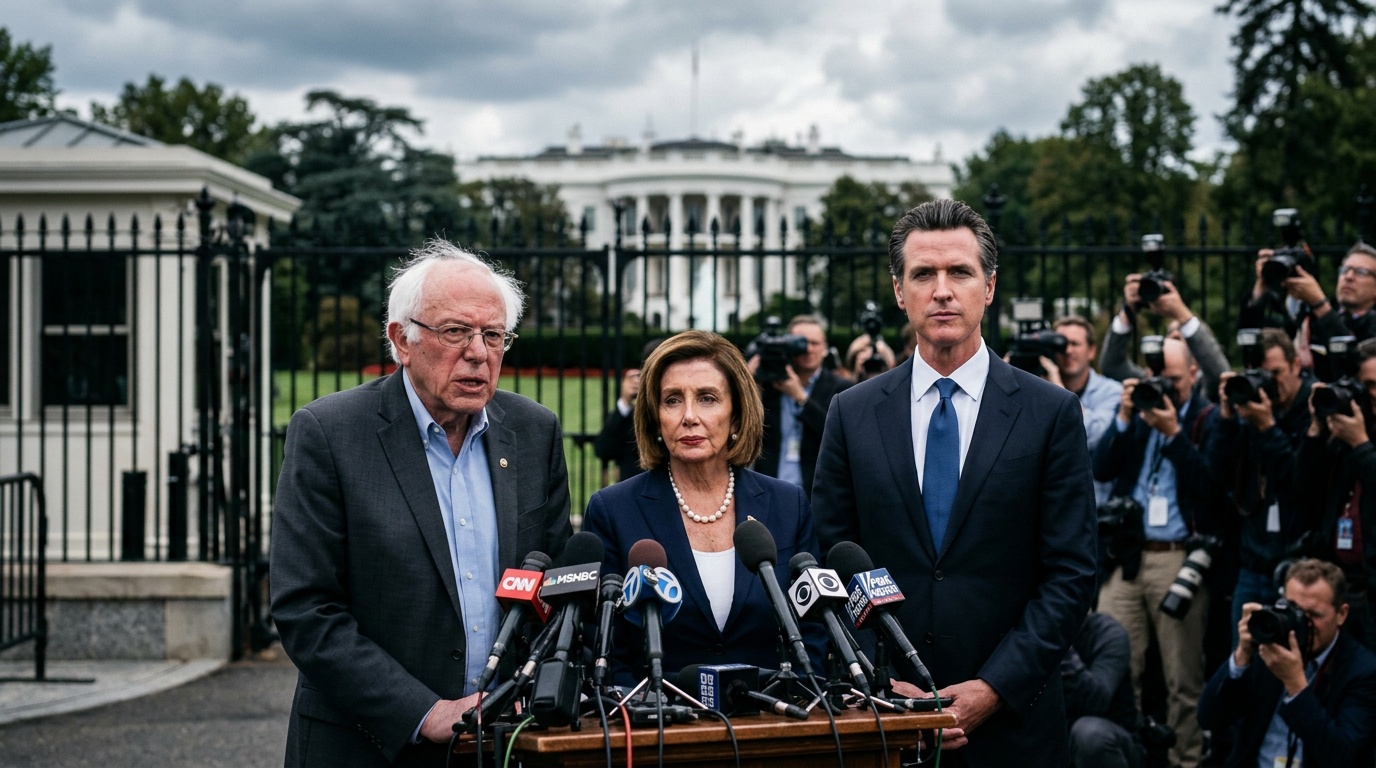
Sanders, Pelosi and Newsom Blast Trump's White House Press Ban: 'We Will Not Accept Authoritarianism'

Macron Meets Carney Amid Trump Map Row, Sanders Slams Trump's Ban On Reporters and More: This Week in Politics
Get CoreWeave Inc - Class A Alerts
Real-time alerts on price moves, news, and trading opportunities.
Join 20,000+ investors. No spam, ever.
Featured Articles
View all newsTrump Warns Iran of Economic Collapse or Worse, Tehran Threatens US Bases as Brent Sits at $102
By MarketDash
September 21, 2026

He Found Rolls-Royce Below $2. Now He’s Found His Second Unicorn. (Ad)
By The Oxford Club
Trump Unveils 'AI Force' and Plans New 'AI Czar' as Tech Leaders Urge Caution
By MarketDash
September 20, 2026
Hakeem Jeffries Torches Trump and Republicans Over Rising Gas, Grocery, Housing and Health Costs: 'America Is Way Too Expensive'
By MarketDash
September 20, 2026
US-Greenland Deal Opens a Rare Earth Frontier, But the Arctic Doesn't Do Easy
By MarketDash
September 20, 2026
Elizabeth Warren Tells Congress to Stop Talking About AI and Actually Regulate It
By MarketDash
September 20, 2026
Elissa Slotkin Calls for 'Legal, Vetted Immigrants' to Help US Economy: 'We're Getting Older'
By MarketDash
September 20, 2026
Sanders, Pelosi and Newsom Blast Trump's White House Press Ban: 'We Will Not Accept Authoritarianism'
By MarketDash
September 20, 2026