Your Retirement Needs 25 Times Your Spending, Not One Hot Stock
MarketDash Editorial Team
Author
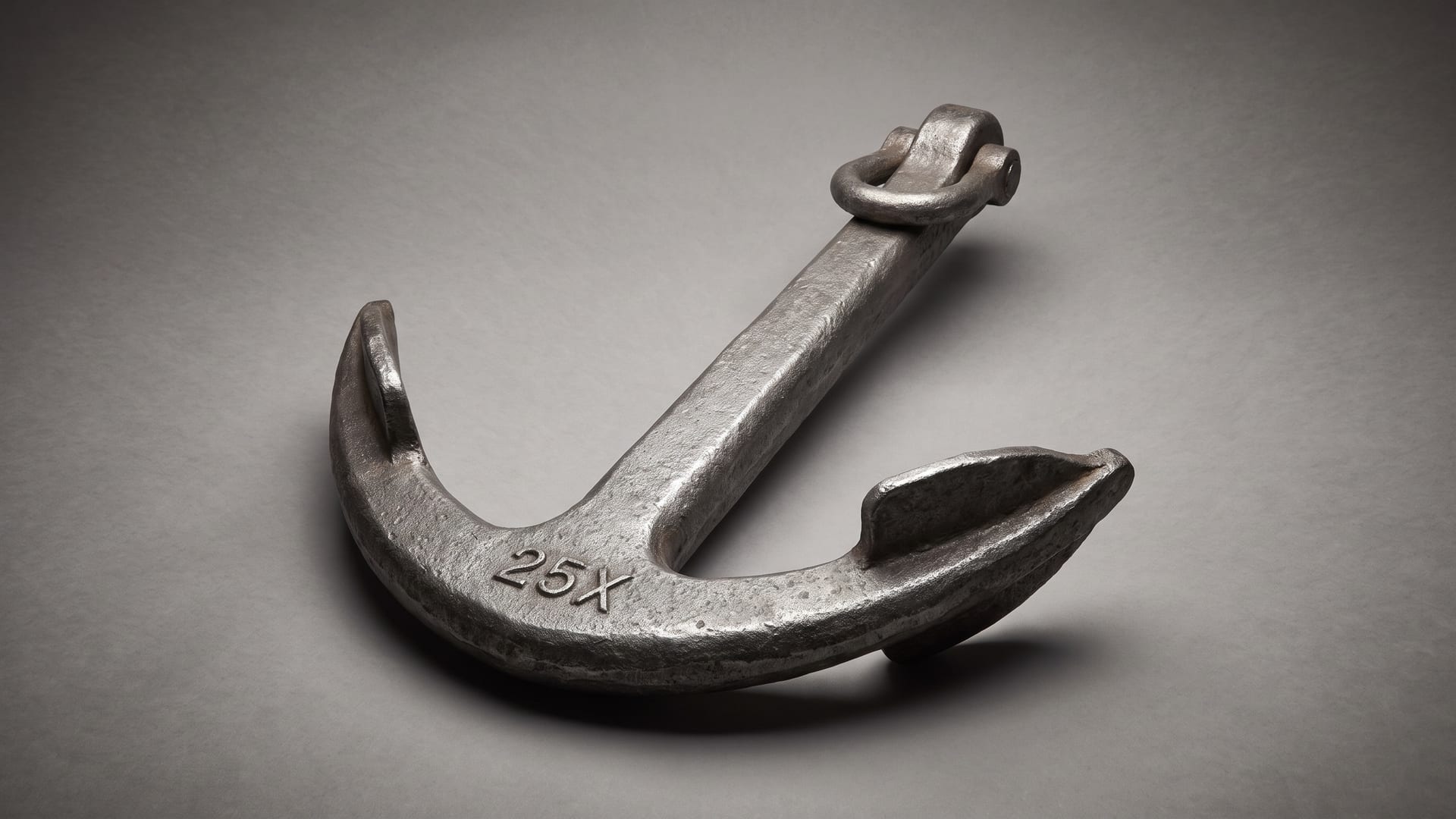
One stock is a bet, not a plan
Decide the largest slice of your money you will ever let sit in a single company, and make it small. Small enough that losing every dollar of it would be annoying rather than life-changing. Then write it down somewhere you will see it while you are excited, like the inside of the kitchen cabinet where the snacks live.
Here is why the cap matters more than which stock you pick. With a small cap, the worst case has a floor. If the company goes to zero, you lose that slice and nothing else. Your plan survives. If the position is most of your savings and it goes to zero, you did not have a portfolio. You had a bet with a story attached, and the story was told to you by a person at a barbecue who was very animated.
A portfolio exists to pay you later. The 4% rule, from research in the 1990s by William Bengen and the Trinity study, says you can withdraw 4% of a stock-and-bond portfolio in your first year of retirement, raise that amount with inflation, and in most historical periods the money lasted at least 30 years. Same idea from the other direction: to spend $50,000 a year you need about $1.3 million, roughly 25 times your yearly spending. That machine is built out of many small pieces. Yank one piston out and hope is not a repair strategy.
The boring math already works
You do not need a hero stock. You need time and a habit.
Start with $50,000 and add $500 a month for 20 years. At 8% a year, before taxes and fees and not adjusted for inflation, you end with about $541,000. You put in about $170,000. The gap, about $371,000, came from the market doing its thing while you did yours. Nobody had to be brilliant. The rule of 72 makes the same point in one line: divide 72 by a yearly return and you get roughly the years it takes money to double. At 8% a year, about 9 years.
Now consider what a concentrated position is competing against. Not a lazy alternative, but a plan that already doubles your money several times over if you leave it alone. The hot stock has to beat that, and it has to beat it after you have already told everyone at the barbecue how well it is going.
Fees you can see, blowups you can't
People will spend an afternoon comparing fund fees, then put an entire bonus into one company because a stranger on the internet used the word "moat."
Take that same $50,000 plus $500 a month at 8% a year, and charge a yearly fee. At 0.05% you end with about $537,000. At 1% you end with about $462,000. The higher fee costs you about $74,000. That is real money, and it is worth arguing about.
But notice what a fee is: a small, certain, visible drag. Concentration is the opposite. It is a large, uncertain, invisible risk that arrives without an appointment. You can compare fees until you are bored. You cannot comparison shop the chance that one company's accounting department is having a creative season.
So be consistent. If a 1% fee is worth switching funds over, a position big enough to rewrite your retirement date deserves at least the same suspicion.
Write the number down before the tip arrives
Rules made in calm weather hold up in a storm. Rules made in a storm are just feelings with a spreadsheet.
So the cap gets written before the tip, not after. A few excuses you will hear, mostly from yourself:
"It's only a small part of my money." Then it is not the problem, and you can stop reading this section.
"I'll sell when it comes back." That is not an exit plan. That is a plan to keep holding whatever is going down.
"The taxes would be brutal." Real, but check the size. Money pulled from a traditional IRA or 401(k) before age 59½ usually means income tax plus a 10% penalty, with some exceptions. Roth accounts are funded with money that was already taxed, so qualified withdrawals in retirement are tax free. Taxes are a percentage of what is left. A company that goes to zero leaves nothing to tax. Do not let a tax bill talk you into a bigger bet than you would otherwise make. Trim over a few years if you must, but trim.
When the slice grows past your cap, sell it back down. That is the whole discipline. It feels dumb while the stock is climbing, which is exactly how you know it is working.
Check it yourself in MarketDash
Before you add to a big position, find out whether the price already assumes everything goes right. Open the stock page and read the Intrinsic Value section. It shows an estimate built from a discounted cash flow, which is a plain guess at what future cash is worth in present-day dollars, blended with a comparison to similar companies. If the share price sits well above that estimate, you are paying for perfection, and perfection is a fragile thing to concentrate in.
Then scroll to the Wall Street section. Look at the range of analyst price targets and, just as important, the dates on them. An old target is a stale opinion, not a promise. If the upside numbers are thin and clustered, the easy money has been made by someone else.
Want to see what normal looks like first? Open the Screener, load the "MarketDash Undervalued" preset, and add the PE Ratio and Intrinsic Value % columns. The PE ratio is the share price divided by a year of profit per share. Spend a few minutes there and the exciting stock will start to look like one of many, which is exactly what it is.
Then close the app and write the cap down. Ink, not memory.
Get Market News Alerts
Real-time alerts on price moves, news, and trading opportunities.
Join 20,000+ investors. No spam, ever.
Featured Articles
View all news
Iran's Supreme Leader Mojtaba Khamenei Warns of 'Immediate' Response If Trump Resumes Strikes After Midterms

Trump Says Iran Talks Are 'Going Fine,' Then Casually Mentions the One or Two Sites Left To 'Take Care Of'

Trump's White House Is Already Planning for a Democratic Congress — Here's the Playbook

Mark Carney Says Canada Can Outlast Trump on Trade: 'We Have Options'
Bernie Sanders Says GOP Megadonors Dropped $1.6 Billion 'Trying To Buy' The 2026 Elections

Steve Bannon Sees a GOP 'Civil War' Coming Right After the Midterms

Mike Johnson Tells Voters to Remember What Democrats 'Actually Did' on Inflation, Border and Crime