






Nvidia Corp. (NASDAQ:NVDA) has an AI investment portfolio that would make almost any venture capitalist jealous. Nearly $10 billion in cumulative unrealized gains is the kind of scorecard that gets framed and hung on the wall. But behind that shiny number sits a less comfortable one: $2.2 billion in cumulative unrealized losses and impairments. And the latest quarter showed a sharp deterioration in private investment marks.
Nvidia's $10 Billion Paper Gain Comes With a $2.2 Billion Warning Label
MarketDash
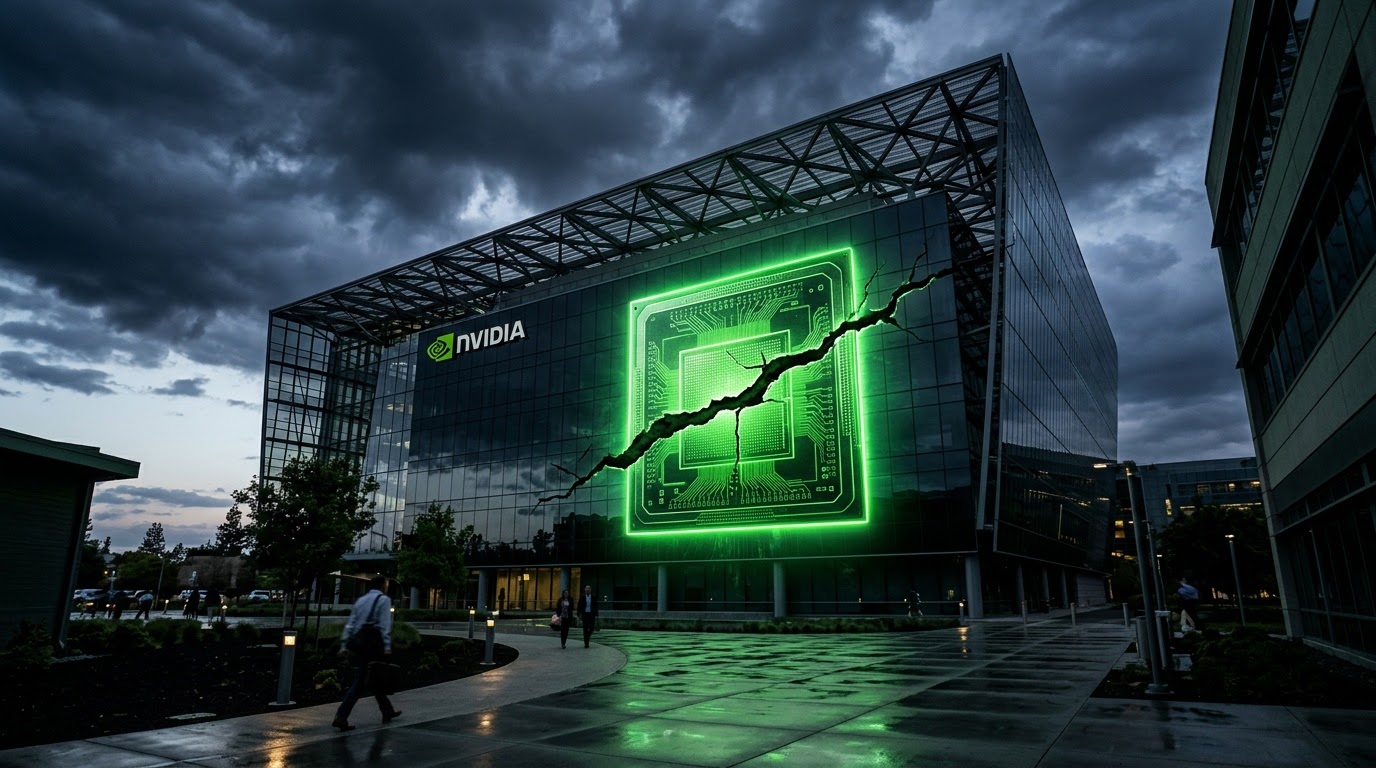
Nvidia's private investment portfolio swelled to $61.65 billion, but $2.2 billion in cumulative losses and impairments, including a $1 billion net hit last quarter, show the AI bet has a downside.
Get NVIDIA Alerts
Weekly insights + SMS alerts
A $62 Billion Private Portfolio
Nvidia's privately held securities reached a carrying value of $61.65 billion as of Oct. 25, nearly three times the $22.25 billion recorded at the start of its fiscal year, according to its third-quarter supplemental financial disclosure.
The expansion reflects how aggressively the chipmaker is deploying capital across the AI ecosystem. Nvidia added $46.4 billion in net investments over the first nine months of fiscal 2027, while unrealized gains contributed another $8.3 billion. Reclassifications, primarily following public-market trading and acquisitions, reduced the balance by $13.3 billion.
The company disclosed $9.9 billion in cumulative gross unrealized gains on its non-marketable equity securities in the footnotes. That is a paper-gain figure, not cash profit from investments sold. Nvidia also reported $2.2 billion in cumulative gross unrealized losses and impairments.
The $2 Billion Warning
The latest quarter offered a more immediate reminder of the risks. Nvidia recorded $1.8 billion in impairment charges and unrealized losses on private securities during the three months ended Oct. 25, against $804 million in unrealized gains. The result was a $1 billion net loss on non-marketable equity securities.
That contrasts with the $2.8 billion in net gains Nvidia recorded on publicly held equity securities during the same quarter. Together, the two categories produced $1.8 billion in net gains from equity securities.
The disclosures do not identify which private investments drove the impairments. Investors therefore cannot conclude that a particular AI company or startup caused the losses. But the figures show that even as Nvidia benefits from the AI boom, its private-market investments are not immune to valuation resets.
Investment Takeaway
Nvidia's investment strategy has a clear strategic logic: backing frontier AI labs, infrastructure financiers and other private companies can strengthen the ecosystem buying and deploying its chips. But it also exposes the company to businesses whose valuations and funding needs may move sharply as the AI buildout evolves.
The next signal for investors is whether Nvidia can keep growing the portfolio's value without a sustained rise in impairments. Its $9.9 billion in cumulative paper gains shows the upside so far; the latest quarter's $1 billion net loss shows why the other side of that ledger deserves attention.
More News
Dow Drops as Nvidia Slips After Earnings, Dollar Hits 19-Month High: Stock Market Today

Nvidia's $105 Billion OpenAI Bet Comes With a 20-Year Catch

Wall Street Says the AI Trade Is Dead. ETF Investors Are Quietly Buying the Dip
Nvidia's $10 Billion Paper Gain Comes With a $2.2 Billion Warning Label

Bitcoin's Next Stop: $54,000, $38,000, Or A Surprise Rebound?

Lowe's Q3 Beat Came With a Tariff Refund Twist, and JPMorgan Says 2026 Is the Clean Slate for 2027

Target's $301 Million Tariff Refund 'Flattered' Earnings, JPMorgan Says

Newmont Stock Sinks 6% as Gold Loses Its Shine Below $3,800
Get NVIDIA Alerts
Real-time alerts on price moves, news, and trading opportunities.
Join 20,000+ investors. No spam, ever.
Featured Articles
View all newsDow Drops as Nvidia Slips After Earnings, Dollar Hits 19-Month High: Stock Market Today
By MarketDash
November 18, 2026
Nvidia's $105 Billion OpenAI Bet Comes With a 20-Year Catch
By MarketDash
November 18, 2026
Wall Street Says the AI Trade Is Dead. ETF Investors Are Quietly Buying the Dip
By MarketDash
November 18, 2026
Bitcoin's Next Stop: $54,000, $38,000, Or A Surprise Rebound?
By MarketDash
November 18, 2026
Lowe's Q3 Beat Came With a Tariff Refund Twist, and JPMorgan Says 2026 Is the Clean Slate for 2027
By MarketDash
November 18, 2026
Target's $301 Million Tariff Refund 'Flattered' Earnings, JPMorgan Says
By MarketDash
November 18, 2026
Newmont Stock Sinks 6% as Gold Loses Its Shine Below $3,800
By MarketDash
November 18, 2026