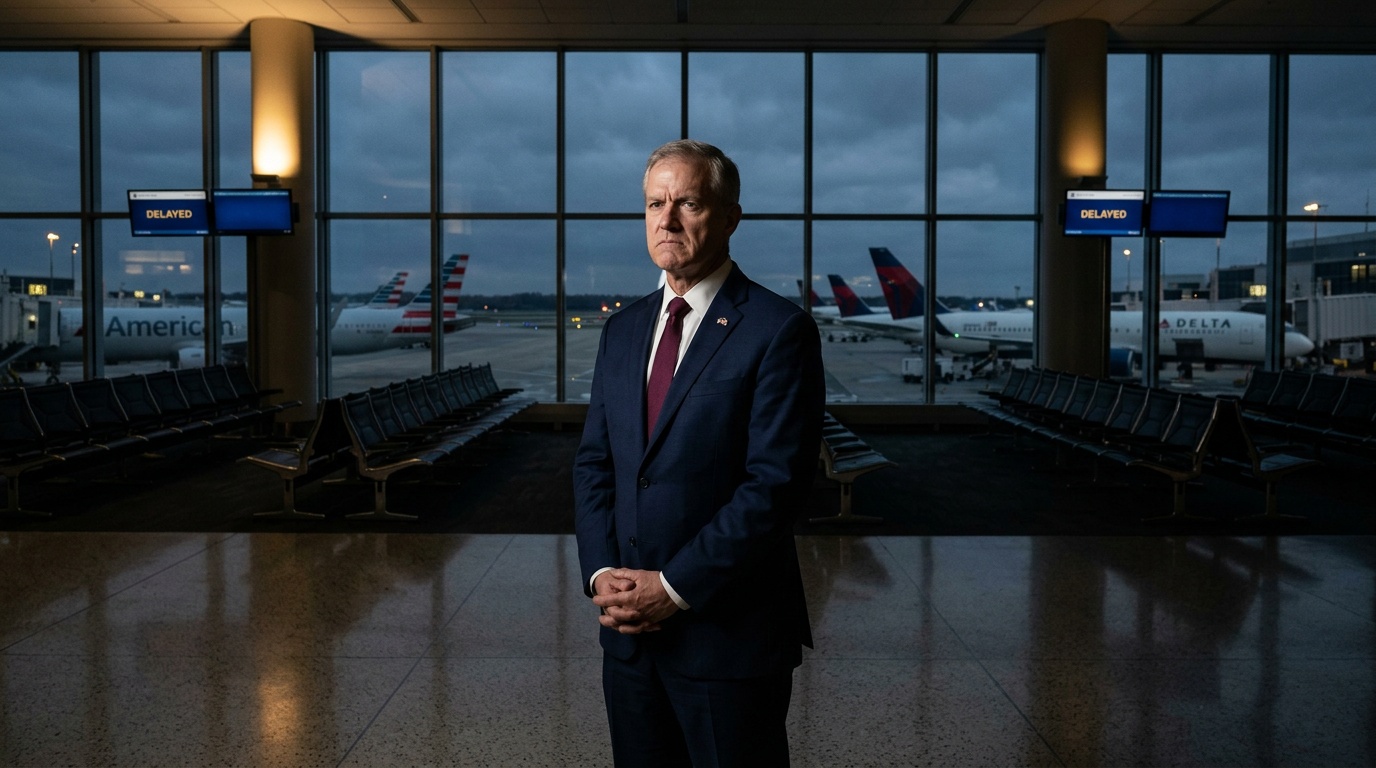
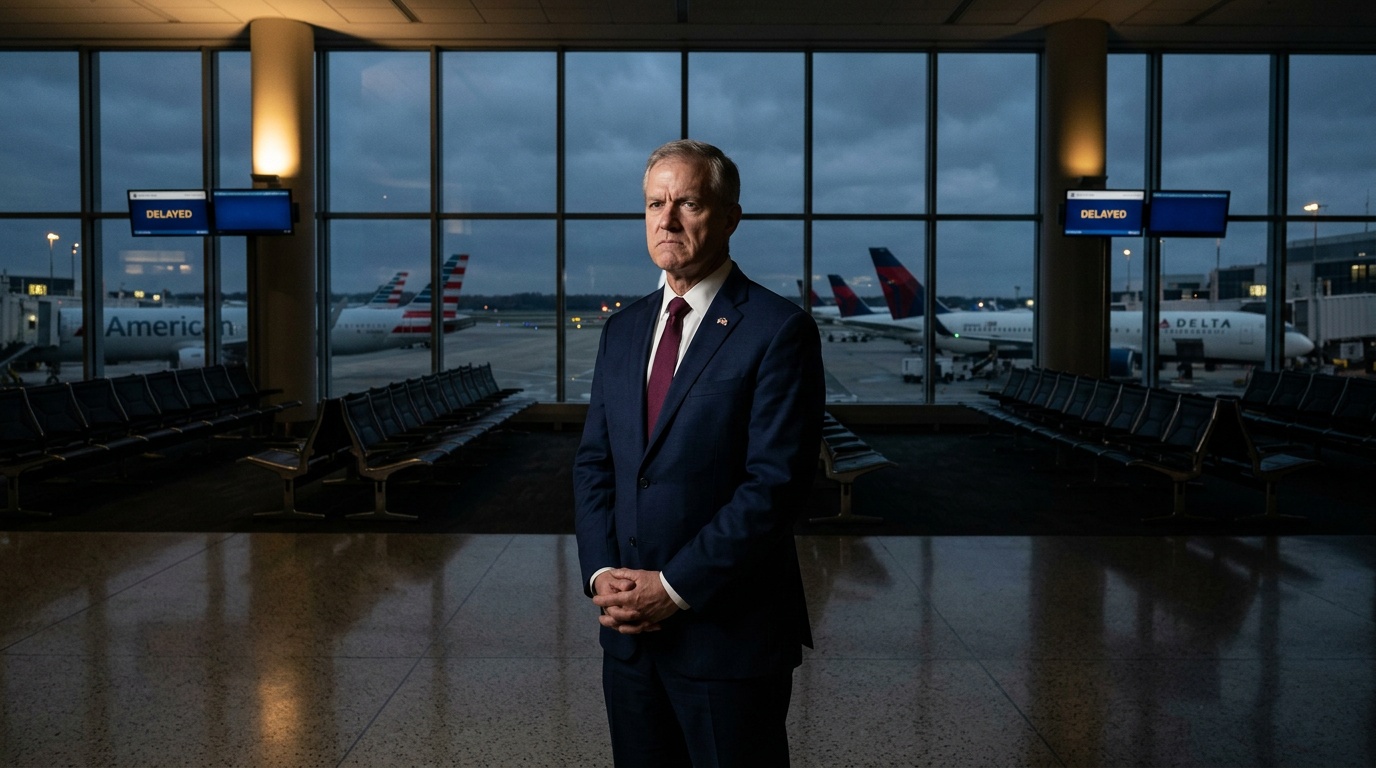
U.S. air travel was still digging out on Saturday after a nationwide FAA ground stop on Friday, with the agency's chief saying carriers should be close to normal schedules by late Sunday.
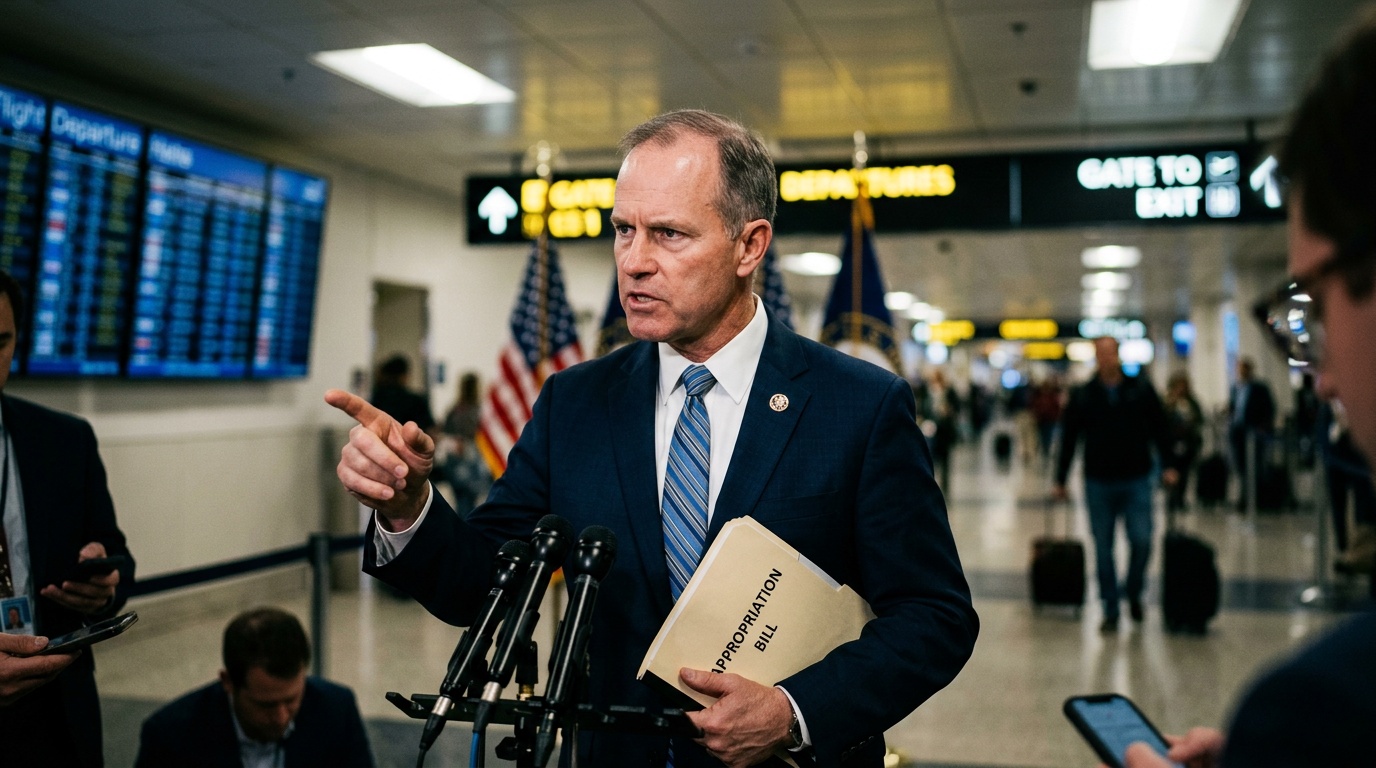
The disruption has also sharpened a political split over next steps, as Congress doesn't need to investigate Friday's nationwide FAA ground stop, in Mike Johnson's view, but should instead pour money into modernization.
Airlines had scrubbed more than 6,400 flights and posted over 8,000 delays by late Saturday evening, reported Reuters, after Friday's outage triggered thousands more cancellations and delays. FlightAware also showed hundreds of Sunday flights already called off before the day began.
The FAA's Aging Infrastructure Sparks Urgency
Transportation Secretary Sean Duffy said the problem appears tied to a router installation by FAA contractor L3Harris Technologies Inc. (LHX), with investigators still trying to pin down whether the failure was human error, a bad device, or something else.
According to the report, the White House convened an emergency Situation Room session on Friday while agencies initially worked through the possibility of a cyber incident.
Duffy also described a technical cascade in which new equipment overwhelmed other sites with more than 1,000 connection attempts every four to five seconds, disrupting communications with aircraft and affecting radar stability. He said the routers being swapped out were roughly 25 years old and should have been replaced in 2006.
The FAA's head, Bryan Bedford, said Saturday he expected operations to mostly normalize by late Sunday and apologized to passengers. Bedford also said the system remained stable during the episode and that no facilities fully lost communications.
The ground stop began around 4 p.m. EST Friday and was lifted around 8:15 p.m., according to Duffy. He contrasted it with the FAA's last broad stoppage in January 2023, which lasted about 90 minutes.
Could This Incident Reshape Aviation Funding Debates?
Duffy has pressed Congress for $50 billion to overhaul air traffic control technology, after previously citing a $30 billion need and with $12.5 billion already approved.
On Saturday, Duffy called modernization a national safety priority and urged lawmakers to back what he described as a state-of-the-art system. Johnson said Saturday he supports moving more air traffic funding this year, while arguing an investigation is unnecessary.
Democratic lawmakers are signaling a different posture on accountability, with Reps. Rick Larsen and Andre Carson saying their committees will press the administration on what happened. They also cited spending gaps, saying that while contracts worth $4.3 billion have been awarded from the prior funding, only $1 billion has been spent.
Criticism is also coming from both parties, though with different targets. Former Rep. Marjorie Taylor Greene objected to the $50 billion request, while Rep. Norma Torres questioned why the system is still lagging and called for clarity on how existing money is being used.
How Airlines Are Managing Widespread Disruptions
Major carriers including Delta Air Lines Inc. (DAL), United Airlines Holdings Inc. (UAL), and American Airlines Group Inc. (AAL) each canceled about a quarter of Saturday schedules, while JetBlue's cancellations approached about 45%.
Airlines issued travel waivers that let customers rebook without paying change fees, and carriers worked to reposition crews and aircraft after Friday's halt. Tens of thousands of travelers were left waiting in airports as networks tried to restart.
The Professional Aviation Safety Specialists union said the outage was limited to two routers updated Friday, and an official said the equipment was believed to be in Arkansas and Texas. The union also said its represented technicians were not involved in the work tied to the ground stop.
L3Harris said it is supporting the FAA's investigation and described progress on a separate effort to move communications lines from copper to fiber, saying more than 70% of that conversion has been completed. The FAA said it is running additional testing with the contractor to check for any remaining risk.