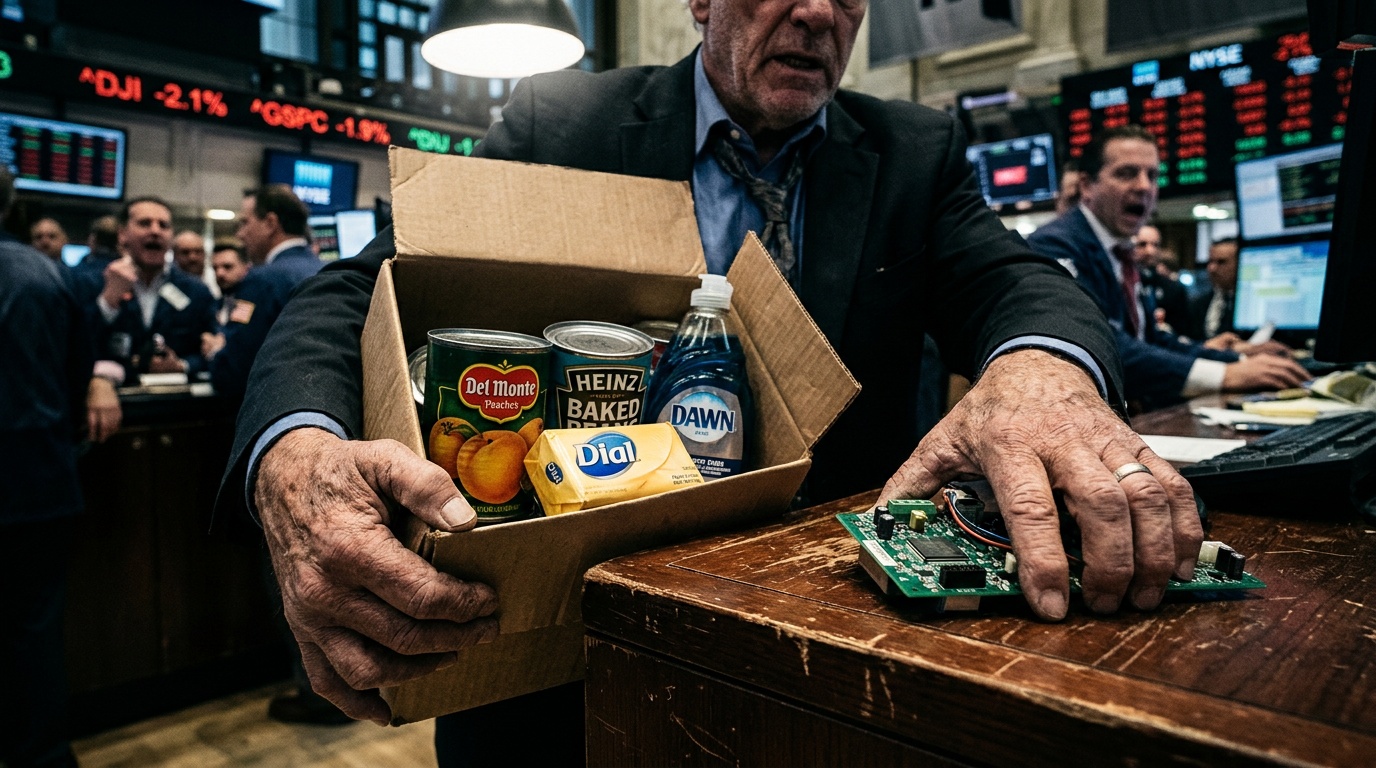
For eight months, the war in the Gulf had a clear set of winners. On Monday, Wall Street started paying the losers instead.
Homebuilders, gold miners and regional banks led the market after Iran said it could reopen the Strait of Hormuz within two days if Washington accepts its terms.
Oil went the other way. West Texas Intermediate crude fell 7.2% to $96.63 a barrel by mid-afternoon in New York, while Brent dropped 7.6% to $104.77.
The State Street SPDR S&P Homebuilders ETF (NYSE:XHB) climbed 3.3%, outpacing every major sector. The VanEck Gold Miners ETF (NYSE:GDX) rose 3.2% and the State Street SPDR S&P Regional Banking ETF (NYSE:KRE) gained 2.4%.
Travel stocks, among the biggest casualties of expensive fuel, rallied hard. The U.S. Global Jets ETF (NYSE:JETS) jumped 4.2%, the biggest gain among industry ETFs.
The State Street Energy Select Sector SPDR ETF (NYSE:XLE) sank 3.5%.
Is Wall Street pricing the end of the war, or just the hope of one?
Iran Cuts Its Hormuz Timeline From Seven Days to Two
Iranian Foreign Minister Abbas Araghchi said talks with Qatari mediators had produced a faster plan to reopen the waterway, according to a post on X by The Middle East Letter.
“On the first day, the U.S. implements a set of measures, and on the second day, the Strait of Hormuz reopens and transit returns to its previous state,” Araghchi said.
“The possibility of implementing this plan in two days is another indication of Iran’s good-faith approach,” foreign ministry spokesman Esmaeil Baqaei said on Monday.
The conditions are steep, from lifting the U.S. naval blockade to cutting American forces back to pre-war levels.
The stakes show up in the shipping data. Only five commodity vessels crossed the strait on Saturday and none on Sunday, compared with 31 the previous weekend, according to Kpler.
Gulf producers have found ways around the chokepoint. At least 16.5 million barrels a day of crude left the region in September, matching pre-war levels excluding Iran, but only 60% of it physically crossed Hormuz, Kpler data show.
Why Homebuilders Lead the Peace Trade
The link between Hormuz and the U.S. housing market runs through the bond market.
Higher oil lifted inflation, inflation lifted Treasury yields, and yields lifted mortgage rates, keeping buyers away.
The 10-year yield has risen about 95 basis points since the war began in late February. A credible end to the Hormuz disruption would reverse that chain.
Bonds rallied as oil fell. The 10-year yield dropped 3.7 basis points to 4.90%, the 30-year yield fell 3.8 basis points to 5.27% and the two-year yield slipped 1.3 basis points to 4.58%.
PulteGroup Inc. (NYSE:PHM) rose 5%, while D.R. Horton Inc. (NYSE:DHI) and Lennar Corp. (NYSE:LEN) gained 4.3% each. Including Toll Brothers Inc. (NYSE:TOL), NVR Inc. (NYSE:NVR) and KB Home (NYSE:KBH), the six builders added about $5.4 billion in market value.
Gold Fell During the War. It Rallies on Peace Hopes
Gold was supposed to be the war hedge. Instead, bullion is down about 8.6% this year.
Gold pays no interest, so the same rise in yields that hurt homebuilders made it less attractive, as did a stronger dollar.
On Monday, both forces eased. Gold rose 1.9% to about $3,948 an ounce and silver jumped 3.2% to $50.69.
Barrick Mining Corp. (NYSE:B) and Newmont Corp. (NYSE:NEM) rose 3% each.
Regional Banks Bet on Less Fed Pressure
The Federal Reserve held rates at 3.75% to 4% last week, but two officials pushed for a hike, citing energy-driven inflation.
Cheaper oil weakens that argument, and fewer hikes would ease pressure on smaller banks’ deposit costs and borrowers.
Western Alliance Bancorp. (NYSE:WAL) rose 3.5%.
The Deal Is Not Done
Washington has not accepted Iran’s terms. President Donald Trump rejected the original seven-day proposal, and Secretary of State Marco Rubio said over the weekend that no decision has been made.
Monday’s rotation is a bet on a deal, not a reaction to one. If talks stall, the same chain that lifted homebuilders, miners and regional banks could run in reverse.