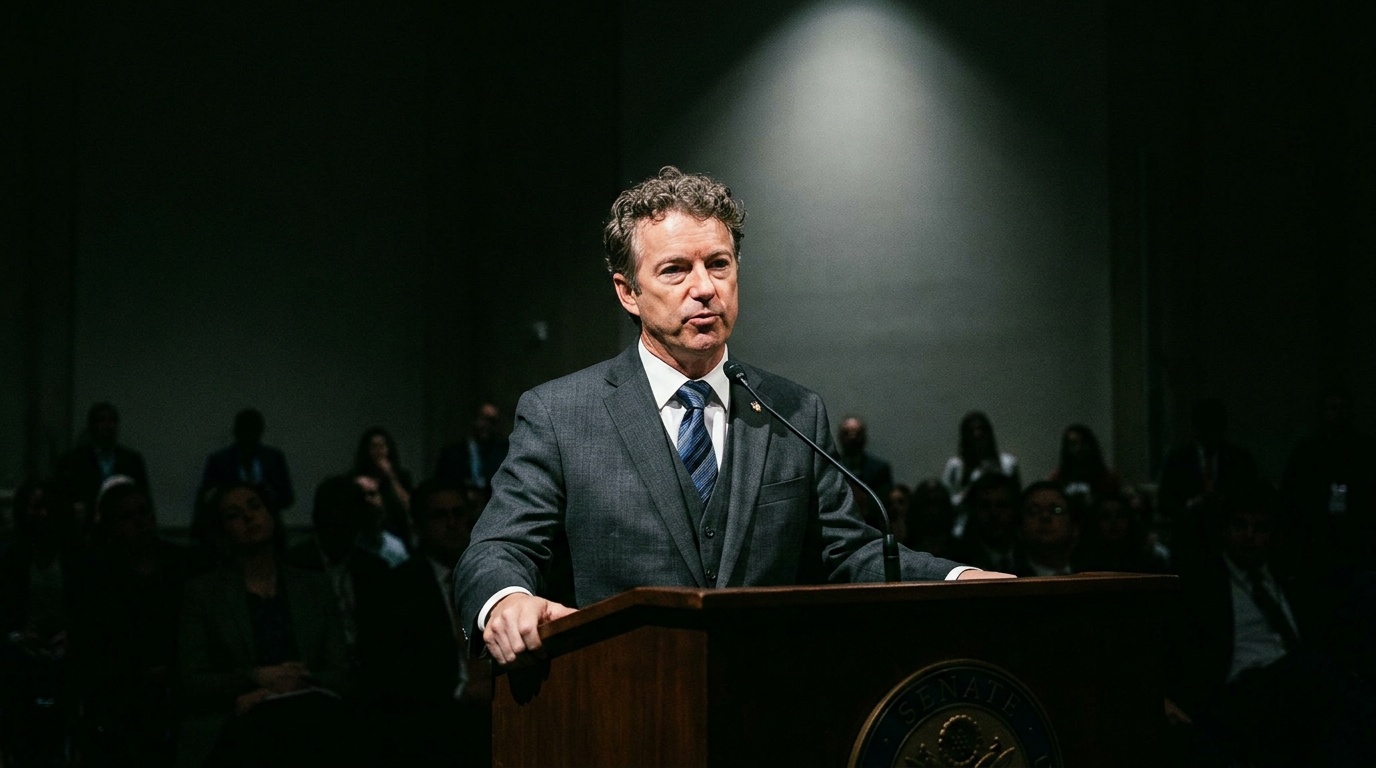
Sen. Rand Paul (R-Ky.) has a theory about how Washington works, and it is not a flattering one. In a post on X on Saturday, Paul argued that government programs routinely fall short of their promises and then come back to taxpayers for more money to patch the gap.
"Washington has a pattern. A new program promises to help, falls short, and then asks for more of your tax dollars to fix the shortfall," Paul wrote.
His alternative? Individual freedom and personal choice. "Liberty breaks that cycle by trusting you to make your own choices and keep the rewards," he said.
Paul added that he makes the case for individual liberty in the Senate and vowed to keep advocating for it. The post featured a graphic declaring, "Liberty is the answer, not socialism," reinforcing his opposition to greater government intervention in the economy.
The Numbers Behind the Warnings
Paul's critique lands against a backdrop of eye-watering fiscal data. Last week, the U.S. recorded a $1.992 trillion deficit in fiscal 2026, while net interest payments reached $1.052 trillion, exceeding the $965 billion spent on national defense.
Moody's Analytics Chief Economist Mark Zandi warned of a "fiscal reckoning" as rising debt and Treasury yields threatened a "vicious cycle" of higher borrowing costs.
Meanwhile, Sen. Mark Kelly (D-Ariz.) criticized Trump's spending priorities, saying, "There's always money for what Trump and his allies want, but never enough to make life better for working families."
Earlier this month, Rep. Thomas Massie (R-Ky.) argued that citizens ultimately paid for government spending through taxes, inflation, interest and debt. He criticized Trump's One Big Beautiful Bill for increasing spending despite its tax cuts. Projections showed the deficit reaching 6.1% of GDP in 2027, while national debt stood at approximately $40.28 trillion.