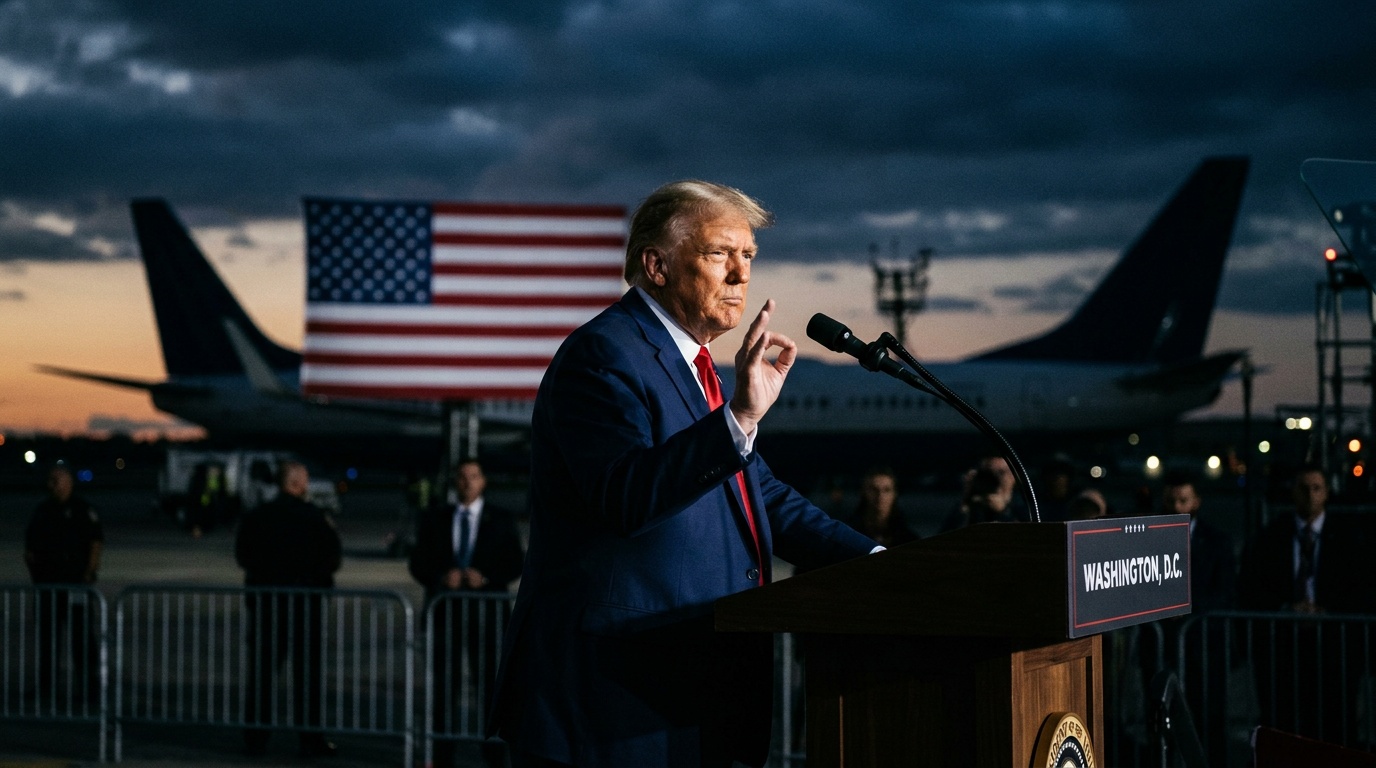
President Donald Trump said the U.S. is working on a "massive deal" to import potash from Belarus, a country that has long been seen as a de facto extension of Russia. Yet with mid-term elections approaching, any deal aimed at easing input costs for American farmers is political points for Trump amid an escalating cross-border trade dispute with Canada.
"The United States is working on a massive Deal with respect to the purchase of Potash from Belarus," Trump said according to Bloomberg. "The pricing would be for substantially less than we are currently paying to Canada, very good news for our Farmers and Ranchers."
New Orleans potash spot prices sit at their highest since July 2023, according to Bloomberg Green Markets, squeezing agricultural producers ahead of elections.
Fertilizer equities retreated on the rhetoric. Saskatchewan-based Nutrien Ltd. (NTR) fell as much as 5.2%, while Tampa-based Mosaic Company (MOS) slid 5.9% intraday before paring most of the losses by market close.
Yet, in reality, the proposal faces numerous challenges: logistical, political, and physical, making the disruption to North American fertilizer flows unlikely.
Capacity Bottlenecks and Transit Hurdles
Belarusian President Alexander Lukashenko himself contradicted the viability of a large-scale export surge.
"Even if we wanted to supply potash to other, Western markets, we simply don't have those volumes—everything is already under contract," he said according to UA.news.
The scale gap is not even a comparison. According to the Department of Agriculture, U.S. potash imports in 2025 were about 13 million tons. Meanwhile, Belarus's pre-sanction shipments to the U.S. peaked at around 700,000 tons in 2021.
Current logistics likely couldn't support even that. Lithuania ended its contract with Belaruskali in 2022, cutting access to the Baltic port of Klaipeda. Since then, Belarus has relied on expensive rerouted corridors through Russia's Arctic.
Meanwhile, Saskatchewan Premier Scott Moe branded the prospective imports "blood potash," citing Minsk's support for Russia's war in Ukraine.
"Does anyone believe Belarusian blood potash shipped through Russia is going to be more affordable, more sustainable or more ethical than potash shipped from Saskatchewan?" he wrote on X.
Nutrien's Core Thesis Intact
Canada's potash accounts for 85% to 90% of U.S. imports, most of it originating from Saskatchewan's low-cost operations. Acknowledging that reliance, the Trump administration has kept Canadian potash exempt from its broad import tariffs.
Even the U.S. Ambassador Pete Hoekstra noted that there are "not lots of other places that you can get it."
Nutrien's operating performance remains solid. Second-quarter adjusted EBITDA reached $2.4 billion, while first-half potash sales rose to a record. Management also raised its full-year volume outlook.
The company expects global potash shipments of 74 million to 77 million tons in 2026. Nutrien said strong demand is already testing production and logistics capacity worldwide.