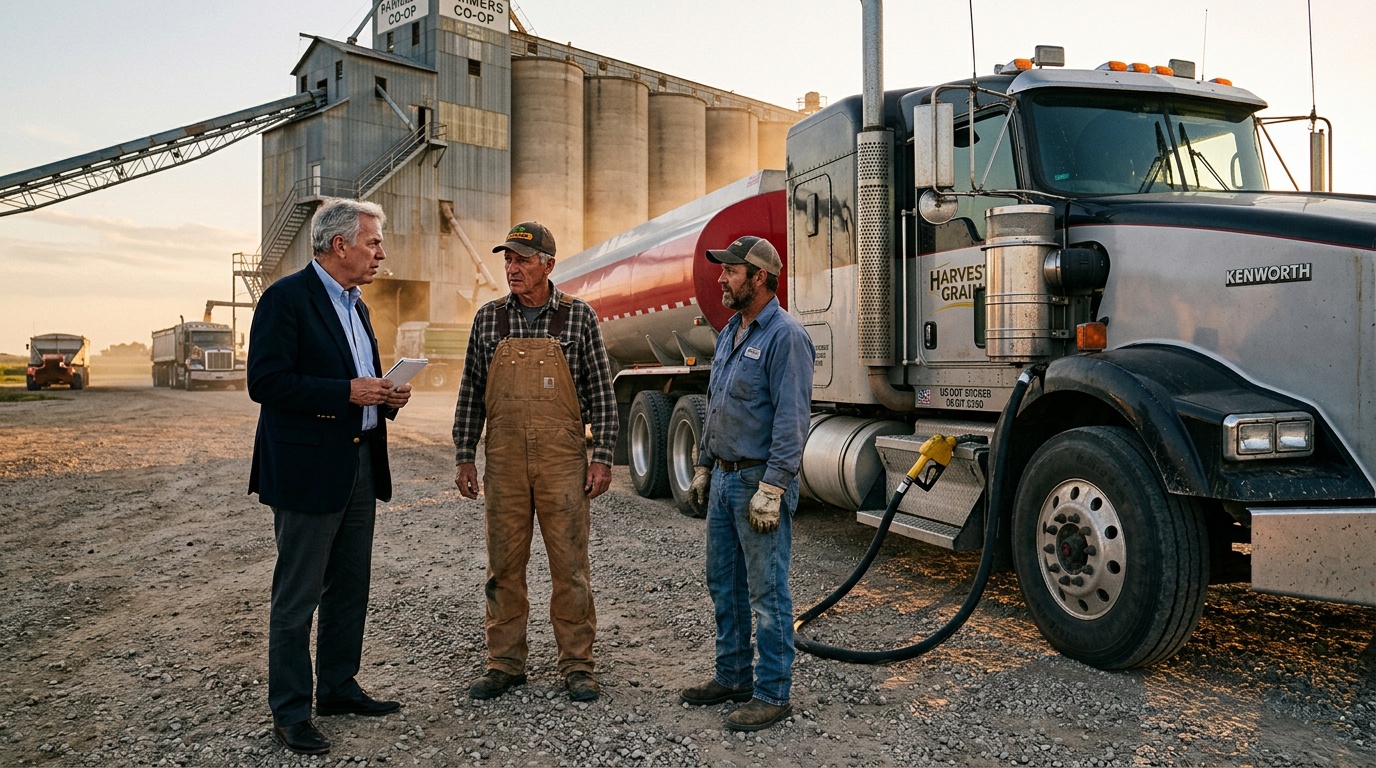
Diesel just did something it has never done before. The average U.S. retail price crossed $6.50 a gallon for the first time, hitting $6.51 on Monday, according to data highlighted by Kobeissi Letter. That's up more than 100% from its January low. The latest official EIA data put the national average at $6.285 a gallon for the week ended Sep. 14, which was already a record.
And the timing could hardly be worse. The 2026 harvest is getting underway right now, which means farmers are about to burn a lot of the stuff.
Why Diesel Matters So Much at Harvest Time
Diesel powers tractors, combines, and just about every other piece of farm machinery. It also moves crops from farms to elevators, processors, and eventually consumers. So when diesel gets expensive, farmers feel it immediately, and the cost squeeze can work its way through to food prices.
That sets up something unusual for agriculture-focused ETFs. Higher food and crop prices could be a tailwind, but only if they outrun the cost side of the equation.
One way to play the commodity side is the Invesco DB Agriculture Fund (DBA), which tracks futures on a basket of agricultural commodities rather than owning farming companies. That distinction matters. Its exposure looks nothing like an agriculture-equity ETF.
Why does that matter? Because a prolonged energy shock could eventually push agricultural commodity prices higher through increased production and transportation costs.
But there's a catch.
Farmers don't automatically pocket higher commodity prices as higher profits. If diesel, fertilizer, machinery, and transportation costs rise faster than crop prices, producer margins can deteriorate. That makes the relationship between commodity prices and agricultural equities particularly worth watching.
Another route is the Invesco Agriculture Commodity Strategy No K-1 ETF (PDBA), which offers commodity exposure without directly owning agricultural companies. Invesco lists PDBA alongside DBA in its commodity ETF lineup.
The Equity Side Tells a Different Story
The VanEck Agribusiness ETF (MOO) owns companies across the agricultural value chain. Its largest holdings include Deere & Co (DE) at 8.65%, Bayer at 8.61%, Corteva Inc (CTVA) at 8.08%, and Nutrien Ltd. (NTR) at 7.03%. The fund also holds Archer-Daniels-Midland Co (ADM) and CF Industries Holdings, Inc. (CF).
That composition makes MOO an interesting lens for the diesel shock. Higher operating costs can affect farmers' equipment purchases and demand for agricultural inputs, while commodity prices, fertilizer prices, and food demand can all move in the opposite direction.
Higher fuel costs can pressure farmers' cash flows and potentially affect equipment demand, which matters for companies like Deere and Kubota. At the same time, higher crop prices could support spending on seeds, crop protection, and other agricultural inputs, potentially benefiting companies like Corteva and Nutrien.
The Diesel Shortage Could Outlast the Harvest
This isn't just a seasonal blip. EIA said U.S. distillate inventories were 13% below the five-year seasonal average as of Sep. 11, while U.S. refineries were already operating at about 97% utilization. That leaves relatively little spare refining capacity to rapidly increase domestic diesel supply.
Reuters reported that industry analysts expect the global diesel shortage to potentially persist into 2027, with inventories in several major markets already unusually low. A prolonged shortage would make diesel costs a more persistent input rather than a one-off harvest-season expense.
The bigger ETF story comes down to whether higher diesel prices become a commodity-price tailwind or a margin squeeze for the agricultural sector. And if the global diesel shortage persists into 2027, as some industry analysts now expect, that distinction could matter more for investors looking at agriculture ETFs.