President Donald Trump took to Truth Social on Sunday with a familiar refrain: he's made a killing in the stock market, but it's not for him. It's for the country. In his post, he said he's made "Hundreds of Billions of Dollars on Stocks, and many other type Holdings, for the U.S.A., not myself," brushing off what he characterized as Democratic scrutiny.
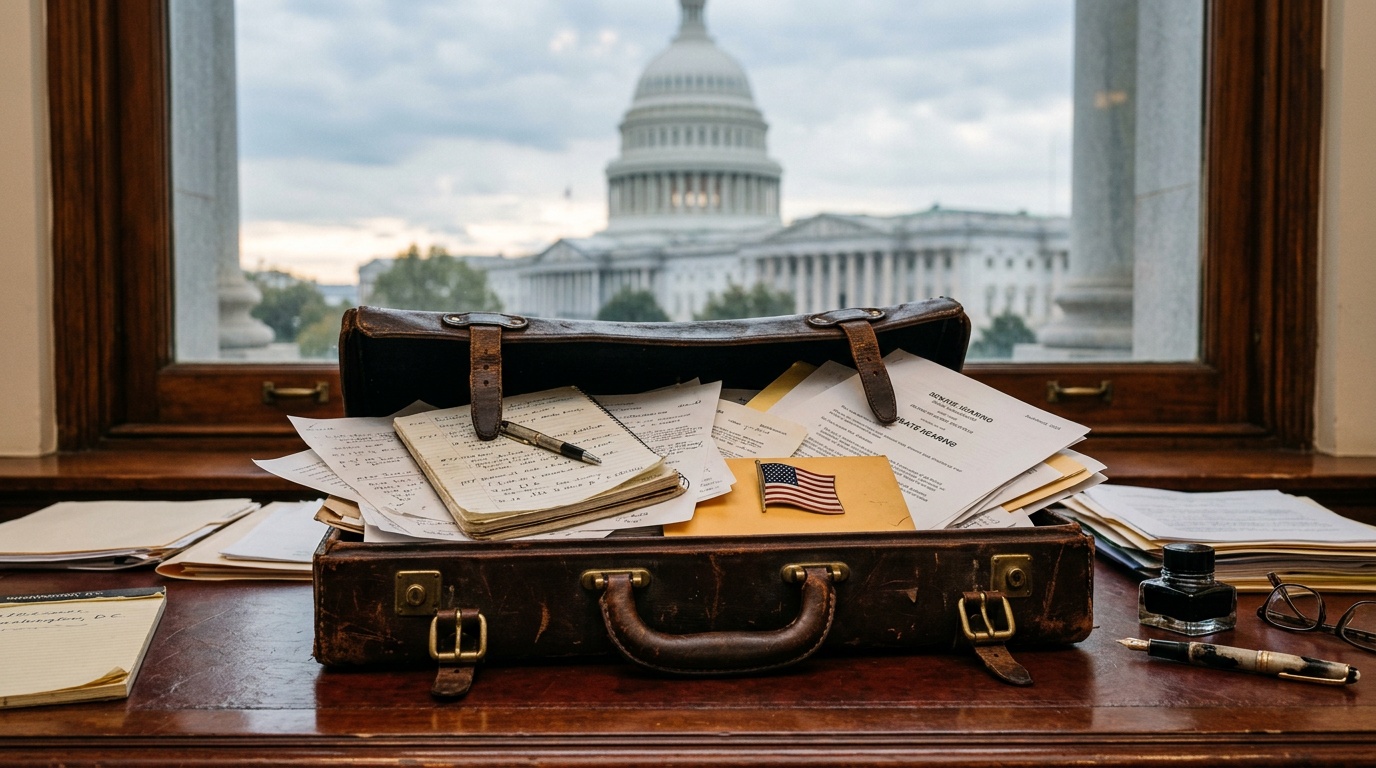
To drive the point home, Trump shared an AI-generated image of himself at the Resolute Desk, surrounded by trading screens. One screen read "BOUGHT: INTEL $20," another showed the stock "NOW $95." It's a visual that captures the administration's most high-profile market bet: a roughly 10% stake in Intel Corp. (NASDAQ:INTC), acquired in August 2025.
The numbers behind that bet are staggering. The government purchased 433.3 million shares at $20.47 apiece, an $8.9 billion investment made at a discount to the then-market price. Since then, Intel's stock has climbed 143.27% so far this year and 291.34% over the past year. That's the kind of return that would make any hedge fund manager blush, and it's become a centerpiece of Trump's economic narrative.
But not everyone is cheering. Trump's personal trading and his public comments on individual stocks have repeatedly drawn ethics criticism this year. The concern isn't just about insider knowledge or market manipulation; it's about the appearance of conflicts when the president of the United States is actively playing the market.
Democrats have been pushing for legislation to ban officials from trading stocks entirely. Rep. Eugene Vindman (D-Va.) introduced the "Sell Your Stocks or Step Down Act," which would prohibit the president, vice president, and members of Congress from trading stocks, digital assets, and prediction market contracts. The bill hasn't gained much traction, but it highlights a growing bipartisan unease with the blurring lines between governance and investing.
The scrutiny extends beyond stocks. Trump's companies generated more than $1.4 billion from crypto ventures in 2025, according to his financial disclosure. That includes over $520 million from World Liberty Financial token sales and more than $635 million from Official Trump memecoin royalties. For a president who once called crypto a scam, it's a notable pivot, and it adds another layer to the ethics debate.
Trump, for his part, sees the market's performance as vindication. Last week, he defended the market amid the Iran conflict, telling reporters he'd warned his office more than a year ago that confronting Iran would hurt stocks. Instead, he said, the market has kept "hitting new records every day." "Believe it or not, the stock market will go up," he added.
The numbers back him up, at least in the aggregate. The S&P 500 is up 12.54% year-to-date and 18.84% over the past year. The Nasdaq Composite has gained 14.08% YTD and 21.60% over 12 months. The Dow Jones Industrial Average is up 10.40% YTD and 17.36% over the year. Over five years, the gains are even more pronounced: the S&P is up 73.12%, the Nasdaq 75.36%, and the Dow 54.34%.
Intel's shares closed 4.51% higher on Friday at $95.80, and edged up another 0.09% in extended trading. Market data shows Intel's stock has a Momentum score in the 98th percentile, though the price trend is negative in the short and medium term while remaining positive over the long term. It's a mixed signal, but for now, the trade is firmly in the green.
The bigger question is whether Trump's approach to the market is sustainable, both for his presidency and for the country. His defenders argue that his business acumen has been a boon to the economy, while his critics see a dangerous precedent. Either way, the debate over presidential trading isn't going away, and with the market at record highs, Trump is likely to keep touting his wins.
For retail investors, the takeaway is twofold: first, the Intel trade shows how government actions can move markets, and second, the ongoing ethics battles could lead to new regulations that affect how officials trade. For now, though, Trump is happy to claim the credit, even if he insists the profits aren't his.