The memory-chip industry is having a moment. Actually, it's having a prolonged, hair-pulling, why-didn't-I-buy-stock-earlier kind of moment. Booming artificial intelligence demand is tightening supply, sending prices skyward, and reshuffling the competitive deck among the world's biggest producers, including Samsung Electronics (SSNLF), SK Hynix (SKHY), Micron Technology (MU), and Chinese upstarts Yangtze Memory Technologies Corp. and ChangXin Memory Technologies.
Dan Kim, chief strategy officer at TechInsights, is the latest industry watcher to wave the red flag. He expects the supply crunch to intensify as AI data centers gobble up DRAM and other memory products at an unprecedented rate, while manufacturers scramble to add production capacity that takes years to come online.
TechInsights Sees Memory Crunch Intensifying
Kim currently rates memory-market conditions an eight out of 10 for what he calls "craziness." But that's just the warm-up act. He expects the craziness meter to hit 10 and stay pinned there through at least the end of 2027, according to a Financial Times report on Friday.
TechInsights is projecting DRAM prices to surge more than 200% year over year, a move Kim described as historically unprecedented. The problem? Significant new supply won't arrive until late 2027 or early 2028. That leaves higher prices as the only mechanism to balance surging demand against limited production.
"Effectively there is no supply out there that hasn't already been spoken for," Kim said.
High-bandwidth memory, the stuff that works alongside AI accelerators, has effectively sold out. And the shortage isn't staying in its lane. It's spreading to other memory products, hitting traditional customers who never signed up for this rollercoaster. Kim said automotive companies, medical-device manufacturers, and other old-school buyers are increasingly facing allocation limits, even when they're willing to pay the quoted prices.
Samsung, SK Hynix And Micron Control Mainstream DRAM
If you want to understand why this crunch is so intense, look at who makes the stuff. Kim described mainstream DRAM as a highly concentrated market dominated by three players: Samsung, SK Hynix, and Micron.
That concentration isn't an accident. Kim pointed to the industry's enormous manufacturing scale, technological complexity, and severe pricing cycles as significant barriers to entry. Advanced DRAM production requires highly sophisticated manufacturing technology, including EUV lithography, which isn't exactly something you can pick up at your local hardware store.
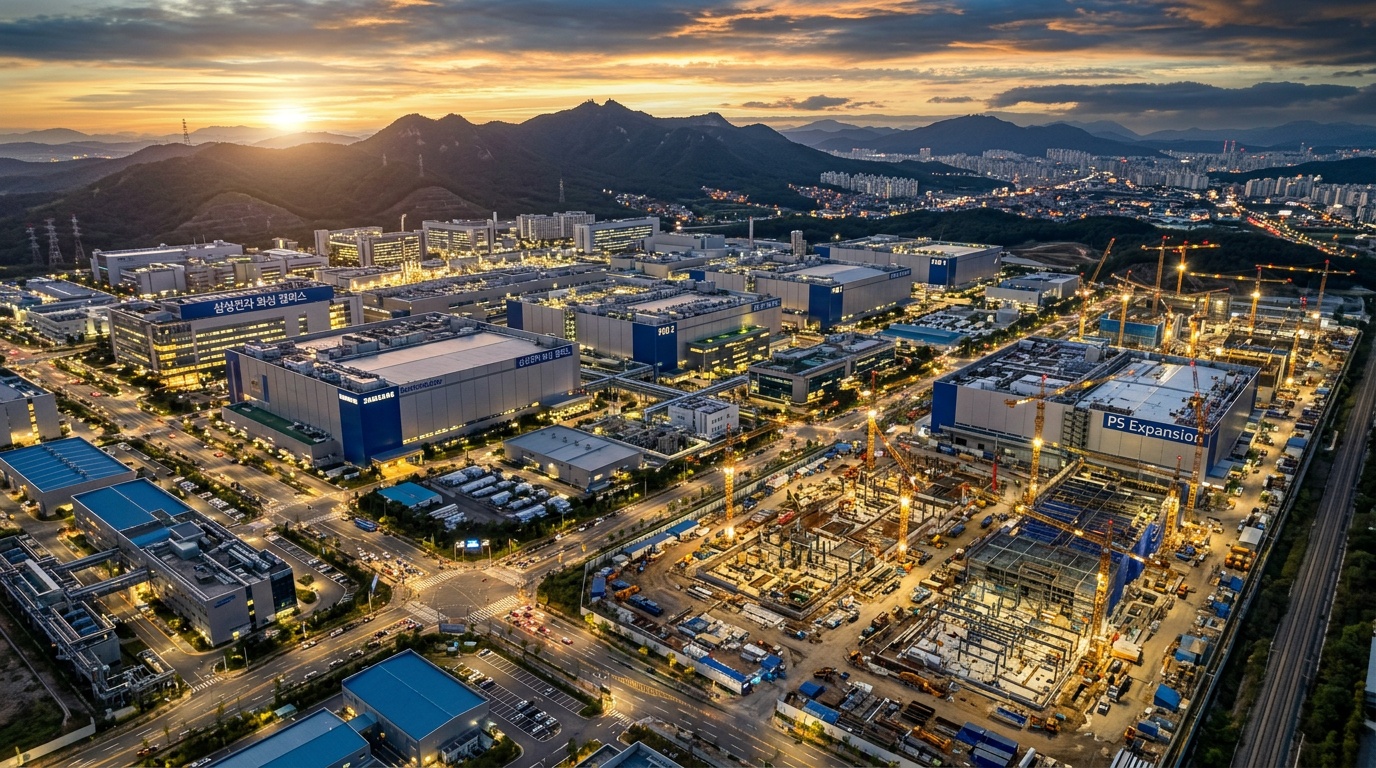
The incumbents are racing to expand. Samsung and SK Hynix are building out production in South Korea, while Micron is adding capacity in Idaho. But here's the kicker: Kim said constructing and qualifying a new fabrication plant can take between two and six years. That's a long time to wait when AI demand is exploding right now.
SK Hynix has carved out an advantage through its leadership in high-bandwidth memory, the premium product that AI accelerators crave. But Kim noted that competitors are developing rival products, so the lead may not be permanent.
YMTC And CXMT Challenge Established Players
While the big three dominate today, the future might look different. Kim identified Chinese producers YMTC and CXMT as the main emerging challengers.
YMTC has become a competitive NAND supplier, producing roughly 10% to 15% of global NAND bits. Depending on how you measure the market, Kim said YMTC ranks as the second- or third-largest NAND provider. That's a significant foothold.
CXMT is further behind in DRAM, but it's making inroads. TechInsights is finding more CXMT memory in flagship Chinese smartphones, including Huawei devices. That's a notable development, given the geopolitical tensions and export controls swirling around the semiconductor industry.
Kim acknowledged that CXMT's lack of access to EUV lithography limits its ability to produce advanced DRAM. But Chinese producers could continue gaining share domestically with substantial state support. And here's a scenario worth watching: the next memory downturn could become an important test. If Chinese manufacturers invest aggressively while established producers pull back, they could capture additional market share.
Price Action: Micron Technology shares were up 1.63% at $973.80 and SK hynix shares were up 1.31% at $165.83 during premarket trading on Friday, according to market data.