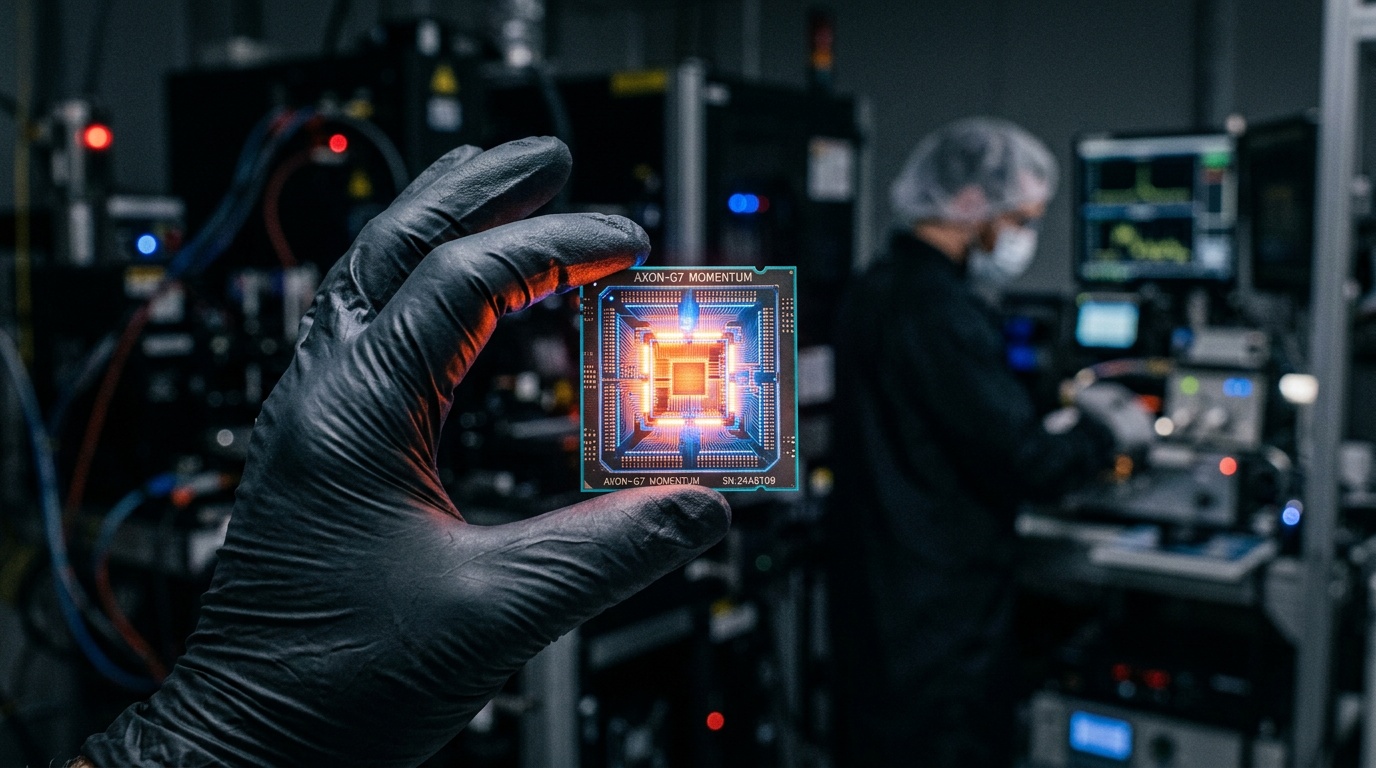
Intel Corp. (INTC) is having a good Thursday, and it's not hard to see why. The stock is riding a wave of semiconductor optimism that started with Nvidia's (NVDA) blowout earnings report and got an extra push from whispers of new U.S. tariffs that could reshape the chip industry.
As of publication, Intel shares were up 3.30% at $91.95, while the Nasdaq climbed 1.20% and the S&P 500 gained 0.55%. The whole sector seems to be catching a bid, and Intel is along for the ride.
Nvidia's Earnings Ignite the Rally
The spark came Wednesday after the market close when Nvidia reported its fiscal second-quarter results. The numbers were, to put it mildly, impressive. Revenue hit $96.22 billion, a 106% year-over-year jump that blew past the Street's $92.18 billion estimate. Adjusted EPS of $2.22 also topped the $2.10 consensus.
Nvidia also guided third-quarter revenue to a range of $105.84 billion to $110.16 billion, and it ended the quarter with $99.0 billion still available under its share repurchase authorization. That's a lot of firepower, and investors clearly liked what they saw.
Tariff Talk Adds Fuel
But there's more to the story than just Nvidia's numbers. According to eight people familiar with the discussions, the Trump administration is weighing a new round of sweeping tariffs on semiconductors. The plan, as reported by POLITICO, could expand the list of tech products subject to duties, hitting chips, laptops, gaming consoles, and data center servers.
Four of those sources noted that Commerce Secretary Howard Lutnick is pushing for a structure that would tie tariff relief for foreign companies to investments in U.S. chip manufacturing. The idea is to use tariffs as leverage to boost domestic production, which could be a double-edged sword for companies like Intel that have both U.S. and overseas operations.
Technical Picture: Still a Work in Progress
Even with today's bounce, Intel's chart isn't exactly screaming "all clear." The stock is still trading 7.3% below its 20-day simple moving average of $95.73 and 15.9% below its 50-day SMA of $105.48. That keeps overhead supply in focus whenever the stock tries to rally.
On the flip side, Intel remains 22.3% above its 200-day SMA of $72.51, so the longer-term trend still looks constructive despite the mid-year drawdown. The 20-day SMA sitting below the 50-day SMA is a bearish crossover, a sign that the market is still "working off" a prior run, and it fits with the break below support that showed up in July.
Traders are watching the range between the June swing high, which also marked the 52-week high at $142.35, and the July swing low. Price is trying to stabilize in the middle of that reset, but it's too early to say if the worst is over.
For now, Intel investors are enjoying the green day, but the real test will be whether the stock can reclaim those moving averages and turn this bounce into something more sustainable.