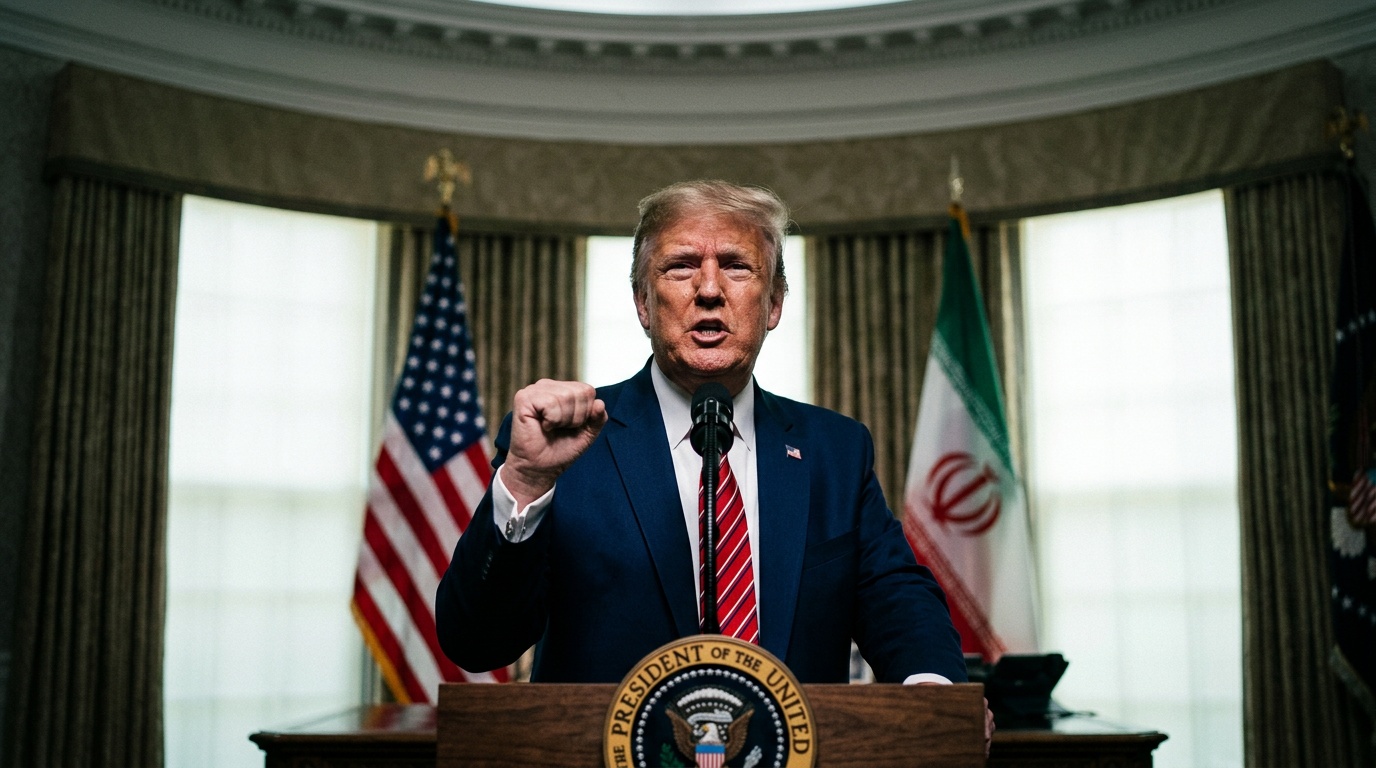
President Donald Trump on Wednesday offered a simple suggestion for the AI data center industry: maybe it needs a better sales pitch. Speaking at a White House event with crypto executives and tech leaders, Trump acknowledged that not everyone is thrilled about the rapid spread of AI infrastructure, but he argued the benefits are too big to ignore.
"Maybe it can use a little public relations help, but if I were a governor or mayor, I would want that plant in my community," Trump said, according to remarks at the event.
Trump framed data centers as economic engines, saying they create "enormous" numbers of jobs and pay "enormous" taxes. He said if he were a local leader with a chance to land an AI plant or data center, he "would absolutely want it." He also warned that communities rejecting such projects could be "left behind," noting that plenty of other places are eager to host them.
The comments come as some states are moving in the opposite direction, tightening rules on data center development in response to local concerns.
States Push Back on Data Centers
Pennsylvania Gov. Josh Shapiro (D-Pa.) signed an executive order Tuesday that imposes new energy, environmental, and transparency requirements on data center developers. The rules give local communities more say over proposed projects and require developers to address electricity costs and other impacts. Shapiro said the move came after residents raised concerns about utility bills, environmental effects, and the broader impact on their communities.
New York Gov. Kathy Hochul (D-N.Y.) has also stepped in, imposing a statewide pause of up to one year on new hyperscale data centers that require 50 megawatts or more of power. Trump previously called that move a "terrible decision," arguing that investment, jobs, and tax revenue could flow to states more willing to host the facilities.
Data Center Benefits Vary by Community
New research from Georgia Tech adds nuance to the debate, showing that data centers can bring economic benefits to host counties, but the gains are not evenly distributed. Metropolitan counties saw larger increases in employment, wages, business activity, and household income, while rural communities experienced more limited spillover benefits. The study also found that retail electricity prices rose about 5% in areas where the impact could be measured after a data center became operational.
The researchers suggest that communities should weigh infrastructure costs, tax incentives, and electricity pricing when evaluating data center projects, rather than focusing solely on the size of the investment.
AI Demand Continues Despite Moratoriums
Despite the regulatory headwinds, demand for AI infrastructure shows no signs of slowing. CoreWeave Inc. CoreWeave (CRWV) CEO Mike Intrator said during the company's second-quarter earnings call that data center moratoriums won't reduce demand for AI infrastructure, but they could affect where projects are built.
"Moratoriums, they are not going to impact the demand for this infrastructure. They are going to impact where this infrastructure gets built," Intrator said.
CoreWeave reported 4.2 gigawatts of contracted power, along with roughly 1.5 gigawatts of additional powered-land options and letters of intent, giving the company visibility into nearly 6 gigawatts of potential capacity.
The tension between AI's insatiable appetite for power and local resistance is likely to persist as states and communities debate how to manage the industry's electricity, infrastructure, and economic impact. Trump's push for better PR may help, but it won't solve the underlying challenges of grid capacity, costs, and community concerns.