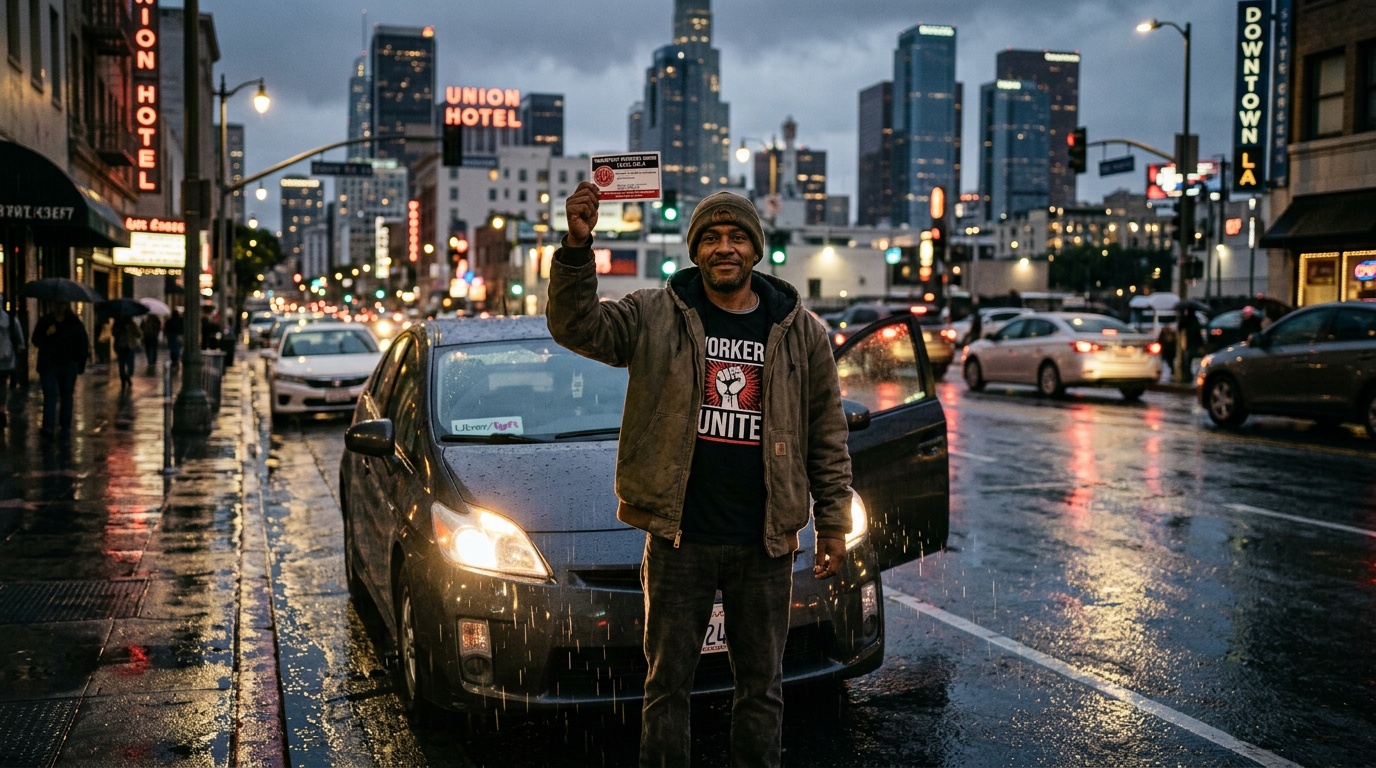
There's a new chapter unfolding in the ongoing saga of gig economy labor, and it's happening in California. Governor Gavin Newsom (D-CA) is celebrating a major milestone: the Service Employees International Union (SEIU) and the California Gig Workers Union (CGWU) have officially gathered enough support to represent drivers for ride-hailing giants Uber Technologies Inc. Uber (UBER) and Lyft Inc. Lyft (LYFT).
In a post on X on Monday, Newsom called it "an amazing new day for Californians working as rideshare drivers," noting that this comes less than a year after the state enacted a law making it possible for gig drivers to unionize. The governor's enthusiasm was palpable, and he didn't stop there.
"At a time when workers' rights are under attack and families across the country are struggling with affordability because of the Trump administration, California is showing what it means to stand with working people," Newsom said in a statement released by his office on Monday.
The law in question is a game-changer. It allows over 800,000 drivers to "have the legally protected choice to unionize and engage in collective bargaining over wages, benefits, and working conditions," according to a statement from Newsom's office last October. That's a huge number of people who now have a formal seat at the table.
According to a statement from the CGWU on Friday, this move will establish the union as "the largest union of gig rideshare drivers in the world" once a 30-day waiting period concludes. That's not just a symbolic win; it's a structural shift in how gig work is organized.
The Robotaxi Elephant in the Room
But here's where things get interesting. This unionization push is happening at the exact same time that Uber and Lyft are doubling down on autonomous vehicles. It's a bit like building a powerful union for factory workers just as the robots are being rolled in.
Uber, for instance, has been ramping up its autonomous driving efforts, recently announcing the expansion of its Robotaxi service in Japan. The company also partnered with drone delivery company Zipline to use drones for food delivery on Uber Eats across the U.S. So, while human drivers are unionizing, Uber is simultaneously exploring ways to reduce its reliance on them.
Lyft's autonomous efforts have been a bit quieter, but they're not sitting still. The company is collaborating with China's Baidu Inc.-backed (NASDAQ: BIDU) Robotaxi outfit Apollo Go, which recently began testing its Robotaxis in London in partnership with Lyft, as well as Uber.
Uber has been vocal about a hybrid approach, suggesting that the future will involve both human drivers and autonomous vehicles working together. But there are also reports that Uber and Alphabet Inc.-backed Alphabet (GOOGL) (NASDAQ: GOOG) Robotaxi operator Waymo are ending their partnership in 2028. So the landscape is shifting in real-time.
Echoes from Massachusetts
California isn't the only state where this is happening. Earlier this year, Sen. Bernie Sanders (I-VT) celebrated the unionization of rideshare drivers for Uber and Lyft in Massachusetts. Sanders had been pushing for fair wages for drivers, and that union is reportedly set to represent 70,000 drivers in the state.
So, what's the takeaway here? For drivers, this is a monumental step toward having a voice in their working conditions. For Uber and Lyft, it adds a new layer of complexity to their business models, especially as they invest heavily in automation. And for the broader gig economy, it's a signal that the era of unorganized, independent contractors might be coming to an end.
It's a fascinating tension: the very companies that built their empires on flexible, non-unionized labor are now facing organized workers, just as they're trying to pivot to a future where human drivers might be optional. How this plays out will be one of the most interesting stories to watch in the coming years.








.jpeg)