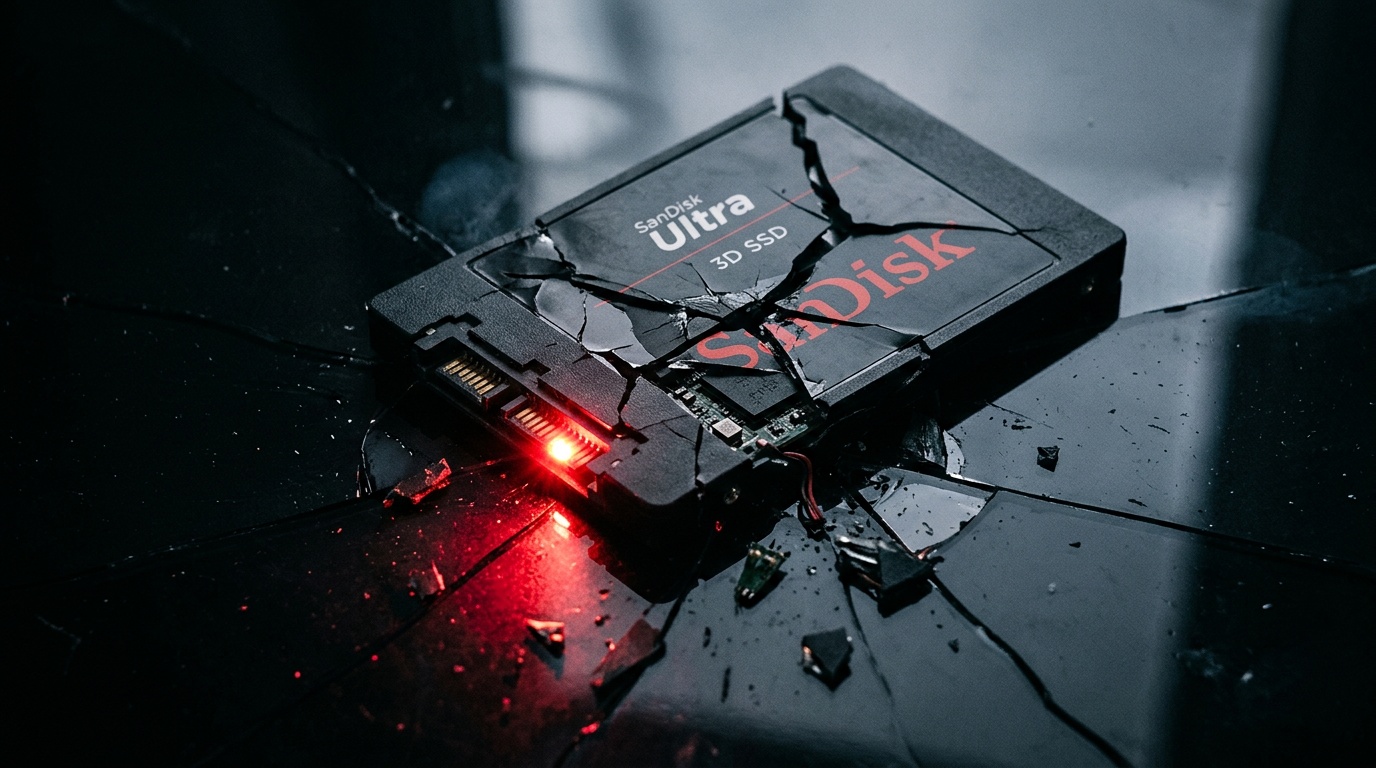
Here's a classic Wall Street head-scratcher: a company beats earnings estimates by a mile, and its stock gets punished. That's exactly what happened to Sandisk Corporation (SNDK) on Thursday, as shares tumbled nearly 10% in premarket trading despite a blowout quarter.
The memory-chip maker reported revenue of $8.97 billion, comfortably topping the $8.39 billion analysts were looking for. But investors weren't in a celebrating mood. Instead, they zeroed in on management's outlook and a nagging question: can those sky-high profit margins actually last?
The selloff also came after some analysts had already warned that expectations were getting too frothy, especially after the stock's monster rally this year.
Analysts Urged Caution Ahead Of Results
Jeff Kilburg, founder of KKM Financial, told CNBC that investors should keep their cool after Sandisk's rapid ascent following its separation from Western Digital Corp. (WDC).
Kilburg noted that Sandisk shares went from about $48 to more than $2,300 before pulling back roughly 40%. That kind of move makes it a high-beta stock, he said, and one that investors should be careful about chasing.
Instead, he prefers broader semiconductor exposure through the iShares PHLX SOX Semiconductor Sector Index Fund (SOXX), arguing it offers more diversified industry exposure than the VanEck Semiconductor ETF (SMH), which has a heavier concentration in NVIDIA Corp. (NVDA).
Kilburg also shared that KKM Financial has been actively managing its semiconductor positions, holding names like KLA Corp. (KLAC), Applied Materials Inc. (AMAT), and NVIDIA, while trimming some positions after strong gains. He mentioned the firm exited Micron Technology Inc. (MU) last quarter to lock in profits.
Margin Durability Remains The Key Question
Susquehanna analyst Mehdi Hosseini told CNBC that Sandisk's investment debate is different from Western Digital's. It's not about market share, he said, but about whether Sandisk can maintain its exceptionally high margins as AI-related memory demand shifts from training models to inference.
Hosseini pointed out that Sandisk, Micron, and South Korean memory makers are all generating gross margins approaching 80%. That makes margin sustainability a central issue for next year. He added that growing AI inference workloads could boost NAND flash demand, potentially benefiting Sandisk more than some rivals.
By contrast, Hosseini said Western Digital faces competitive pressure as it lags Seagate Technology in the industry's next-generation hard-drive transition. For Sandisk, the key questions are whether AI inference will meaningfully increase NAND demand and whether the company can preserve its margins.
Investors Look Past Earnings Beat
So why did the stock drop despite the strong numbers? It comes down to a few things: mixed guidance, lofty expectations, and plain old profit-taking after a massive run.
Sandisk reported adjusted earnings of $39.20 per share, beating estimates by almost $5. Revenue also came in above expectations at approximately $9 billion, and adjusted gross margin hit nearly 85%, well above the Street consensus of about 80%.
But investors saw the company's guidance as mixed, echoing the market's reaction to Western Digital's earnings report earlier.
Before the report, Sandisk shares had gained more than 460% year to date. That kind of rally leaves little room for disappointment, and even a beat wasn't enough to keep the stock up. As CNBC reported, investors took profits despite the earnings beat.
Top ETF Exposure
- Global X NASDAQ 100 Covered Call ETF (QYLD): 7.64% weighting
- Invesco S&P 500 Pure Growth ETF (RPG): 9.61% weighting
- First Trust US Equity Opportunities ETF (FPX): 7.37% weighting
Because Sandisk is a significant holding in these ETFs, large fund inflows or outflows could result in automatic buying or selling of the stock.
Price Action
SNDK Stock Price Activity: Sandisk shares were down 9.62% at $1,220.63 during premarket trading on Thursday, according to market data.