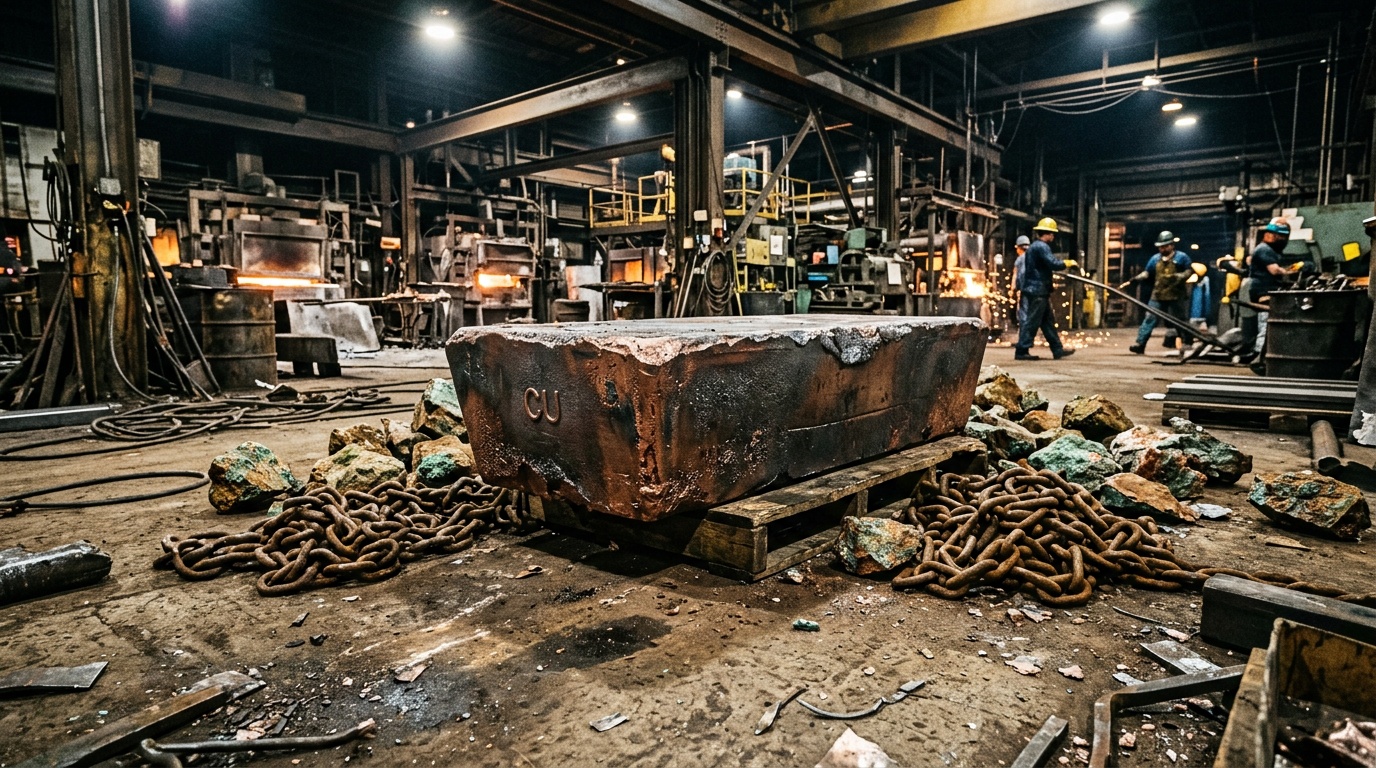
Copper has hit record highs in New York as traders scramble to move metal ahead of potential import tariffs. The COMEX contract for September delivery closed at $6.7180 per pound, while London prices moved above $14,000 a ton. But the spread between the two markets remains above $300, a clear sign that the U.S. market is pulling in supply like a magnet.
The Commerce Department missed a June deadline to recommend whether to impose phased duties on refined copper imports, which could start at 15% in 2027 and rise to 30% in 2028. Traders aren't waiting for the official word. According to Bloomberg, more than 200,000 tons of copper arrived at U.S. ports in July alone.
The Global X Copper Miners ETF (COPX) jumped 3.25% on Wednesday and is up 18.70% year-to-date.
Supply Constraints Keep Piling Up
The rush for metal is colliding with threats to copper output elsewhere. The closure of the Strait of Hormuz has cut seaborne sulfur shipments from the Gulf, and China's export ban on the material has added to the problem. Together, these disruptions have removed roughly a quarter of global acid supply.
Without acid, the solvent extraction-electrowinning (SX-EW) process, which accounts for more than 15% of world copper output, is crippled. Operations in Chile and the Democratic Republic of Congo, two major SX-EW producers, are facing increasingly tight inventory positions.
Chilean state producer Codelco has added to the concern after pausing the Andes Norte expansion at El Teniente following seismic findings.
China's Processing Hold
The price rally also highlights a deeper strategic imbalance. China mines only about 8% of global copper but controls about 60% of smelting and refining capacity. According to Phillip Mackey, a Canadian Mining Hall of Fame alumnus, China's output is about 12 to 13 million tons of refined metal annually.
"We're mining the copper and then shipping it to China to be smelted and refined and then bringing it back," he told The Northern Miner. "It doesn't make sense in the long term."
Mackey noted how China built this advantage over the last 25 years through state-backed financing and industrial scale. The U.S., in contrast, saw its smelting fleet shrink from about 12 facilities to two, as high capital costs, lengthy construction schedules and environmental permitting discouraged investment.
He sees a path forward to domestic production, but not without a long-term political commitment, funding and permitting reforms.
Glencore Scaling Up
The multinational commodity firm Glencore Plc (GLCNF) is moving to capitalize on these market conditions. The firm reported strong half-year results, increasing adjusted EBITDA by 86% to $10.1 billion and boosting copper output by 15%. Management is now targeting 1 million tons of annualized copper production by the end of 2028.
Furthermore, Glencore is pursuing a secondary listing on the Australian Stock Exchange (ASX) in October, seeking access to the country's 4.4 trillion Australian dollars ($3.1 trillion) pension market and an inclusion in the ASX 200.