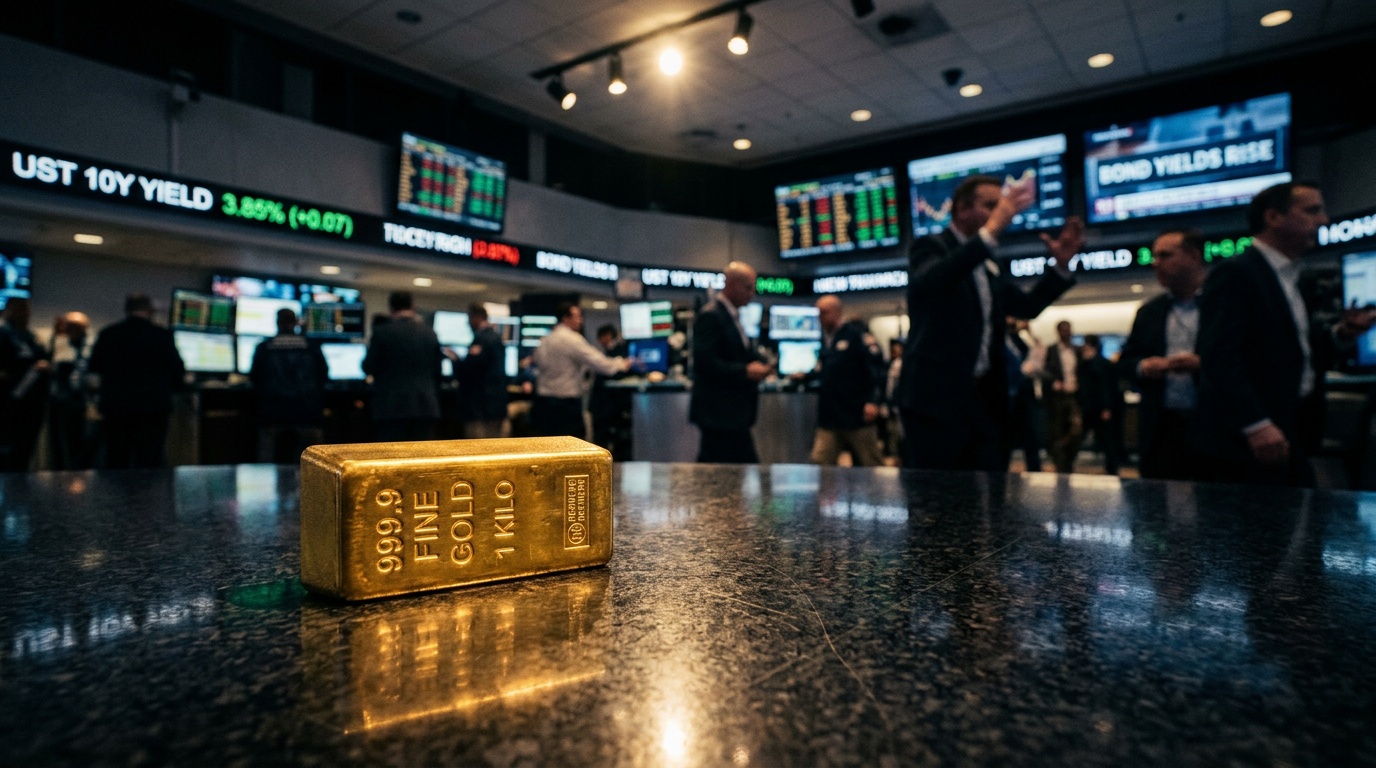
Gold miners are digging more of the shiny stuff out of the ground than ever before. But here's the catch: it's costing them more to do it. And while production climbs, so does the list of buyers, which now includes an unexpected player: a stablecoin issuer.
According to the World Gold Council (WGC), mine production rose 2% year-over-year to 966 metric tons in the second quarter. That pushed first-half output to an all-time high of 1,867 tons across major producing regions. Not too shabby.
Costs Rise, Australia Expands
Several big projects are coming online. Agnico Eagle Mines Limited (AEM) expanded its Detour Lake mine in Canada, Gold Fields Limited (GFI) got its Salares Norte operation in Chile up to steady state, and Newmont Corp. (NEM) ramped up Ahafo North in Ghana. All contributing to the record output.
But that supply milestone comes with a bigger bill. All-in sustaining costs, the industry's go-to measure for what it costs to keep a mine running, hit a record $1,785 an ounce in the first quarter. That's up 16% from a year earlier. Higher royalties and corporate overheads are driving the increase, and energy costs tied to Middle East hostilities are starting to trickle down to mine sites, the WGC said.
Australia looks poised to grab a big slice of the market expansion. Surbiton Associates, a consultancy, says the country is probably the largest producer of newly mined gold in the world. Director Sandra Close points to a pipeline of expansions, including Northern Star's plan to double treatment capacity at Kalgoorlie and Newmont's expansion at Tanami.
China and Tether Step In
While supply is up, demand from official buyers has also bounced back strongly as prices dipped. Central-bank net purchases jumped 62% from a year earlier to a second-quarter record of 289 tons. That's five times the revised first-quarter total of 57 tons.
Poland's central bank bought 51 tons, bringing its first-half purchases to 82 tons. Its total reserves now stand at 632 tons, inching closer to its 700-ton target. The People's Bank of China added 33 tons. "Central banks will remain significant buyers, albeit at a slightly slower pace than we've seen over the last four years," said Louise Street, senior markets analyst at the WGC.
Institutions ramped up buying as gold fell from record highs near $5,600 per ounce to below $4,000. China's imports exploded, with purchases rising to about 173 tons in June, the highest since March 2024. "Investors buying the dip is an important driver of recent demand," Zijie Wu, an analyst at Jinrui Futures, told Bloomberg.
Outside the public sector, Tether has emerged as a notable buyer. The stablecoin issuer ended the quarter with a stockpile of 146 tons of gold, valued at $18.8 billion. "We remained one of the world's largest buyers of U.S. Treasuries, reduced secured lending by $2.38 billion, and added 14 tons of physical gold," CEO Paolo Ardoino said, according to Reuters.
So, gold's story is one of record supply, rising costs, and a diverse cast of buyers, from central banks to crypto companies. It's a market that keeps finding new reasons to shine.