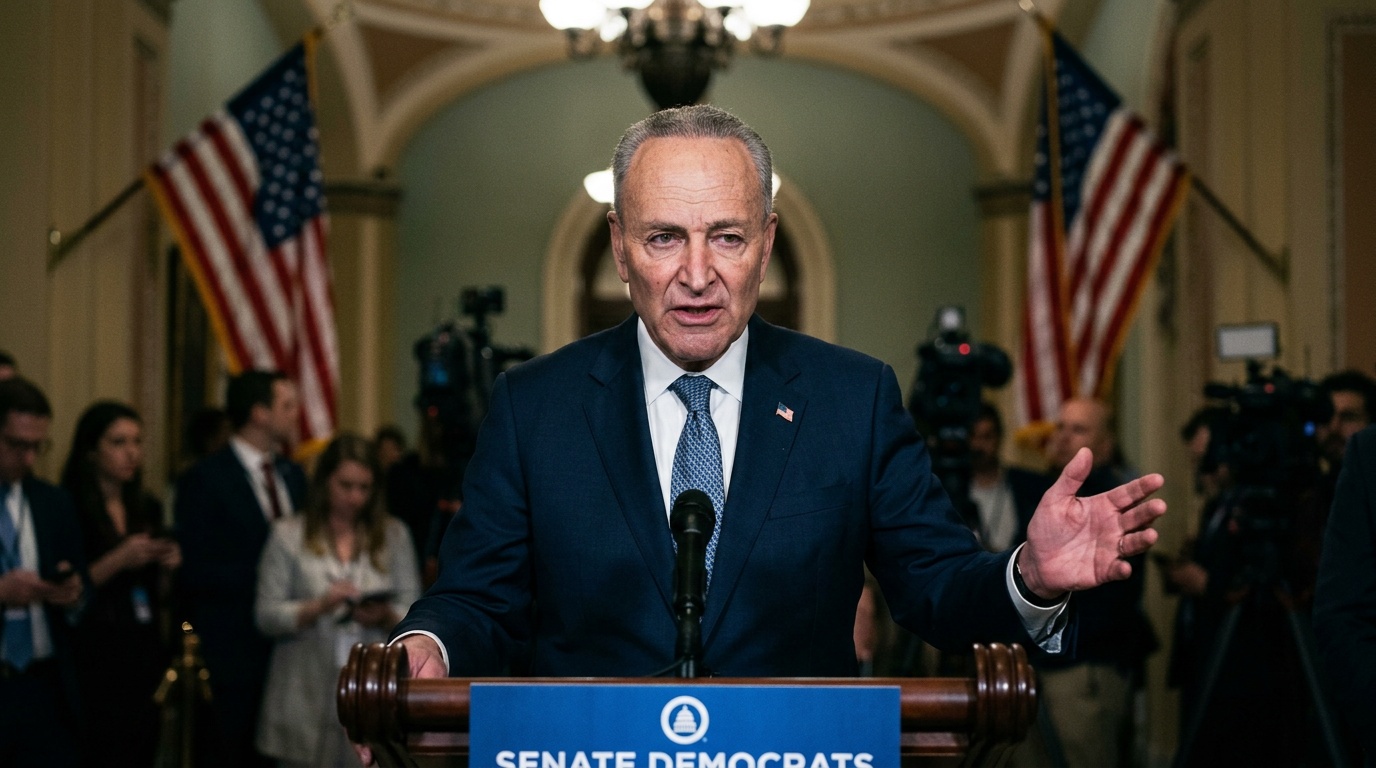
Sen. Chuck Schumer (D-N.Y.) took to social media on Saturday to accuse President Donald Trump of making Americans less safe through the ongoing war in Iran. His list of grievances is long: hundreds of injured servicemembers, 18 dead, skyrocketing prices, and now cyberattacks on the homeland. He's calling on Republicans to break ranks and help end what he calls a "dangerous and unnecessary war."
"Trump is making Americans less safe with his war in Iran," Schumer wrote on X. "Hundreds of servicemembers injured, 18 dead, skyrocketing prices—now cyberattacks on the Homeland. The GOP needs to stand up to this lunacy and work with us to end this dangerous and unnecessary war."
The timing isn't coincidental. The FBI and the Environmental Protection Agency have confirmed that at least seven states have reported cyberattacks on water utility systems since Monday. The Cybersecurity and Infrastructure Security Agency (CISA) says hackers are "targeting water entities of all sizes," and some areas have already issued boil-water notices as a precaution.
Minnesota and Michigan have both confirmed intrusions, according to a New York Times report on Saturday. Officials stress that no drinking water has been altered, but the attacks hit industrial control systems that manage chemical treatment and water pressure. That's the kind of thing that gets people's attention.
Investigators haven't officially pinned the attacks on Iran, though it's the leading suspect. President Trump, for his part, downplayed Iran's possible role on Friday and instead floated the idea that Minnesota was responsible. That claim didn't sit well with Gov. Tim Walz, who rejected it outright.
So what's being done? CISA is telling water facilities to disconnect vulnerable control systems from the internet. The agency says the intrusions have "resulted in boil water notices and sustained manual operations." The investigation into Iran's role is still ongoing, per the report.
This isn't happening in a vacuum. Earlier this week, CENTCOM chief Adm. Brad Cooper warned troops that their social media posts were giving Iran free battle-damage intelligence, sparking talk of tighter phone restrictions in the region. And it's part of a broader pattern of Iran-linked cyber incidents, including a March breach where Tehran-linked hackers leaked personal emails and photos tied to FBI Director Kash Patel.
The bottom line: the war's fallout is hitting home in ways that go beyond the battlefield. Whether it's water systems or social media, the conflict is increasingly touching everyday Americans, and Schumer is making sure voters hear that message.