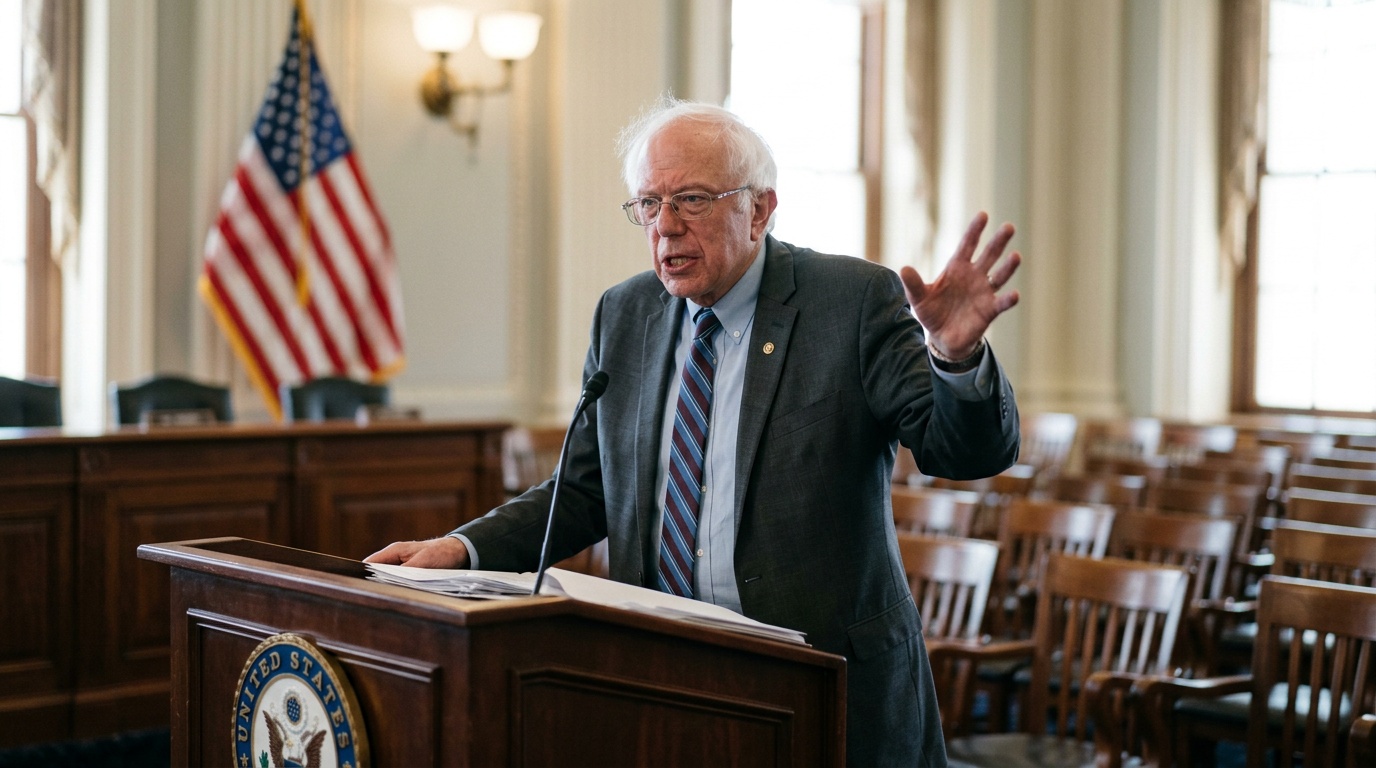
Sen. Bernie Sanders (I-Vt.) is at it again, this time with a familiar refrain: the billionaires need to pay up. In a Saturday post on X, the Vermont senator made his case in all caps, writing, "THE BILLIONAIRES MUST PAY THEIR FAIR SHARE OF TAXES."
His argument? Working families are getting squeezed. "Working families are struggling to afford health care, housing, groceries and other basic necessities," he said, pointing to the widening gap between the ultra-rich and everyone else.
The proposal itself is straightforward: a 5% annual tax on the wealth of fewer than 1,000 U.S. billionaires. Sanders claims this could raise more than $4.4 trillion in new revenue. That's a lot of zeros, and he's got big plans for it.
The money, he says, could fund financial support for families, universal child care, and an expansion of Medicare to cover dental, vision, and hearing benefits. It could also tackle homelessness and give teachers a $60,000 minimum salary. In Sanders' words, "The time is long overdue for the U.S. government to begin representing the needs of working families, not billionaire campaign contributors."
This isn't a new fight for Sanders. Last month, he was already pushing the same 5% wealth tax, even challenging Elon Musk to get on board. He also noted that a similar measure in California could hit Meta CEO Mark Zuckerberg with a bill of about $10.5 billion, all while helping protect health care coverage for millions.
But not everyone is sold on the idea. Comedian and podcast host Joe Rogan has pushed back, arguing that taxing the rich more doesn't guarantee better services or improved living standards. He worries that higher taxes could just expand government power without fixing the root problems.
Then there's Jeff Bezos. The Amazon founder says targeting billionaires won't fix inequality, and he's tired of wealthy people being cast as "villains" in political debates. Bezos points out that the U.S. has "two economies," where some Americans thrive while others struggle. His alternative? Eliminate federal income taxes for the bottom half of earners and find other ways to replace that revenue.
The debate comes at a time when wealth inequality in the U.S. is only getting wider. The richest households have seen far bigger gains than average Americans over recent decades, and that trend shows no signs of slowing.
So, will a wealth tax ever become law? That's a long shot, but Sanders isn't backing down. For now, it's a political talking point that's sure to keep stirring the pot.
Disclaimer: This content was partially produced with the help of AI tools and was reviewed and published by MarketDash editors.