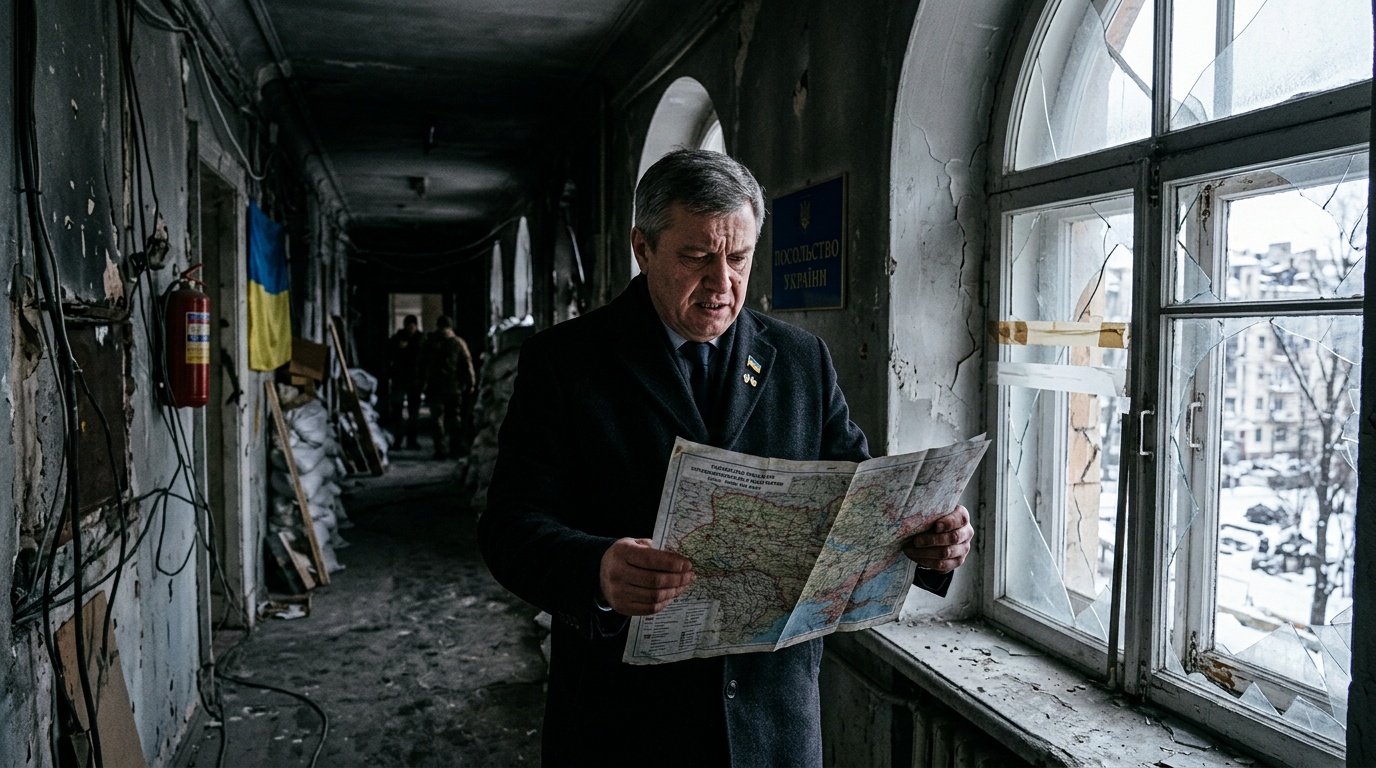
Ukraine's top diplomat in Washington has a simple message for the world: winter is coming, and Kyiv needs missiles now, not in five years.
Ambassador Olha Stefanishyna said Thursday that Ukraine cannot afford to wait for domestic production to ramp up, as Russia's overnight attacks are taking a brutal toll. "The devastating effect of every overnight attack right now is unbelievable," she said, according to Reuters. "Last night and the night before, it was 30 to 40 ballistic missiles."
While Ukraine has managed to shoot down many of the drones Russia and Iran have thrown at it, ballistic missiles remain a tougher nut to crack. Stefanishyna's warning echoes President Volodymyr Zelenskiy's earlier concern that limited US interceptor production could spark a broader missile supply "crisis."
So what's the plan? Kyiv is talking to the Pentagon about getting a license to manufacture Patriot PAC-3 interceptors on home soil. But Stefanishyna is realistic about the timeline: production could take anywhere from 12 months to five years. That's a lifetime in wartime. To bridge the gap, Ukraine is also considering a long-term purchase agreement that could let it leapfrog another customer in the production queue.
Defense contractors are taking notice. Raytheon (RTX) representatives have already visited Ukraine, and Lockheed Martin (LMT), which builds the PAC-3 interceptors, plans to send its own experts. Lockheed has also unveiled a lower-cost Patriot interceptor as global demand strains supplies.
The urgency is hard to overstate. Earlier in July, Ukraine failed to intercept any of 23 ballistic missiles in a single Russian attack because its Patriot stocks were running low. And just this week, an overnight barrage of more than 70 missiles and 280 drones killed at least 10 civilians and wounded over 50. The attack even sent NATO scrambling jets after a missile crossed into Poland.
Diplomatically, the clock is also ticking. Zelenskiy met with President Donald Trump at the White House on Tuesday, seeking immediate air defenses and a revival of diplomatic efforts. Trump has been trying to broker a ceasefire through contacts with Russian President Vladimir Putin. Now, US negotiators Steve Witkoff and Jared Kushner could visit Kyiv as early as next week, according to Stefanishyna.
Zelenskiy has again offered to stop fighting along existing battle lines and use them as a starting point for negotiations, a proposal that resembles earlier front-line ceasefire ideas. But Stefanishyna is skeptical of Putin's intentions. "He has an intention to destroy Ukraine," she said. "We have been successful in everything, but so far, for this winter, we need the missiles."