The Trump administration is stepping on the gas when it comes to self-driving cars. On Thursday, the Department of Transportation rolled out a new set of regulatory changes designed to speed up the development and deployment of autonomous vehicles, and Amazon.com Inc.'s (AMZN) robotaxi operator Zoox just got a big win.
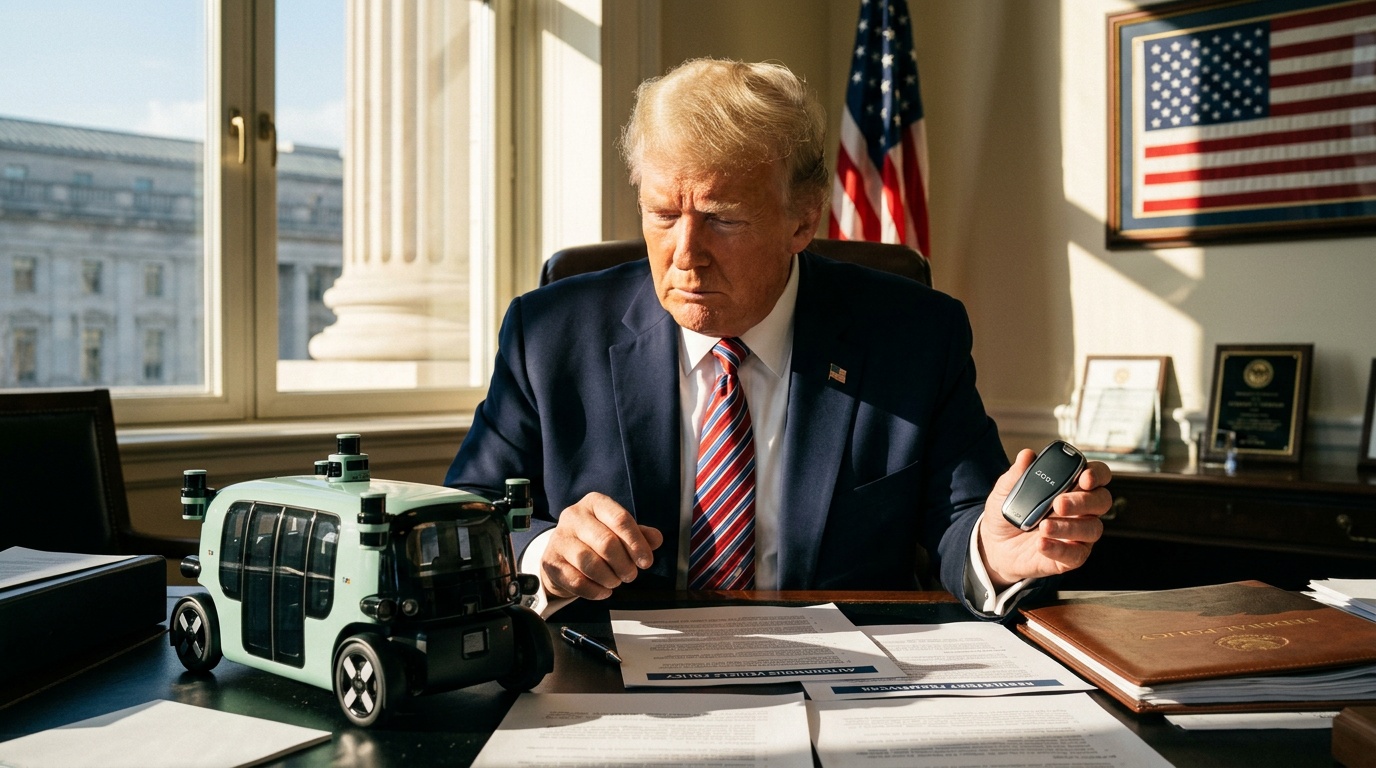
Transportation Secretary Sean Duffy directed the National Highway Traffic Safety Administration (NHTSA) to implement policy changes aimed at "accelerate American automated vehicle (AV) innovation." The headline move: a temporary exemption for Zoox to deploy 2,500 robotaxis "annually for two years," with an oversight structure in place.
Zoox is already running its service in Las Vegas, where it has completed 500,000 rides. The company recently unveiled its updated pod-like robotaxi, which features a LiDAR-enabled self-driving suite and a bidirectional design that seats four passengers. Its California production facility can churn out 100 units per week.
But the changes go beyond just Zoox. NHTSA is also launching a new three-year, $5 million consortium called "A2SCEND" — the first-ever AV performance standards partnership with the Society of Automotive Engineers (SAE) Industry Technologies Consortia. The goal is to establish a single national standard for AV safety and "eliminate the patchwork regulatory landscape that has stifled innovation for years," according to the agency.
The statement also gives the NHTSA Administrator discretion to grant exemptions for AV developers to deploy vehicles manufactured before the exemption date into their autonomous fleets after the exemption is granted. NHTSA is updating its Part 555 exemptions, which allow manufacturers to sell a limited number of vehicles that don't comply with certain Federal Motor Vehicle Safety Standards (FMVSS) to develop new technology. The agency is also updating its deployment guidance by creating a Federal Docket covering topics like emergency responder interactions, safety management systems, remote assistance, and post-crash behavior.
"By removing unnecessary barriers to innovation, developing industry guidance, and providing strong enforcement oversight while we create performance requirements, NHTSA is taking a balanced approach to AV regulation," said NHTSA Administrator Jonathan Morrison.
So what does this mean for the broader AV landscape? The move could give a boost to companies like Alphabet Inc. (GOOGL, GOOG), which leads the autonomous driving race with Waymo. Tesla Inc. (TSLA) also stands to benefit. Waymo operates in multiple U.S. cities and has plans to expand globally, including to the U.K. Tesla, meanwhile, offers its driverless robotaxi service in Miami, Orlando, Houston, Austin, Dallas, and more.
The regulatory shift signals a clear federal push to remove obstacles for AV companies, which have long complained about inconsistent state-by-state rules. Whether this accelerates the path to widespread robotaxi adoption remains to be seen, but for now, the industry is getting exactly what it asked for: a clearer, faster route to the road.