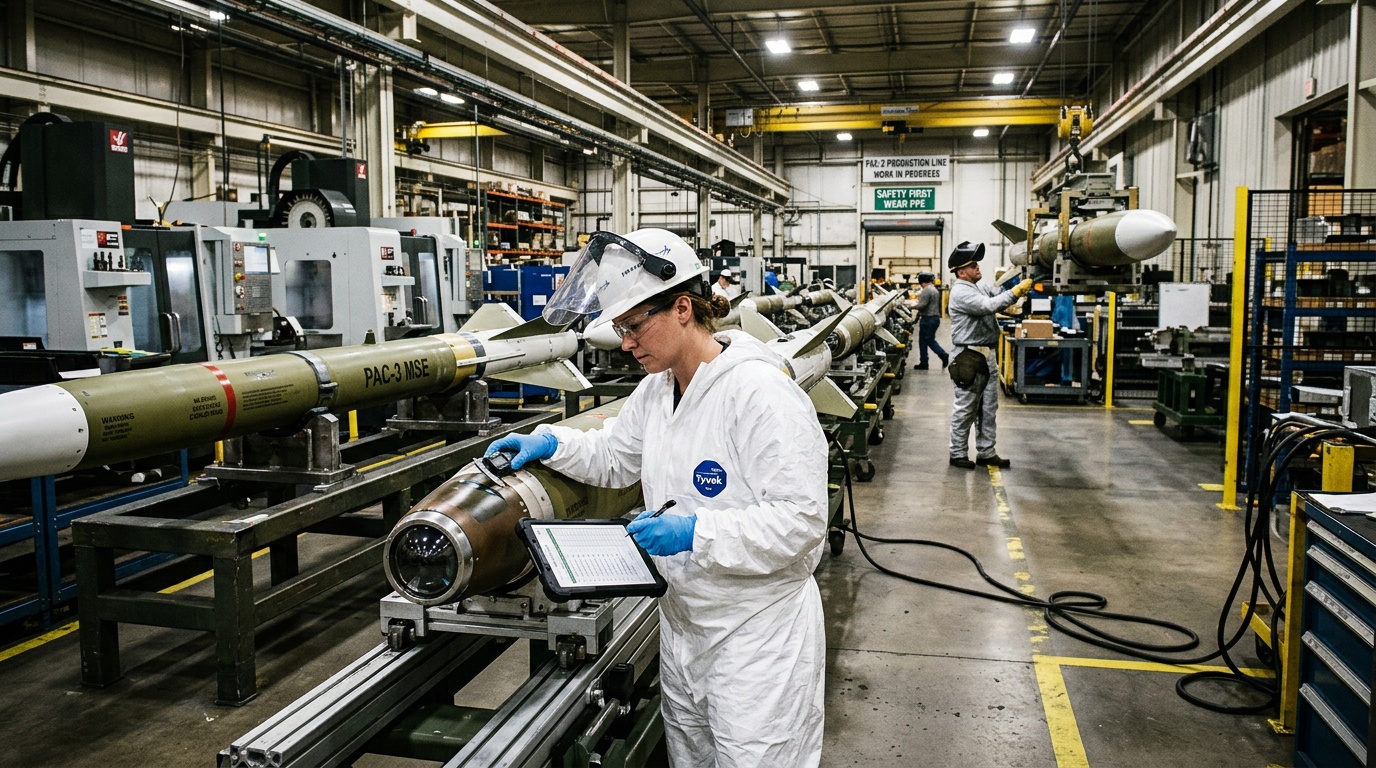
Lockheed Martin (LMT) shares dipped slightly on Thursday, but the news behind the move is anything but small. The company just landed a massive U.S. government contract modification for its PAC-3 Missile Segment Enhancement (MSE) interceptors — think of it as the Pentagon doubling down on a weapon that's been battle-tested in Ukraine and beyond.
The award is a seven-year undefinitized contract action worth up to $53.86 billion. That's on top of a $4.7 billion contract from April, bringing the total potential value of the multiyear deal to a staggering $58.62 billion. Yes, that's billion with a B.
So what does Lockheed plan to do with all that cash? For starters, triple PAC-3 MSE production capacity by the end of 2030. The company also expects to boost employment at its Camden, Arkansas facility by about 50%, from 1,200 workers to roughly 1,850. That's where the final assembly of these interceptors happens — basically the last stop before they go out the door to defend against advanced air and missile threats.
This contract is part of the Department of Defense's Acquisition Transformation Strategy, which is a fancy way of saying: give defense contractors long-term visibility so they can actually ramp up production without worrying about next year's budget. The PAC-3 MSE has already been deployed in Ukraine during Operation Epic Fury and in missions worldwide, so it's not just a paper weapon.
Lockheed's chairman and CEO, Jim Taiclet, summed up the moment with typical defense-contractor flair: "This is a once-in-a-generation moment, and we are moving with wartime urgency to deliver the Arsenal of Freedom."
This is Lockheed's second major multiyear contract under the Pentagon's new model, following a $35 billion award to accelerate Terminal High Altitude Area Defense (THAAD) interceptor production. The company plans to invest $8 billion to $9 billion through 2030 to modernize more than 20 U.S. facilities and increase munitions output. That's a lot of concrete and conveyor belts.