The Federal Reserve didn't raise interest rates Wednesday, holding them steady at 3.50%-3.75%. But you wouldn't know it from watching some of the market's favorite AI stocks.
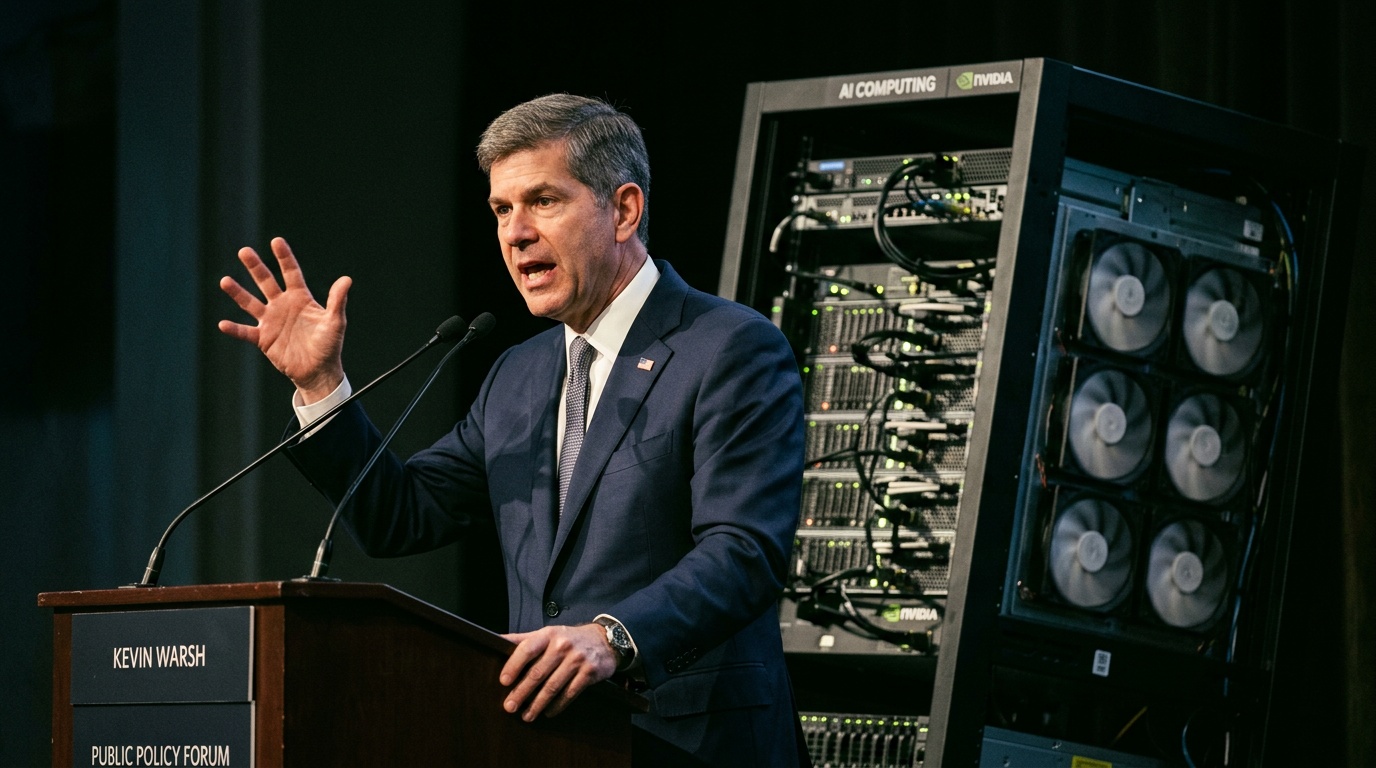
Between 3 p.m. and 3:30 p.m. ET, as markets absorbed Fed Chair Kevin Warsh's hawkish message, a bunch of high-flying names got absolutely crushed. The trigger wasn't a rate move — it was Warsh's insistence that the inflation fight is far from over, and his refusal to give investors any hint that rate cuts are coming.
Warsh's repeated mantra — "there's only one [inflation] target and it's 2%" — and his dismissal of a single soft inflation report as a turning point reinforced the idea that restrictive monetary policy could be the new normal for months to come. The biggest casualties were concentrated in AI infrastructure, semiconductors, data centers, and speculative tech.
Here are the 10 biggest losers during that 30-minute window, according to market data:
What Exactly Did Warsh Say to Spook the Markets?
The selloff wasn't about the rate decision itself — it was about Warsh's tone. He made it crystal clear that the fight against inflation is far from over, and he refused to give investors any hint that rate cuts are on the horizon.
"There is no soft inflation target. There is no soft implicit target," Warsh said.
He reinforced that message by warning that "the five-plus years of inflation above target cannot be cured in nine weeks or by a single month of modest price decreases." One encouraging inflation report, he made clear, would not alter the Fed's strategy.
Warsh also pointed out that while the Fed hasn't raised rates in the past six weeks, markets effectively have. "Nominal and real yields are materially higher across the Treasury curve... some of the increases... are among the most significant in the last two decades."
When asked about markets pricing a near-certain September hike, Warsh refused to validate those expectations but added: "Markets can be a very good source of information."
The implication is significant. Under Warsh, the Fed appears less interested in reassuring markets and more interested in observing how they price inflation, growth, and monetary policy on their own. That shift leaves investors with less guidance and more uncertainty.
This may be the biggest philosophical shift: Powell tried to shape markets. Warsh wants to observe them. That means less reassurance when volatility rises.