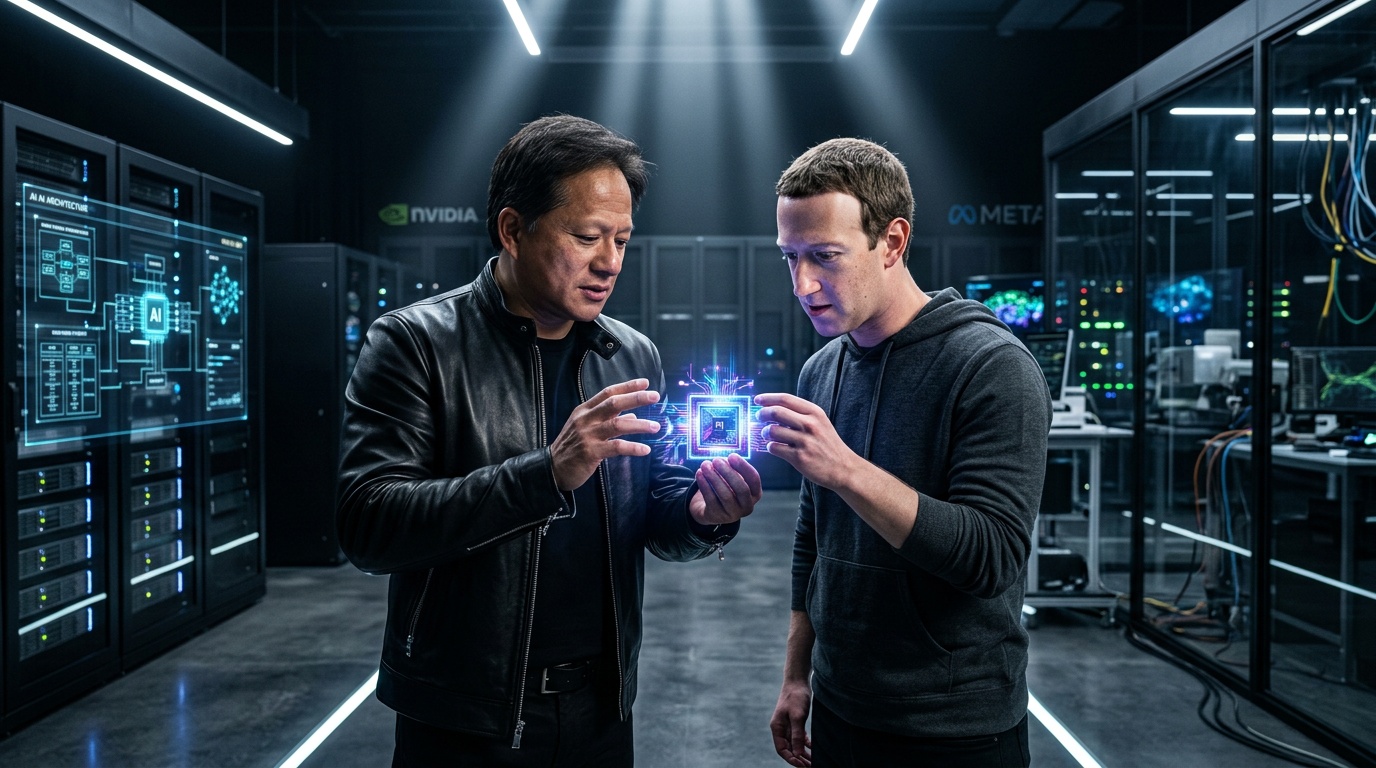
Two of the biggest names in tech are pushing back against the idea that Chinese AI should be banned. Nvidia Corp. (NVDA) CEO Jensen Huang and Meta Platforms Inc. (META) CEO Mark Zuckerberg are making the case that the best way to handle Chinese AI models isn't to block them—it's to outcompete them.
Their message comes as the Trump administration weighs restrictions on Chinese open-source AI models. One model in the spotlight is Kimi K3, built by Beijing-based startup Moonshot AI, which has reportedly outperformed some U.S. rivals on industry benchmarks. But rather than seeing this as a reason to pull up the drawbridge, Huang and Zuckerberg argue that open competition actually strengthens America's position in the global AI race.
The Debate Is Shifting From China to Open AI
Speaking to reporters in Washington this week, Huang dismissed concerns that Chinese open-source models pose an existential threat to American AI companies. He called fears surrounding AI "science fiction" and argued that open models expand AI adoption while users still gravitate toward the strongest proprietary systems. Both approaches, he said, can coexist.
Huang also pushed back against claims that downloaded Chinese models carry hidden security risks, saying they can be securely customized and isolated. More importantly, he argued there is "zero" chance China drives U.S. AI companies out of business. He added that many investors misunderstood the impact of DeepSeek earlier this year and are making the same mistake with Moonshot AI's latest model.
Zuckerberg has echoed a similar view. Earlier this month, the Meta CEO warned against blocking Chinese AI models in an effort to give U.S. companies an edge. He argued that excessive regulation could amount to "regulatory capture" that benefits a handful of frontier AI labs while stifling broader innovation.
The comments put two of the AI industry's biggest infrastructure and platform companies on one side of an increasingly important policy debate, even as some leading U.S. AI developers have urged tighter oversight of advanced AI systems.
Why Investors Should Care
For Nvidia, the position is unsurprising. The company sells the computing infrastructure that powers AI development, regardless of whether developers build on proprietary models like OpenAI's GPT or open-source alternatives from Meta, DeepSeek, or Moonshot AI. More AI adoption ultimately translates into greater demand for GPUs.
Meta, meanwhile, has long championed open-weight AI through its Llama family of models, betting that widespread access accelerates innovation and expands its ecosystem.
The debate is increasingly moving beyond whether Chinese AI models can compete with U.S. systems. Instead, the bigger question for investors is whether the future of AI will be shaped by a handful of closed models or by an expanding ecosystem of open AI platforms—a shift that could have implications for everything from chip demand to enterprise software adoption.