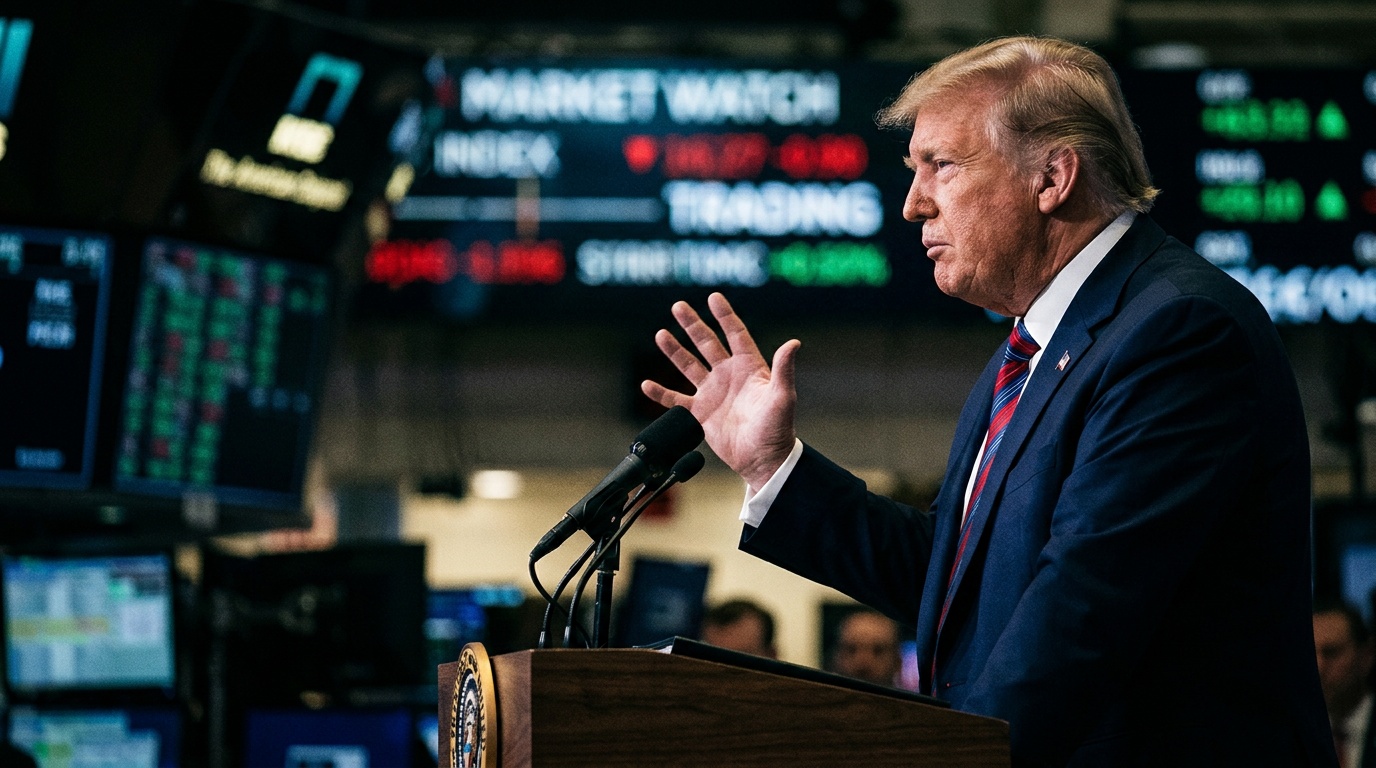
If you were hoping Congress would finally ban its members from trading stocks, Tuesday's House vote was a disappointment. But depending on who you ask, it was either a Democratic betrayal or a Republican setup.
The bill in question combined two things: a ban on members of Congress trading stocks, and a requirement that voters show ID at the polls. It failed. And now the finger-pointing is in full swing.
Speaker Mike Johnson (R-La.) took to X to blast Democrats, writing: "Nearly 200 Democrats voted to ALLOW Members of Congress to participate in shady stock trading and voted AGAINST requiring voter ID at the polls." He called the measures "common sense" and said Democrats are "on the wrong side EVERY SINGLE TIME."
But Rep. Thomas Massie (R-Ky.) isn't buying it. He fired back, arguing that Johnson and GOP leadership deliberately sabotaged the stock trading ban by tying it to voter ID — a non-starter for most Democrats.
"You could ban stock trading by U.S. Representatives tomorrow with a simple change to House rules. It wouldn't even have to go through the Senate or be signed by the President," Massie wrote on X. "Instead you put this political gimmick up for a vote which had a poison pill for Dems in it — Voter ID."
Massie's point is a good one: House rules are controlled by the majority. If Republicans really wanted to stop insider trading by lawmakers, they could have done it unilaterally, without any Democratic votes. Instead, they chose to package it with a controversial voting measure that guaranteed Democratic opposition.
The bill that did come to a vote — the Stop Insider Trading Act — actually passed the House 232-198. But it wasn't a clean ban. Democrats like Rep. Ro Khanna (D-Calif.) pointed out that the bill allowed lawmakers to keep and sell existing holdings and didn't apply to the president. Rep. Joseph Morelle (D-N.Y.) said Republicans weakened the proposal by attaching the SAVE America Act's voter ID language. Rep. Jim McGovern (D-Mass.) noted the bill created a loophole by only preventing new stock purchases but allowing sales. And Reps. James Clyburn (D-S.C.) and Sean Casten (D-Ill.) criticized the exclusion of President Donald Trump, arguing that stock trading restrictions should apply to the president as well.
On the other side, supporters like Sen. Pete Ricketts (R-Neb.) defended the measure, saying it introduced stricter rules while still allowing business leaders to serve in Congress.
So what actually happened? The House passed a bill that Democrats say doesn't go far enough, and then the broader package that included voter ID failed. Johnson blames Democrats for the failure. Massie says the whole thing was a political stunt designed to fail.
Either way, members of Congress can still trade stocks. And unless there's a simple rule change — which Massie says could happen tomorrow — that's not changing anytime soon.