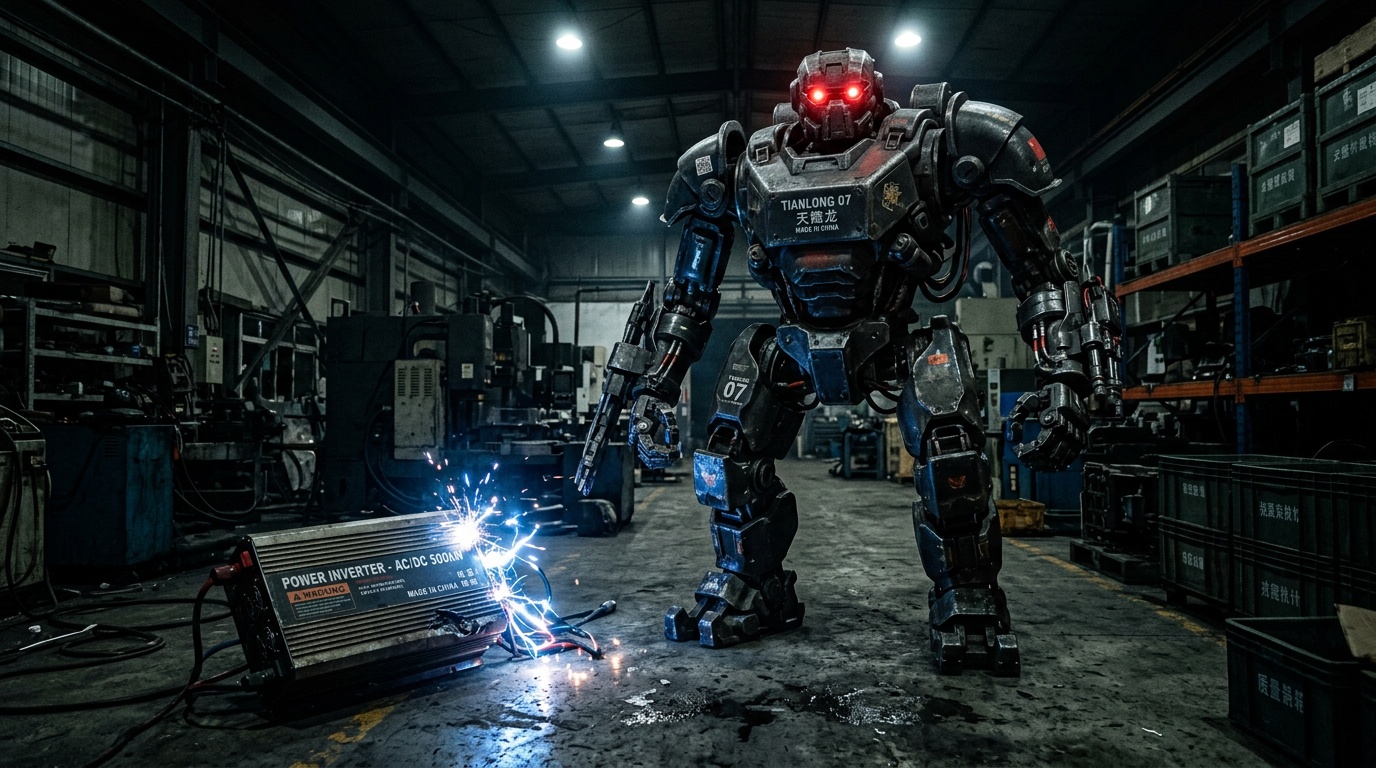
The Federal Communications Commission just dropped the hammer on a new batch of Chinese tech, and this time it's not just about telecom gear. On Tuesday, the Trump administration unveiled sweeping restrictions on new Chinese-made humanoid robots, quadruped robots, and connected power inverters, citing concerns that these devices could threaten U.S. national security and cybersecurity.
The FCC said the measures took effect immediately and apply to new models that haven't yet been authorized for sale in the U.S. The agency also retains the authority to revoke approvals for previously authorized products—so existing devices aren't necessarily safe forever.
"These devices could create supply chain vulnerabilities that could disrupt U.S. economic and national security and could create a cybersecurity risk that [threatens] American critical infrastructure," the FCC said in a statement.
FCC Chairman Brendan Carr added, "The FCC will continue to do our part to secure America’s critical supply chains and, with today’s action, the FCC is acting in lock step with our national security agencies to do just that."
Why the Trump Administration is Targeting Chinese AI Robots and Inverters
The administration says the move is designed to reduce risks associated with Chinese technology in sectors viewed as critical to America's AI future, including data centers, renewable energy systems, and advanced robotics. Officials have raised concerns that AI-powered robots equipped with cameras, microphones, and sensors could collect sensitive data, facilitate surveillance, or even be remotely controlled by foreign adversaries.
Power inverters—essential components that connect solar panels, batteries, and other energy sources to electrical grids and AI data center equipment—have also come under increased scrutiny over fears they could be exploited for cyberattacks or infrastructure disruption.
The FCC said robots "collect data that could be leveraged by malign actors to surveil Americans, enhance the capabilities of foreign intelligence services, or to remotely commandeer the robots."
China Pushes Back as Unitree Faces Pressure
China's embassy in Washington criticized the decision, urging the U.S. to "heed the objective and rational voices of the business communities in both countries" and "stop smearing Chinese companies and threatening them with sanctions," Reuters reported.
The restrictions are expected to affect Chinese robotics leader Unitree Robotics, which recently partnered with Nvidia Corp. (NVDA) to integrate Blackwell AI chips into its humanoid robots.
Image via Shutterstock/ IM Imagery