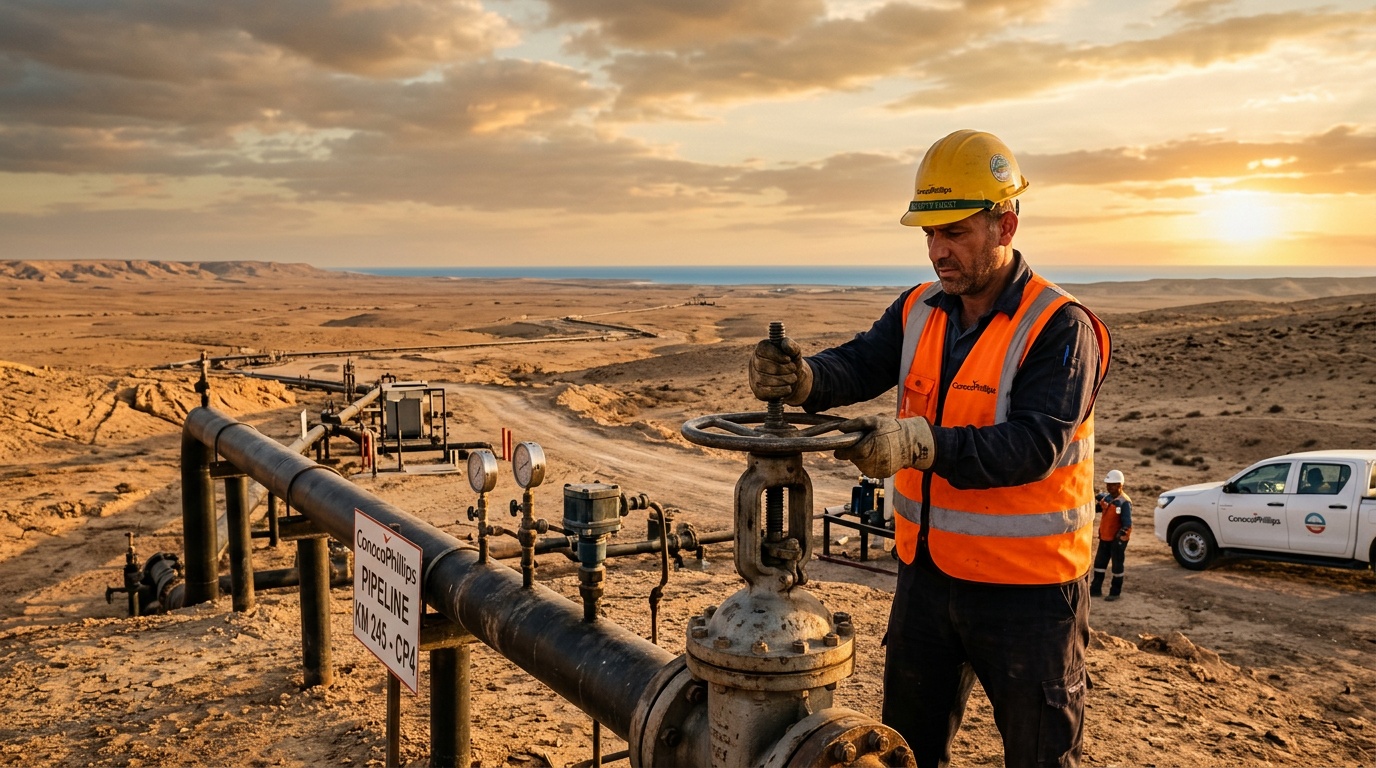
Iraq is making big moves to reshape its energy future. Over the weekend, the country's cabinet gave the green light for the Ministry of Oil to start talks with a consortium led by ConocoPhillips to explore and develop the Akkas gas field and surrounding areas. Akkas, located near the Syrian border, is one of Iraq's largest undeveloped gas fields, and getting it online is seen as crucial for reducing the country's reliance on imported gas.
The consortium isn't just ConocoPhillips. It also includes TI Capital, a private investment firm based in Los Angeles, and Novaterra Energy, a company that says it's focused on investing in Syria to rebuild and boost energy security there. The cabinet's authorization paves the way for a formal contract signing.
But that's not all. The cabinet also authorized Basra Oil Co. to sign a memorandum of understanding between Iraq's Ministry of Oil and Syria's Ministry of Energy for a pipeline project. This pipeline would link Iraqi oil production to global export markets via the Mediterranean Sea. It's a big deal because it gives Iraq a second direct oil export outlet to the Mediterranean, reducing its dependence on exports through the Persian Gulf and the Iraq-Turkey pipeline to Ceyhan, which has faced repeated disruptions.
The timing is telling. Shipments through the Strait of Hormuz have become increasingly risky during the ongoing US-Iran conflict, with Tehran threatening tankers and maritime traffic. The conflict has already restricted oil flows to global markets, so Iraq is smart to look for alternative routes. The cabinet's statement didn't provide details on the pipeline's capacity, completion timeline, or financing, but it's clear Iraq is serious about diversifying its export options. Iraq and Syria have been discussing reviving oil ties since the toppling of Bashar al-Assad in 2024. A pipeline once carried Iraqi crude from Kirkuk to Baniyas on the Syrian coast, but it was shut down due to war and sanctions. Baghdad is now working to reconnect energy infrastructure with neighbors to secure more stable export routes.
In addition to the gas deal and pipeline, the cabinet also authorized the Ministry of Oil to put the Integrated Qayyara Project up for bidding. This project aims to develop oil infrastructure and raise production rates. The Qayyarah field, located in northern Iraq, holds roughly 800 million barrels of heavy crude and currently produces about 33,000 barrels a day. It's part of a broader push to expand Iraq's oil and gas production.
ConocoPhillips is clearly doubling down on Iraq. Just last week, on July 17, the company announced it had agreed to terms with BP (BP) to acquire a 42% interest in BP Energy Company of Kirkuk Ltd. (BP ECKL). That stake supports the ongoing redevelopment of four large-scale oil fields in the Kirkuk area: the Baba and Avanah domes of the Kirkuk field, plus the Bai Hassan, Jambur, and Khabbaz fields. The development and production contract includes an initial gross recoverable resource of more than 3 billion barrels of oil equivalent, with additional exploration potential. So ConocoPhillips is not just dipping a toe in Iraq—it's diving in headfirst.