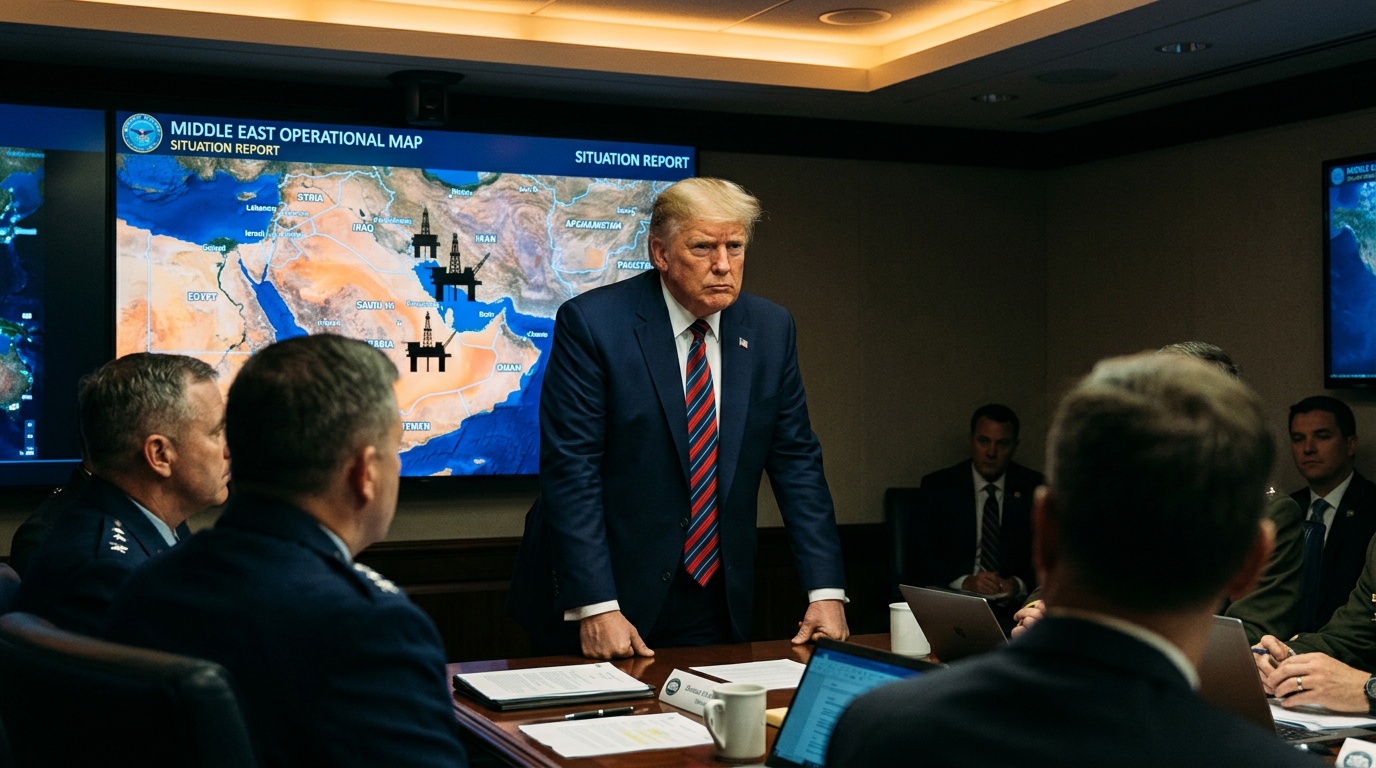
The Iran conflict is no longer confined to the Persian Gulf. On Saturday, Tehran-backed Houthi rebels in Yemen claimed attacks on Saudi oil facilities along the Red Sea coast, while Washington paused its own strikes amid fears of a wider regional war.
According to Reuters, the Houthis targeted facilities belonging to Saudi oil giant Aramco (2222.SR) in Jizan and Yanbu. Saudi Arabia's missile defenses intercepted some of the attacks, and Saudi-backed Yemeni forces retaliated against Houthi positions. Both sides are mobilizing along front lines, threatening Yemen's fragile ceasefire.
The U.S. military said its naval blockade against Iran "remains in full effect" but offered no explanation for why American strikes had paused after nearly two weeks of escalation. A senior Trump administration official said President Donald Trump "has always been clear that his preference is diplomacy," adding that the U.S. had demonstrated what would happen if Iran refused to engage in serious negotiations.
The New York Times reported that Trump stepped back from plans to intensify strikes after advisers raised concerns about expanding the conflict, exhausting U.S. military resources, straining relations with Gulf allies, and threatening global energy markets.
Yanbu port has become increasingly important as an alternative export route while Iran disrupts shipping through the Strait of Hormuz. The Houthi attacks on Aramco facilities there underscore how the conflict is spreading.
Separately, Iran accused Ukraine of attacking an Iranian commercial vessel in the Caspian Sea, saying the incident killed one sailor and injured another. Ukrainian President Volodymyr Zelenskyy earlier referenced successful long-range strikes in the Caspian Sea but did not identify specific targets.
Last week, Trump said he was close to deciding on a "massive attack" against Iran, while Pakistan reportedly worked to restart stalled negotiations. The President said U.S. forces were prepared and warned Iran had "not received enough pain yet." Iranian Foreign Minister Seyed Abbas Araghchi criticized U.S. asset seizure plans, warning they could set a dangerous global precedent and fuel instability.