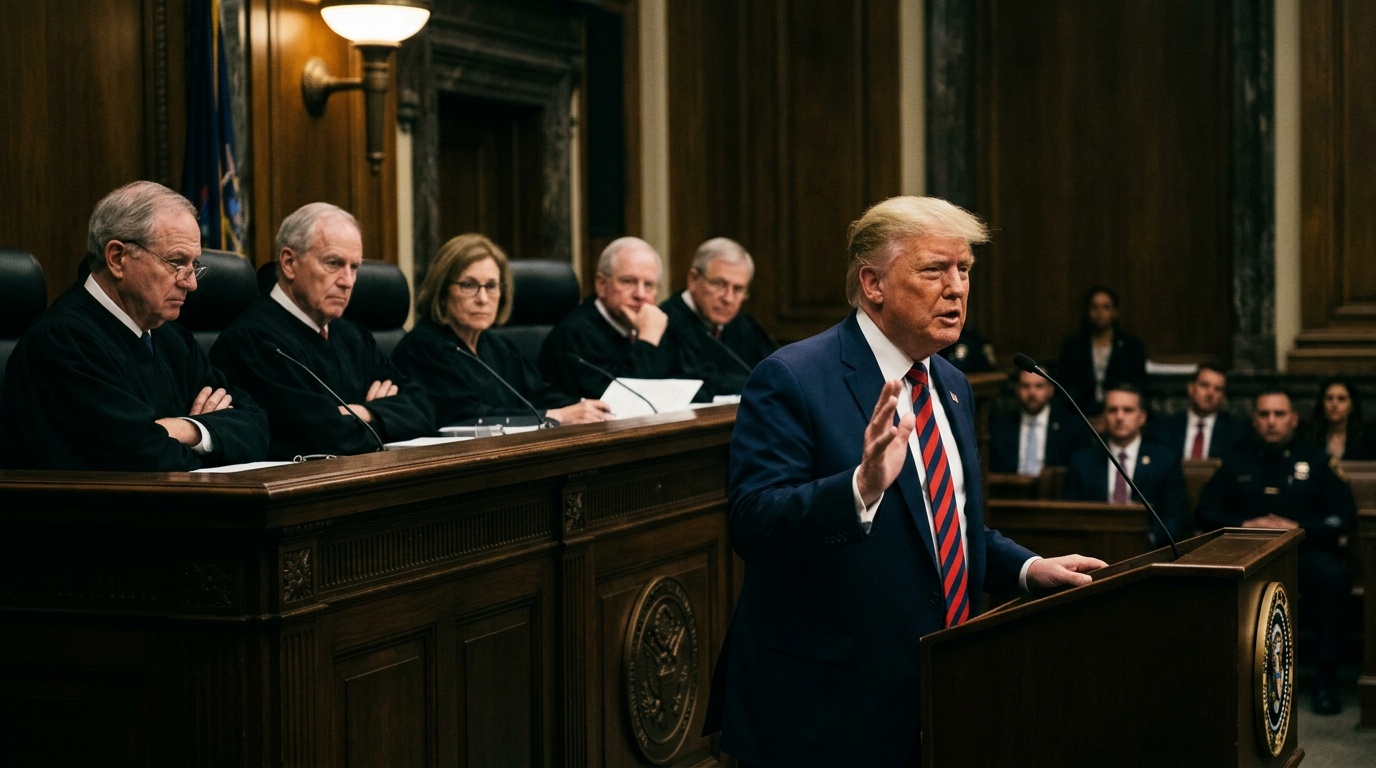
President Donald Trump's push to tighten mail-in voting rules hit another legal roadblock this weekend. On Saturday, the 1st U.S. Circuit Court of Appeals voted 2-1 to keep a lower court's injunction in place, blocking key provisions of Trump's executive order aimed at overseeing mail-in ballots ahead of the midterm elections.
The lawsuit, brought by Democratic-led states including California, Massachusetts, and Washington, argued that the president had overstepped his authority. The order had directed the Department of Homeland Security to compile a list of confirmed U.S. citizens eligible to vote using federal databases, and instructed the Justice Department to investigate local officials who sent mail ballots to people deemed "not eligible."
In her June ruling, U.S. District Judge Indira Talwani made clear that Trump didn't have the power to force DHS to create such lists or to require the Postal Service to carry out the order's mail-related provisions. She also wrote that the president lacked the authority "to intimidate local election officials to use the necessarily incomplete confirmed citizenship lists as a resource, lest they face criminal prosecution."
The appeals court's decision keeps that injunction in place, meaning the administration can't enforce those parts of the order for now. The Justice Department has signaled it may ask the Supreme Court to step in, which could set up a major election law showdown just months before voters head to the polls.
Trump signed the executive order earlier this year, framing it as a "voter integrity" measure. It sought stricter absentee ballot procedures, including approved voter lists and secure ballot tracking. But Democrats and voting-rights groups quickly promised legal challenges. Gov. Gavin Newsom of California and Senate Minority Leader Chuck Schumer both said they would fight the order in court.
For now, the appeals court has handed Trump a clear loss. But with the Supreme Court potentially next, this fight is far from over.