President Donald Trump has given generic-drug manufacturers a choice – add U.S. capacity within two years or face tariffs.
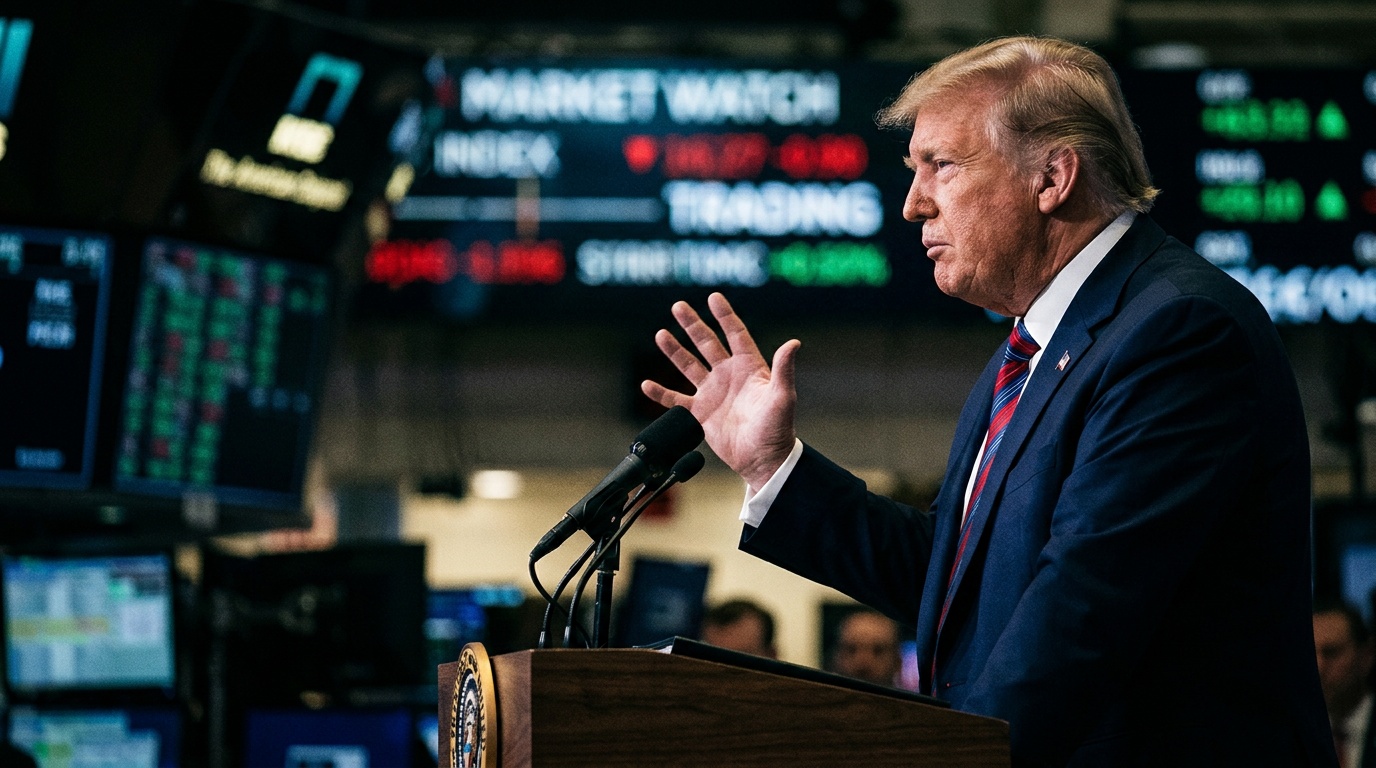
Writing on Truth Social, Trump framed the measure as one designed to “RESHORE Generic Pharmaceutical Production into America, with a penalty to those Companies that decide not to build Plant and Equipment within the stated period of time.”
His schedule is precise – imported generics stay at a 0% tariff from Aug. 1, 2026, through July 31, 2028, before the rate climbs to 100% for one year and then to 200% from Aug. 1, 2029.
The approach differs from the administration’s treatment of branded medicines. Reuters reported that drugmakers secured tariff exemptions through pricing agreements or commitments to manufacture domestically.
However, generic producers have less room to bargain because a low-price business model leaves little cushion to absorb a levy of that magnitude.
Nearshoring Has a Hard Economic Limit
Generics account for more than 90% of medicines sold in the U.S., according to the Food and Drug Administration. India alone supplies over half of the generic prescriptions filled domestically, per a 2025 Senate Committee on Aging report. Meanwhile, China remains indispensable for active ingredients and basic medicines.
Relocation, however, is far from straightforward.
“A tariff can be part of a broader strategy, but is not going to by itself lead to onshoring,” Marta Wosińska, senior fellow at the Brookings Institution’s Center on Health Policy, said for CBS News.
Mariana Socal, an associate professor at the Johns Hopkins Bloomberg School of Public Health, noted that such plants demand “very specific equipment and infrastructure and quality standards.”
The two-year runway is demanding. Producers must finance plants, qualify equipment, validate processes and satisfy regulatory requirements while deciding whether U.S. production costs can support generic returns. Wosińska warned that inadequate capacity could lead manufacturers to leave the U.S. market. Socal said others may prioritize markets that pay more.
The fallout could include drug shortages, higher patient costs, and quality risks should producers trim corners to offset the levies.
The Relative Winners and the Import-Exposed
The most insulated names are those with entrenched U.S. operations and revenue that is less tied to imported finished generics. Amgen Inc. (AMGN), AbbVie Inc. (ABBV) and Gilead Sciences Inc. (GILD) broadly fit that description. However, their advantage is insulation, not necessarily a direct windfall.
Among generic drugmakers, the policy rewards usable domestic manufacturing capacity more than corporate scale. Jefferies analyst Dennis Ding wrote that if tariffs apply only to finished products rather than imported ingredients, Amphastar Pharmaceuticals Inc. (AMPH) and ANI Pharmaceuticals Inc. (ANIP) would be among the most insulated, while Apotex Inc., Canada’s largest generic drug manufacturer, would face greater risk.
Finally, Amneal Pharmaceuticals Inc. (AMRX)’s $1.1 billion acquisition of Kashiv could strengthen its domestic development and manufacturing position. The firm benefits from Kashiv’s strong product pipeline and deep R&D capabilities, but particularly from its domestic manufacturing facilities in New Jersey and Illinois.